More Info on Willie DixonSimilar Undetermined MusicSearch Artistopia
Biography
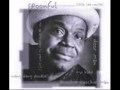
Infobox musical artist | Name = Willie Dixon| Img = | Img_capt = | Img_size =| Landscape = yes| Birth_name = William James Dixon| Alias =| Background = solo_singer| Born = birth date|1915|7|1 Vicksburg, Mississippi|Vicksburg , Mississippi | Died = death date and age|1992|1|29|1915|7|1 Burbank, California|Burbank , California | Origin = Chicago , Illinois , United States | Instrument = Singing|Vocals , double bass , guitar | Genre = Blues , rock and roll , Chicago blues , jump blues , R& B , Gospel music|gospel | Occupation = Musician , Songwriter , Arrangement|Arranger , Record producer|Producer , Boxing|Boxer | Years_active =| Label = Chess Records|Chess , Columbia Records|Columbia , Bluesville Records|Bluesville , Checker Records|Checker , Verve Records|Verve , MCA Records|MCA , Legacy Records|Legacy , Columbia Records|Columbia , Yambo Records|Yambo | Associated_acts = Big Three Trio| URL = http://www.willie-dixon.com/ www.willie-dixon.com| Notable_instruments = William James "Willie" Dixon (July 1, 1915 & ndash; January 29, 1992) was an United States|American blues musician , vocalist, songwriter, arranger and record producer. A Grammy Award winner who was proficient on both the Upright bass and the guitar , as well as his own singing voice, Dixon is arguably best known as an acclaimed, prolific songwriter, and one of the founders of the Chicago blues sound. His songs have been recorded not only by himself, or that of the trio and other ensembles in which he participated, but an uncounted number of musicians representing many genres between them. A short list of his most famous compositions include " Little Red Rooster ", " Hoochie Coochie Man ", " Evil (Howlin' Wolf song)|Evil ", " Spoonful ", " Back Door Man ", " I Just Want to Make Love to You ", " I Ain't Superstitious ", " My Babe ", " Wang Dang Doodle ", and " Bring It On Home (Sonny Boy Williamson II song)|Bring It On Home ". They were written during the peak of Chess Records , 1950�1965, and performed by Muddy Waters , Howlin' Wolf , and Little Walter , influencing a worldwide generation of musicians.Dicaire, David (1999). Blues Singers: Biographies of 50 Legendary Artists of the Early 20th Century . McFarland. p. 87. ISBN 0-7864-0606-2 Next to Muddy Waters, he was the most influential person in shaping the post World War II sound of the Chicago blues .Trager, Oliver (2004). Keys to the Rain: The Definitive Bob Dylan Encyclopedia . Billboard Books. pp. 298�299. ISBN 0-8230-7974-0 He also was an important link between the blues and rock and roll , working with Chuck Berry and Bo Diddley in the late 1950s. His songs were covered by some of the biggest musicians|artists of more recent times, including Bob Dylan , Cream (band)|Cream , Jimi Hendrix , Led Zeppelin , Foghat , The Yardbirds , The Rolling Stones , Queen (band)|Queen , Megadeth , The Doors , The Allman Brothers Band , Grateful Dead , and a posthumous duet (music)|duet with Colin James .
Biography
Early life
Dixon was born in Vicksburg, Mississippi|Vicksburg , Mississippi on July 1, 1915.Allmusic|class=artist|id=p332|pure_url=yes Allmusic biography - accessed February 2008 His mother Daisy often rhymed the things she said, a habit Dixon imitated. At the age of 7, he became an admirer of a band that featured pianist Little Brother Montgomery . Dixon was first introduced to blues when he served time on prison farms in Mississippi as an early-teenager. He learned how to sing harmony as a teen as well, from local carpenter Leo Phelps. Dixon sang bass in Phelps' group, The Jubilee Singers, a local gospel music|gospel quartet that regularly appeared on the Vicksburg radio station WQBC. Dixon began adapting poem s he was writing into songs, and even sold some of them to local music groups.
Adulthood
Dixon left Mississippi for Chicago in 1936. A man of considerable stature, at 6 and a half feet and weighing over 250 pounds, he took up boxing; he was so successful that he won the Illinois State Golden Gloves Championship (professional wrestling)|Heavyweight Championship (Novice Division) in 1937.Snowden, Don (1997).Dixon turned professional as a boxer and worked briefly as Joe Louis ' sparring partner. After four fights, Dixon left boxing after getting into a fight with his manager over being cheated out of money.
Dixon met Leonard "Baby Doo" Caston at the boxing gym where they would harmonize at times. Dixon performed in several vocal groups in Chicago but it was Caston that got him to pursue music seriously. Caston built him his first bass, made of a tin can and one string. Dixon's experience singing bass made the instrument familiar. He also learned the guitar.
Dixon, whose initial attempts at his vocation as a boxer were now dubious, began performing around Chicago and with Leonard Caston|Leonard "Baby Doo" Caston , who convinced him to move towards a musical career.cite web|url=Allmusic|class=artist|id=p63195|pure_url=yes|title=Leonard Caston|last=Eder|first=Bruce|year=2010 |work=Biography of Leonard Caston|publisher=Rovi Corporation|accessdate=2 May 2010 In 1939, was a founding member of the Five Breezes, with Caston, Joe Bell, Gene Gilmore and Willie Hawthorne. The group blended blues, jazz , and vocal harmonies, in the mode of the Ink Spots . Dixon's progress as he progressed on the Upright bass came to an abrupt halt during the advent of World War II when he resisted the draft as a conscientious objector and was imprisoned for ten months. After the war, he formed a group named the Four Jumps of Jive and then reunited with Caston, forming the Big Three Trio , who went on to record for Columbia Records .
Pinnacle of career
Dixon signed with Chess Records as a recording artist, but began performing less and became more involved with the record label. By 1951, he was a full time employee at Chess where he acted as Record producer|producer , Artists and repertoire|talent scout , session musician and staff songwriter. He was also a producer for Chess subsidiary Checker Records . His relationship with the Chess label was sometimes strained, although his tenure there covered the years from 1948 to the early 1960s. During this time his output and influence were prodigious. From late 1956 to early 1959, he worked in a similar capacity for Cobra Records , where he produced early singles for Otis Rush , Magic Sam , and Buddy Guy . cite book| last = Dixon | first = Willie | authorlink = | coauthors = Snowden, Don | title = I Am the Blues | publisher = Da Capo Press | year = 1989 | location = | pages = 103& ndash;112 | url = | doi = | id = | isbn = 0306804158 He later recorded on Bluesville Records .cite web |url= http://www.wirz.de/music/blvilfrm.htm |title=Prestiage Bluesville discography |publisher= |accessdate=2006-11-17 From the late 1960s until the middle 1970s, Dixon ran his own record label, Yambo Records , along with two subsidiary labels, Supreme and Spoonful. He released his 1971 album Peace? (Willie Dixon album)|Peace? on Yambo, as well as singles by McKinley Mitchell , Lucky Peterson and others. cite book| last = Dixon | first = Willie | authorlink = | coauthors = Snowden, Don | title = I Am the Blues | publisher = Da Capo Press | year = 1989 | location = | page = 244 | url = | doi = | id = | isbn = 0306804158
Dixon is considered one of the key figures in the creation of Chicago blues . He worked with Chuck Berry , Muddy Waters , Howlin' Wolf , Otis Rush , Bo Diddley , Joe Louis Walker , Little Walter , Sonny Boy Williamson II|Sonny Boy Williamson , Koko Taylor , Little Milton , Eddie Boyd , Jimmy Witherspoon , Lowell Fulson , Willie Mabon , Memphis Slim , Washboard Sam , Jimmy Rogers , and others. His double bass playing was of a high standard. He appears on many of Chuck Berry 's early recordings, further proving his linkage between the blues and the birth of rock and roll .
Dixon is remembered mainly as a songwriter ; his most enduring gift to the blues lay in refurbishing archaic Southern motifs, often of magic and country folkways and often derived from earlier records such as those by Charlie Patton , in contemporary arrangements, to produce songs with both the sinew of the blues, and the agility of pop music|pop .cite book | first= Tony | last= Russell | year= 1997 | title= The Blues: From Robert Johnson to Robert Cray | edition= | publisher= Carlton Books Limited | location= Dubai | pages= 107 | isbn= 1-85868-255-X British Rhythm and blues|R& B bands of the 1960s constantly drew on the Dixon songbook for inspiration. In December 1964, The Rolling Stones reached #1 in the UK Singles Chart with their cover version of Dixon's " Little Red Rooster ".cite book | first= David | last= Roberts | year= 2006 | title= British Hit Singles & Albums | edition= 19th | publisher= Guinness World Records Limited | location= London | pages= 458 | isbn= 1-904994-10-5
By the late sixties, Dixon's songwriting and production work began to take a back seat to his organisational abilities, which were utilised to assemble all-star, Chicago-based blues ensembles for work in Europe.
In his later years, Willie Dixon became a tireless ambassador for the blues and a vocal advocate for its practitioners, founding the Blues Heaven Foundation. The organization works to preserve the blues� legacy and to secure copyrights and royalties for blues musicians who were exploited in the past. Speaking with the simple eloquence that was a hallmark of his songs, Dixon claimed, "The blues are the roots and the other musics are the fruits. It�s better keeping the roots alive, because it means better fruits from now on. The blues are the roots of all American music. As long as American music survives, so will the blues."
Dixon's health deteriorated increasingly during the seventies and the eighties, primarily due to long-term Diabetes mellitus|diabetes . Eventually one of his legs had to be amputate d.Dixon was inducted at the inaugural session of the Blues Foundation 's ceremony, and into the Blues Hall of Fame in 1980." http://www.blues.org/halloffame/inductees.php4? YearId=25 1980 Hall of Fame Inductees". Blues Foundation . Retrieved on February 17, 2008. In 1989 he was also the recipient of a Grammy Award for his album, Hidden Charms .
cite web|title = Willie Dixon Timeline |url = http://bluesheaven.com/about/the-legend/timeline/ |publisher = Blues Heaven Foundation |location = Chicago |year = 2007 |accessdate = 2009-07-18
Death and legacy
Dixon died of heart failure http://thedeadrockstarsclub.com/1992.html Dead Rock Stars Club entry - accessed February 2008 in Burbank, California on January 29, 1992, and was buried in the Burr Oak Cemetery and Restvale Cemetery|Burr Oak Cemetery in Alsip, Illinois . Dixon was posthumously inducted into the Rock and Roll Hall of Fame in the "early influences" (pre-rock) category in 1994.Rule, Sheila (January 20, 1994). " http://query.nytimes.com/gst/fullpage.html? res=9F03E1D91430F933A15752C0A962958260 Rock Greats Hail, Hail Their Own At Spirited Hall of Fame Ceremony". The New York Times . Retrieved on February 17, 2008.
Actor and comedian Cedric the Entertainer portrayed Dixon in Cadillac Records , a 2008 film based on the early history of Chess Records . http://www.reuters.com/article/filmNews/idUSN2235591420080122 Brody, Wright join musical Chess club http://www.reuters.com/article/filmNews/idUSN1216708520080212 Alessandro Nivola to play blues mogul in "Chess"
Willie Dixon's grandson, Alex Dixon , recently recorded two Willie Dixon songs, (" Spoonful " and "Down in the Bottom"), on his latest release titled Rising from the Bushes .Allmusic|class=artist|id=p1159116|pure_url=yes Allmusic biography, Song list - accessed July 2009
Songs
Main|List of songs written by Willie Dixon
Tributes
French singer-songwriter Francis Cabrel refers to Dixon in the song "Cent Ans de Plus" on his 1999 album Hors-Saison . Cabrel cites the artist as one of a number of blues influences, including Charley Patton , Son House , BlindLemon , Robert Johnson (musician)|Robert Johnson , Howlin' Wolf , Blind Blake and Ma Rainey .
Canadian rock musician Tom Cochrane wrote a song entitled "Willie Dixon Said" that appeared on his 1999 album X-Ray Sierra .
Bob Dylan credited Willie Dixon for the music on his album Together Through Life and gave special thanks Dixon's estate.
title = Songs of Memphis Slim and "Wee Willie" Dixon
work = Smithsonian Folkways
publisher = Smithsonian Institution
accessdate =January 1, 2010
1962
1963
1970
1971
1973
1976
1983
1985
1988
1989
1990
1995
1996
1998
1998
2001
See also
List of blues musicians
Chicago Blues Festival
List of Rock and Roll Hall of Fame inductees
Boogie-woogie
References
Reflist
Further reading and listening
Dixon, Willie; & Snowden, Don (1990). I Am the Blues: The Willie Dixon Story . Da Capo Press . ISBN 0-7043-0253-5
Dixon, Willie (1992). Willie Dixon - Master Blues Composer: With Notes and Tablature . Hal Leonard . ISBN 0-7935-0305-1
Dixon, Willie (2003). I Am The Blues . ( DVD )
1997 The Chess Box Snowden, Don "Willie Dixon" CD booklet. MCA Records|MCA Records, Inc.
External links
Allmusic|class=artist|id=p332
IMDb name|0229006
Find a Grave|4156
http://www.rockhall.com/inductee/willie-dixon Willie Dixon at the Rock and Roll Hall of Fame
http://shs.starkville.k12.ms.us/mswm/MSWritersAndMusicians/musicians/Dixon.html Willie Dixon, Mississippi blues musician. The Mississippi Writers and Musicians Project of Starkville High School .
http://bluesheaven.com/ Willie Dixon's Blues Heaven Foundation
Blues
Persondata|NAME= Dixon, Willie |ALTERNATIVE NAMES= Dixon, William James |SHORT DESCRIPTION= Blues musician, singer-songwriter, arranger, record producer |DATE OF BIRTH= July 1, 1915 |PLACE OF BIRTH= Vicksburg, Mississippi , United States |DATE OF DEATH= January 29, 1992 |PLACE OF DEATH= Burbank, California , United States DEFAULTSORT:Dixon, Willie Category:1915 births Category:1992 deaths Category:African American musicians Category:American blues musicians Category:American blues singers Category:American blues singer-songwriters Category:American conscientious objectors Category:American double-bassists Category:American record producers Category:American music arrangers Category:American session musicians Category:Songwriters from Mississippi Category:Blues Hall of Fame inductees Category:Blues musicians from Mississippi Category:Chicago blues musicians Category:Cardiovascular disease deaths in California Category:Grammy Award winners Category:Jive singers Category:Jump blues musicians Category:People from Vicksburg, Mississippi Category:Rock and Roll Hall of Fame inductees