More Info on The BeatlesSimilar Pop & Rock MusicSearch Artistopia
Biography
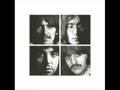
About|the bandRedirect|Fab FourFeatured articlepp-semi-blp|small=yesUse British English|date=September 2010Use dmy dates|date=September 2011Infobox musical artist| name = The Beatles| image = The Fabs.JPG| caption = The Beatles in 1964 Top: John Lennon , Paul McCartney Bottom: George Harrison , Ringo Starr | alt = A square quartered into four head shots of young men with moptop haircuts. Clockwise from top left, one smiles jauntily towards his right, one faces forward excitedly with an opened mouth, one smiles with his left eye half closed as if blinking, and one looks up with his tongue stuck out slightly as if licking his lips. All four wear white shirts and dark coats.| background = group_or_band| origin = Liverpool , England| genre = Rock music|Rock , Pop music|pop | years_active = Start date|df=yes|1960�End date|df=yes|1970| label = Parlophone , Swan Records|Swan , Vee-Jay Records|Vee-Jay , Capitol Records|Capitol , United Artists Records|United Artists , Apple Records|Apple | associated_acts = The Quarrymen , Plastic Ono Band | website = URL|thebeatles.com| current_members = John Lennon Paul McCartney George Harrison Ringo Starr | past_members = Stuart Sutcliffe Pete Best The Beatles were an English Rock music|rock band formed in Liverpool in 1960, and one of the most commercially successful and critically acclaimed acts in the history of popular music.sfn|Unterberger|2009a The group's best-known lineup consisted of John Lennon (rhythm guitar, vocals), Paul McCartney (bass guitar, vocals), George Harrison (lead guitar, vocals) and Ringo Starr (drums, vocals). Rooted in skiffle and 1950s rock and roll , the group later worked in many music genre|genres ranging from Pop music|pop ballad s to psychedelic rock , often incorporating classical music|classical and other elements in innovative ways. Their enormous popularity first emerged as " Beatlemania "; as their songwriting grew in sophistication by the late 1960s, they came to be perceived by many fans and cultural observers as an embodiment of the ideals shared by the Counterculture of the 1960s|era's sociocultural revolutions .
Initially a five-piece lineup of Lennon, McCartney, Harrison, Stuart Sutcliffe (bass) and Pete Best (drums), they built their reputation playing clubs in Liverpool and Hamburg over a three-year period from 1960. Sutcliffe left the group in 1961, and Best was replaced by Starr the following year. Moulded into a professional act by manager Brian Epstein , their musical potential was enhanced by the creativity of producer George Martin . They gained popularity in the United Kingdom after their first single, " Love Me Do ", became a modest hit in late 1962, and they acquired the nickname the "Fab Four" as Beatlemania grew in Britain over the following year. By early 1964 they had become international stars, leading the " British Invasion " of the United States pop market. The band toured extensively around the world until August 1966, when they performed their final commercial concert. From 1966 they produced what many critics consider to be some of their finest material, including the innovative and widely influential albums Revolver (album)|Revolver (1966), '' Sgt. Pepper's Lonely Hearts Club Band (1967), The Beatles (album)|The Beatles (1968) and Abbey Road (1969). After their break-up in 1970, the ex-Beatles each found success in individual musical careers. Lennon was Death of John Lennon|murdered in 1980, and Harrison died of cancer in 2001. McCartney and Starr remain active.
The Beatles are the List of best-selling music artists|best-selling band in history, with estimated sales of over one billion units.sfn|Guinness|2012 They have had more number-one albums on the UK charts and have held the top spot longer than any other musical act. According to the Recording Industry Association of America|RIAA , they have sold more albums in the US than any other artist, and in 2008 they topped Billboard magazine's list of the all-time most successful Billboard Hot 100 All-Time Top Artists|Hot 100 artists. As of 2012, they hold the record for most number one hits on the Hot 100 chart with 20. They have received 7 Grammy Award s from the American National Academy of Recording Arts and Sciences and 15 Ivor Novello Awards from the British Academy of Songwriters, Composers and Authors . They were collectively included in Time magazine's compilation of Time 100: The Most Important People of the Century|the 20th century's 100 most influential people .
History
The Beatles history
Anchor|Formation Formation, Hamburg, and UK popularity (1957�1962)
In March 1957 John Lennon , then aged sixteen, formed a skiffle group with several friends from Quarry Bank school. They briefly called themselves the Blackjacks, before changing their music group naming|name to The Quarrymen after discovering that a respected local group was already using the name.sfn|Spitz|2005|pp=47�52 Fifteen-year-old Paul McCartney joined as a guitarist shortly after he and Lennon met that July.sfn|Spitz|2005|pp=93�99 In February 1958 McCartney invited his friend George Harrison to watch the group. The fourteen-year-old auditioned for Lennon on the upperdeck of a bus, playing Raunchy (instrumental)|"Raunchy" by Bill Justis . While Lennon was initially impressed by his playing ability, he thought Harrison was too young for the band, but after about a month of persistence he joined as lead guitarist.sfn|Miles|1997|p=47sfn|Lewisohn|1992|p=13 By January 1959, Lennon's schoolfriends had left the group, and he had begun studies at the Liverpool College of Art .sfn|Harry|2000a|p=103 The three guitarists, billing themselves at least three times as "Johnny and the Moondogs",sfn|Lewisohn|1992|p=17 were playing rock and roll whenever they could find a drummer.sfn|Harry|2000b|pp=742�43 Lennon's art school friend Stu Sutcliffe , who had recently sold one of his paintings and purchased a bass guitar using the proceeds, joined in January 1960, and it was he who suggested changing the band's name to "The Beetles" as a tribute to Buddy Holly and The Crickets .sfn|Lewisohn|1992|p=18 According to Beatles expert Mark Lewishon, they used the name "Beatals", through May, when they became "The Silver Beetles", before undertaking a brief tour of Scotland as the backing group for pop singer and fellow Liverpudlian Johnny Gentle . By early July they had changed their name to "The Silver Beatles", and by the middle of August to "The Beatles".sfn|Lewisohn|1992|pp=18�20 The lack of a full-time drummer posed a problem when the group's unofficial manager, Allan Williams , arranged a resident band booking for them in Hamburg , Germany, but before the middle of August they auditioned and hired Pete Best , and the five-piece band left four days later, contracted to club owner Bruno Koschmider , for what would be a 3� month residency.sfn|Lewisohn|1992|pp=21�25 Lewisohn writes: "They pulled into Hamburg at dusk on 17 August, the time when the red-light district|red-light area comes to life ... flashing neon lights screamed out the various entertainment on offer, while scantily clad women sat unabashed in shop windows waiting for Prostitution|business opportunities ".sfn|Lewisohn|1992|p=22 Initially placing the group at the The Beatles in Hamburg|Indra Club , in October Koschmider moved them to the Kaiserkeller , after he closed the Indra due to noise complaints.sfn|Lewisohn|1992|p=23 When he learned they were also performing at The Top Ten Club , a rival venue and thus in breach of contract, Koschmider gave the band one month's termination notice,sfn|Lewisohn|1992|pp=24, 33 and reported the underage Harrison,sfn|Gould|2008|p=88 who had obtained permission to stay in Hamburg by lying to the German authorities about his age, causing his deportation in late-November.sfn|Lewisohn|1992|p=24 A week later, Koschmider had McCartney and Best arrested for arson after they set fire to a tapestry on the wall in their room; they were also deported.sfn|Lewisohn|1992|pp=24�25 Lennon returned to Liverpool in early December, while the newly engaged Sutcliffe remained in Hamburg with his German fianc�e, Astrid Kirchherr , through late-February.sfn|Lewisohn|1992|p=25 Kirchherr took the first semi-professional photos of the group,sfn|Spitz|2005|pp=222�224 and she encouraged Sutcliffe to comb his hair forward in the pilzenkopf or "mushroom head" style popular among university students in Germany and France at the time.sfn|Gould|2008|p=96 In 1961, during their second Hamburg engagement, she cut his hairsfn|Lewisohn|1992|p=32 in the "exi", or existentialist style that was later adopted by the other Beatles.sfn|Miles|1997|p=76 When he decided to leave the band in early 1961 and resume his art studies in Germany, McCartney took up the bass.sfn|Gould|2008|pp=89, 94 German producer Bert Kaempfert contracted what was now a four-piece group through June 1962, and he used them as Tony Sheridan 's backup band|backing band on a series of recordings.sfn|Spitz|2005|pp=249�251 Credited to "Tony Sheridan & The Beat Brothers", the single " My Bonnie ", recorded in June and released four months later, reached number 32 on the Musikmarkt chart, and was group's first worldwide release.sfn|Everett|2001|p=100 After completing their second Hamburg stint the group enjoyed increasing popularity back home in Liverpool, particularly in Merseyside , where the Beat music|Merseybeat movement was gaining popularity. However, the band were also growing tired of the monotony of numerous appearances at the same clubs night after night.sfn|Lewisohn|1992|p=33 In November, during one of the band's frequent appearances at the The Cavern Club|Cavern Club , they encountered Brian Epstein , a local record store owner and music columnist.sfn|Miles|1997|pp=84�87 Epstein would later recall: "I immediatley liked what I heard. They were fresh and they were honest, and they had what I thought was a sort of presence and ... star quality."sfn|Lewisohn|1992|pp=34�35 Epstein courted the band over the next couple of months and was appointed manager in January 1962.sfn|Miles|1997|pp=84�88 He made efforts throughout the winter and spring to get them released from their contract obligations with Bert Kaempfert Productions.sfn|Winn|2008|p=10 To secure an early release from the contract, Epstein negotiated for the band to provide one last recording session, at the end of May, during their next visit to Hamburg.sfn|Winn|2008|p=10 Tragedy greeted them upon their return there in April, when a distraught Kirchherr met them at the airport with news of Sutcliffe's death the previous day from a Cerebral hemorrhage|brain haemorrhage .sfn|Lewisohn|1992|p=56 Kaempfert released them from the record contract the day after the session, a month before it was to expire at the end of June,sfn|Winn|2008|p=10 and although The Beatles' Decca audition|Decca Records rejected the band in early February with the comment, "Guitar groups are on the way out, Mr. Epstein",sfn|The Beatles|2000|p=68George Martin signed the group to EMI 's Parlophone label in May.sfn|Lewisohn|1992|p=56
The Beatles first recording session under Martin's direction took place at EMI's Abbey Road Studios in London in June 1962. Martin immediately complained to Epstein about Best's drumming and suggested they use a Session musician|session drummer in the studio.sfn|Spitz|2005|pp=318, 322 The band had already been contemplating Best's dismissal, so he was replaced by Ringo Starr , who left Rory Storm and the Hurricanes to join them, but had previously performed with them during Best's occasional absences.sfn|Spitz|2005|pp=328, 330 A dissatisfied Martin hired session drummer Andy White (drummer)|Andy White , sfn|Spitz|2005|p=353 who played on the band's first single, " Love Me Do " and " P.S. I Love You (The Beatles song)|P.S. I Love You ".sfn|Lewisohn|1992|p=59 Released in early October, "Love Me Do" was a top twenty UK hit, peaking at number seventeen on the Record Retailer chart.sfn|Lewisohn|1992|pp=59�60 In mid-October they made their television d�but with a live performance on the regional news programme Granada Reports|People and Places ,sfn|Lewisohn|1992|pp=81, 355 and a late-November studio session yielded their second single, " Please Please Me (song)|Please Please Me ",sfn|Lewisohn|1992|pp=62, 84 after which Martin accurately predicted, "You've just made your first No.1."sfn|Harry|2000a|p=875 In December 1962, the band concluded their fifth and final Hamburg stint.sfn|Lewisohn|1992|pp=62�62, 86 By 1963 Epstein, Martin, and the group had agreed that all four members should contribute vocals to their albums, despite Starr's restricted vocal range, to "affirm his status as a full-fledged member".sfn|Gould|2008|p=191 Lennon and McCartney had established a songwriting partnership, and as the band's success grew, their dominant collaboration limited Harrison's opportunities as a lead vocalist.sfn|Harry|2000a|p=494 Epstein, wanting to maximize their commercial potential, encouraged the group to adopt a professional attitude to performing.sfn|Gould|2007|pp=128, 133�134 Lennon recalled him saying, "Look, if you really want to get in these bigger places, you're going to have to change � stop eating on stage, stop swearing, stop smoking".sfn|The Beatles|2000|p=67 Lennon said, "We used to dress how we liked, on and off stage. He'd tell us that jeans were not particularly smart and could we possibly manage to wear proper trousers, but he didn't want us suddenly looking square. He'd let us have our own sense of individuality".sfn|The Beatles|2000|p=67
Beatlemania and touring years (1963�1966)
Please Please Me and With The Beatles
After the moderate success of "Love Me Do", "Please Please Me" met with a more emphatic reception. Released in January 1963, it reached number one on every national chart except Record Retailer , where it stalled at number two.sfn|Lewisohn|1992|pp=88, 351 Martin originally considered recording The Beatles' debut LP live at the Cavern Club, but after deciding that the building's acoustics were inadequate he elected to simulate a "live" album with minimal production in "a single marathon session at Abbey Road".sfn|Gould|2008|p=147 Ten songs were recorded for Please Please Me , accompanied by the four tracks already released on their two singles.sfn|Gould|2008|p=147 Recalling how the band "rushed to deliver a debut album, bashing out Please Please Me in a day", Allmusic 's Stephen Thomas Erlewine comments, "Decades after its release, the album still sounds fresh, precisely because of its intense origins."sfn|Erlewine|2009a Lennon said little thought went into composition at the time; he and McCartney were "just writing songs � la The Everly Brothers|Everly Brothers , � la Buddy Holly , pop songs with no more thought of them than that�to create a sound. And the words were almost irrelevant."sfn|Harry|2000b|p=721
Released in March 1963, the album reached number one on the top four British charts, initiating a run during which eleven of their twelve studio albums released in the United Kingdom through 1970 reached number one.sfn|Lewisohn|pp=90, 351 The band's third single, " From Me to You ", came out in April and was also a chart-topping hit, starting an almost unbroken run of seventeen British number one singles for the band, including all but one of the eighteen they released over the next six years.sfn|Lewisohn|1992|pp=89, 350�351 On its release in August, the band's fourth single, " She Loves You ", achieved the fastest sales of any record in the UK up to that time, selling three-quarters of a million copies in under four weeks.sfn|Gould|2008|p=159 It became their first single to sell a million copies, and remained the biggest-selling record in the UK until 1978 when it was surpassed by " Mull of Kintyre (song)|Mull of Kintyre ", by McCartney's post-Beatles band, Wings (band)|Wings .sfn|Harry|2000a|p=990 The popularity of their music brought with it increasing press attention, to which the band members responded with an irreverent and comical attitude that defied what was expected of pop musicians at the time, inspiring even more interest.sfn|Gould|2008|pp=166�69
The Beatles' logo, seen on the front of Starr's bass drum during the group's major touring years,sfn|Kay|1992|p=139 was based on an impromptu sketch by instrument retailer and designer Ivor Arbiter upon instruction from Epstein that the design should emphasize the word "beat".sfn|Alcantara|Hall|2005sfn|Thompson|2008|p=270 The band toured the UK three times in the first half of the year: a four-week tour that began in February preceded three-week tours in March and May�June. As their popularity spread, a frenzied adulation of the group took hold, dubbed " Beatlemania ". Although not billed as tour leaders, they overshadowed other acts including Tommy Roe , Chris Montez and Roy Orbison , American artists who had established great popularity in the UK.sfn|Pawlowski|1990|pp=125�32 Performances everywhere, both on tour and at many one-off shows around the country, were greeted with riotous enthusiasm by screaming fans.sfn|Pawlowski|1990|pp=117�85 In late October, a five-day tour of Sweden saw the band venture abroad for the first time since the Hamburg chapter.sfn|Harry|2000a|p=1088 Returning to the UK, they were greeted at London Heathrow Airport|Heathrow Airport in heavy rain by thousands of fans in "a scene similar to a shark-feeding frenzy", attended by fifty journalists and photographers and a BBC Television camera crew.sfn|Pawlowski|1990|p=150 The next day, they began yet another British tour, scheduled for six weeks. By now, they were indisputably the headliners.sfn|Pawlowski|1990|pp=125�32 Before a concert in Plymouth, police found it necessary to use high-pressure water hoses to control the crowds, and there were debates in Parliament of the United Kingdom|Parliament concerning the thousands of police officers putting themselves at risk to protect the group.sfn|Pawlowski|1990|p=153sfn|Davies|1968|pp=184�85 Please Please Me maintained the top position on the Record Retailer chart for thirty weeks, only to be displaced by their follow-up, With The Beatles , which EMI delayed the release of until sales of Please Please Me had subsided.sfn|Lewisohn|1992|pp=90, 92, 100 With The Beatles was released in late-November to record advance orders of 270,000 copies, topping the half-million mark in one week.sfn|Lewisohn|1992|p=93 It held the top spot for twenty-one weeks with a chart life of 40 weeks.sfn|Harry|2000a|p=1161 Making much greater use of studio production techniques than its "deliberately primitive" predecessor, the album was recorded between July and October.sfn|Gould|2008|p=187 Erlewine describes With The Beatles as "a sequel of the highest order�one that betters the original by developing its own tone and adding depth."sfn|Erlewine|2009b In a reversal of what had until then been standard practice, the album was released in late November ahead of the impending single " I Want to Hold Your Hand ", with the song excluded in order to maximize the single's sales.sfn|Gould|2008|pp=187�88 With The Beatles caught the attention of The Times ' music critic William Mann, who went as far as to suggest that Lennon and McCartney were "the outstanding English composers of 1963".sfn|Gould|2008|p=187 The newspaper published a series of articles in which Mann offered detailed analyses of the music, lending it respectability.sfn|Harry|2000a|p=1162 With The Beatles became the second album in UK chart history to sell a million copies, a figure previously reached only by the 1958 South Pacific (musical)|South Pacific soundtrack.sfn|Harry|2000b|p=978 In writing the sleeve notes for the album, the band's press officer Tony Barrow used the superlative "the fabulous foursome", which the media would widely adopt as: "the Fab Four".sfn|Harry|2000a|p=402
"British Invasion"
Listen |filename=Iwanttoholdyourhandsample.ogg |title="I Want to Hold Your Hand" |description=Sample of the single " I Want to Hold Your Hand " (1963) which secured the band's international success when it achieved enormous US popularity a few weeks before their debut in the country The Beatles' releases in the United States were hindered for over a year by EMI's American subsidiary, Capitol Records , who initially declined to issue Beatles material, including their first three singles. Concurrent negotiations with the independent US labels Vee Jay and Swan led to the eventual release of the singles, but legal issues with royalties and publishing rights proved an obstacle to the successful marketing of the group in the US.sfn|Harry|2000a|pp=225�226, 228, 1118�1122 Capitol began to issue the material in December 1963,sfn|Lewisohn|1992|p=350 exercising complete control over format, they compiled distinct US albums from the band's recordings and issued songs of their choosing as singles.sfn|Gould|2008|pp=295�96 American chart success began after Epstein arranged for a $40,000 US marketing campaign and secured the support of disk jockey Carrol James, who first played the band's records in mid-December 1963, initiating their music's spread across US radio. This caused an increase in demand, leading Capitol to rush-release "I Want to Hold Your Hand" later that month.sfn|Everett|2001|p=206 Released 26 December 1963, "I Want to Hold Your Hand" sold a million copies in the US by 10 January 1964, and by 16 January the single was a number one hit in the States, with the band's previously scheduled debut there just weeks away.sfn|Lewisohn|1992|pp=136, 350- The Beatles left the United Kingdom on 7 February 1964, with an estimated four thousand fans gathered at Heathrow, waving and screaming as the aircraft took off.sfn|Spitz|2005|p=457 At New York's John F. Kennedy International Airport|John F. Kennedy Airport they were greeted by another uproarious crowd estimated at three thousand people.sfn|Spitz|2005|p=459 They gave their first live US television performance two days later on The Ed Sullivan Show , watched by approximately 73 million viewers in over 23 million households,sfn|Lewisohn|1992|p=137or 34 percent of the American population, and according to the Nielsen rating service, it was "the largest audience that had ever been recorded for an American television program."sfn|Gould|2008|p=3 The next morning critical consensus in the US was generally against the group,sfn|Spitz|2005|pp=473�474 but a day later their first US concert saw Beatlemania erupt at Washington Coliseum .sfn|Harry|2000a|pp=1134�35 Back in New York the following day, they met with another strong reception during their two shows at Carnegie Hall .sfn|Lewisohn|1992|p=137 The band then flew to Florida and appeared on the weekly Ed Sullivan Show a second time, before another 70 million viewers, before returning to the UK on 22 February.sfn|Lewisohn|1992|pp=137, 146�147
''A Hard Day's Night
Capitol Records' lack of interest throughout 1963 had not gone unnoticed. A competitor, United Artists Records , encouraged United Artists|their film division to offer the group a three motion picture deal, primarily for the commercial potential of the soundtracks.sfn|Harry|2000a|pp=483�84 Directed by Richard Lester , '' A Hard Day's Night (film)|A Hard Day's Night '' had the group's involvement for six weeks in March�April 1964 as they played themselves in a Mockumentary|mock-documentary .sfn|Gould|2008|pp=230�232 The film premiered in London and New York in July and August, respectively, and was an international success, with some critics drawing comparison with the Marx Brothers.sfn|Harry|2000a|pp=489�90 According to Erlewine, the accompanying soundtrack album, '' A Hard Day's Night (album)|A Hard Day's Night '', saw them "truly coming into their own as a band. All of the disparate influences on their first two albums had coalesced into a bright, joyous, original sound, filled with ringing guitars and irresistible melodies."sfn|Erlewine|2009c That "ringing guitar" sound was primarily the product of Harrison's Rickenbacker 360/12|12-string electric Rickenbacker , a prototype given him by the manufacturer, which made its debut on the record. Harrison's ringing 12-string inspired Roger McGuinn , who obtained his own Rickenbacker and used it to craft the trademark sound of The Byrds .sfn|Gould|2008|pp=286�87 The Beatles held twelve positions on the Billboard Hot 100| Billboard Hot 100 singles chart during the week of 4 April, including the top five.sfn|Lewisohn|1992|p=138 That same week, a third American LP joined the two already in circulation; two of the three reached the first spot on the Billboard album chart, the third peaked at number two.sfn|Lewisohn|1992|p=351 The band's popularity generated unprecedented interest in British music, and a number of other UK acts subsequently made their own American debuts, successfully touring over the next three years in what was termed the British Invasion .sfn|Gould|2008|pp=9, 250, 285 The Beatles' hairstyle, unusually long for the era and mocked by many adults, was widely adopted and became an emblem of rebellion to the burgeoning youth culture.sfn|Gould|2008|p=345
The Beatles toured internationally in June and July. Staging thirty-seven shows over twenty-seven days in Denmark, the Netherlands, Hong Kong, Australia and New Zealand.sfn|Lewisohn|1992|pp=161�165 Starr was briefly hospitalised after a tonsillectomy , and Jimmie Nicol sat in on drums for the first five dates.sfn|Lewisohn|1992|pp=160�161, 163 In August they returned to the US, with a thirty-concert tour of twenty-three cities.sfn|Gould|2008|p=249 Generating intense interest once again, the month-long tour attracted between ten and twenty thousand fans to each thirty-minute performance in cities from San Francisco to New York.sfn|Gould|2008|p=249 In August, journalist Al Aronowitz arranged for the group to meet Bob Dylan .sfn|Gould|2008|p=252 Visiting the band in their New York hotel suite, Dylan introduced them to cannabis (drug)|cannabis .sfn|Miles|1997|p=185 Beatles biographer Jonathan Gould points out the musical and cultural significance of this meeting, before which the musicians' respective fanbases were "perceived as inhabiting two separate subcultural worlds": Dylan's core audience of "college kids with artistic or intellectual leanings, a dawning political and social idealism, and a mildly bohemian style" contrasted with The Beatles' core audience of "veritable ' teenybopper s'�kids in high school or grade school whose lives were totally wrapped up in the commercialized popular culture of television, radio, pop records, fan magazines, and teen fashion. They were seen as idolaters, not idealists." Within six months of the meeting, "Lennon would be making records on which he openly imitated Dylan's nasal drone, brittle strum, and introspective vocal persona." Within a year, Dylan would "proceed, with the help of Electric Dylan controversy|a five-piece group and a Fender Stratocaster electric guitar , to shake the monkey of folk authenticity permanently off his back ... the distinctions between the folk and rock audiences would have nearly evaporated and The Beatles' audience ... would be showing signs of growing up."sfn|Gould|2008|pp=252�53 In September they refused to play a show in Florida until the local promoter assured them that the audience would not be racial segregation in the United States|racially segregated .sfn|Lewisohn|1992|p=171
Beatles for Sale , Help! and Rubber Soul
According to Gould, the band's fourth studio LP, Beatles for Sale , indicates an emerging conflict between the "intense commercial pressures" of global success, and the group's "creative aspirations".sfn|Gould|2008|pp=255�56 Recorded between August and October 1964,sfn|Lewisohn|1992|pp=167�176 they had intended the album to continue the format established by ''A Hard Day's Night'' which, unlike the band's first two LPs, contained only original songs.sfn|Gould|2008|pp=255�56 However, having nearly exhausted their backlog of songs on the previous album, and the challenges posed by constant international touring to the band's songwriting efforts, Lennon admitted, "Material's becoming a hell of a problem", and as such six covers from their extensive repertoire were chosen to complete the album.sfn|Gould|2008|pp=255�56 Released in early December, its eight original compositions stood out, demonstrating a growing maturity in the Lennon�McCartney songwriting partnership.sfn|Gould|2008|pp=255�56 In early 1965, while they were his guests for dinner, Lennon and Harrison's dentist secretly added Lysergic acid diethylamide|LSD to their coffee. Lennon described the experience: "It was just terrifying, but it was fantastic. I was pretty stunned for a month or two."sfn|Gould|2008|p=316 He and Harrison subsequently became regular users of the drug, joined by Starr on at least one occasion.sfn|Gould|2008|p=317 McCartney was initially reluctant to try it, but eventually did so in the fall of 1966.sfn|Gould|2008|p=317 He later became the first Beatle to discuss LSD publicly, declaring in a magazine interview that "it opened my eyes" and "made me a better, more honest, more tolerant member of society."sfn|Brown|Gaines|2002|p=228 Controversy erupted in June 1965 when Elizabeth II appointed the four Beatles Order of the British Empire|Members of the Order of the British Empire (MBE) after Prime Minister of the United Kingdom|Prime Minister Harold Wilson nominated them for the award.sfn|Spitz|2005|p=556 In protest�the honour was at that time primarily bestowed upon military veterans and civic leaders�some conservative MBE recipients returned their own insignia.sfn|Spitz|2005|p=557
The Beatles' second film, Help& #33; (film)|Help! , again directed by Lester, was released in July. Described as "mainly a relentless spoof of James Bond (film series)|Bond ",sfn|Gould|2008|p=275 it inspired a mixed response among both reviewers and the band. McCartney said, " Help! was great but it wasn't our film�we were sort of guest stars. It was fun, but basically, as an idea for a film, it was a bit wrong."sfn|Gould|2008|p=274 The soundtrack was dominated by Lennon, who wrote and sang lead on most of its songs, including the two singles: " Help& #33; (song)|Help! " and " Ticket to Ride ".sfn|Gould|2008|pp=276�77 The accompanying album, the group's fifth studio LP, contained all original material save for two covers, including the LP's closing track, " Dizzy, Miss Lizzy|Dizzy Miss Lizzy ", which became the last cover the band would include on an album, with the exception of '' Let It Be 's brief rendition of the traditional Liverpool folk song " Maggie May (traditional song)|Maggie Mae ".sfn|Gould|2008|pp=276�280 Help& #33; (album)|Help! '' reflects the band's increased use of vocal overdubs and the incorporation of classical instruments into their arrangements, notably the string quartet on the pop ballad " Yesterday (song)|Yesterday ".sfn|Gould|2008|pp=290�292 Composed by McCartney, "Yesterday" would inspire the most recorded cover versions of any song ever written.sfn|Guinness World Records The band's third US visit, on 15 August, opened with the first major stadium concert in history when they performed before a crowd of 55,600 at New York's Shea Stadium .sfn|Miles|2001|p=206 A further nine successful concerts followed in other American cities. Towards the end of the tour they were granted an audience with Elvis Presley , a foundational musical influence on the band, who invited them to his home in Beverly Hills, California|Beverly Hills , where they discussed the music business and exchanged anecdotes.sfn|Harry|2000a|pp=882�83sfn|Gould|2008|pp=283�84 In September, The Beatles (TV series)|The Beatles , an American Saturday morning cartoon series began that echoed ''A Hard Day's Night s slapstick antics. Original episodes appeared for the next two years, and reruns aired through 1969.sfn|McNeil|1996|p=82
Listen |filename=Beatles norwegian wood.ogg |title="Norwegian Wood (This Bird Has Flown)" |description=Sample of " Norwegian Wood (This Bird Has Flown) " from Rubber Soul (1965). The use of a sitar on this song saw the band "beginning to expand the conventional instrumental parameters of the rock group".sfn|Unterberger|2009b Released in December 1965, Rubber Soul has been hailed by critics as a major step forward in the maturity and complexity of the band's music.sfn|Unterberger|2009b Musicologist Ian MacDonald observes that with the album they "recovered the sense of direction that had begun to elude them during the later stages of work on Beatles for Sale ".sfn|MacDonald|2005|pp=181�82 Their thematic reach was beginning to expand as they embraced more complex aspects of romance and philosophy.sfn|Brown|Gaines|2002|pp=181-82 Biographers Peter Brown and Steven Gaines attribute the new musical direction to "the Beatles now habitual use of marijuana",sfn|Brown|Gaines|2002|p=182 an assertion confirmed by the band�Lennon referred to it as "the pot album",sfn|The Beatles|2000|p=194 and Starr said, "Grass was really influential in a lot of our changes, especially with the writers. And because they were writing different material, we were playing differently."sfn|The Beatles|2000|p=194 After ''Help!'s'' foray into the world of classical music with flutes and strings, Harrison's introduction of a sitar on " Norwegian Wood (This Bird Has Flown) " marked a further progression outside the traditional boundaries of rock music. As their lyrics grew more artful, fans began to study them for deeper meaning. There was speculation that "Norwegian Wood" might refer to cannabis, a claim Lennon refuted: "I was trying to be sophisticated in writing about an affair ... but in such a smokescreen way that you couldn't tell."sfn|Gould|2008|pp=297�98, 423 While many of Rubber Soul 's more notable songs were the product of Lennon and McCartney's collaborative songwriting,sfn|Spitz|2005|pp=584�92 it also featured distinct compositions from each,sfn|Miles|1997|pp=268, 276, 278�79 though they continued to share official credit. The song " In My Life ", of which each later claimed lead authorship, is considered a highlight of the entire Lennon�McCartney catalog.sfn|Spitz|2005|p=587 Harrison called Rubber Soul his "favorite album"sfn|The Beatles|2000|p=194 and Starr referred to it as "the departure record".sfn|Spitz|2005|p=591 McCartney said, "We'd had our cute period, and now it was time to expand."sfn|The Beatles|2000|p=197 However, recording engineer Norman Smith (record producer)|Norman Smith later stated that the studio sessions revealed signs of growing conflict within the group�"the clash between John and Paul was becoming obvious", he wrote, and "as far as Paul was concerned, George could do no right".sfn|Harry|2000b|p=780 In 2003, Rolling Stone ranked Rubber Soul fifth among " The 500 Greatest Albums of All Time ",sfn|Rolling Stone|2003 and Allmusic's Richie Unterberger describes it as "one of the classic folk rock|folk-rock records."sfn|Unterberger|2009a
Controversy, studio years and break-up (1966�1970)
Events leading up to final tour
In June 1966, Yesterday and Today �a compilation album created by Capitol Records for the US market�caused an uproar over its cover, which portrayed the grinning Beatles dressed in butcher's overalls, accompanied by raw meat and mutilated plastic baby dolls. It has been suggested that this was meant as a satirical response to the way Capitol had "butchered" the US versions of their albums.sfn|Harry|2000a|p=1187 Thousands of copies of the album had a new cover pasted over the original; an unpeeled "first-state" copy fetched $10,500 at a December 2005 auction.sfn|Gaffney|2004 In England, meanwhile, Harrison met sitar maestro Ravi Shankar , who agreed to train him on the instrument.sfn|Lavezzoli|2006|p=176 During a tour of the Philippines the month after the Yesterday and Today furore, they unintentionally snubbed the nation's first lady, Imelda Marcos , who had expected the group to attend a breakfast reception at the Malaca�ang Palace|Presidential Palace .sfn|Spitz|2005|p=619 When presented with the invitation, Epstein politely declined on behalf of the group, as it had never been his policy to accept such official invitations.sfn|Spitz|2005|p=620 The group soon found that the Marcos regime was unaccustomed to taking "no" for an answer. The resulting riots endangered the group and they escaped the country with difficulty.sfn|Spitz|2005|p=623 Immediately afterward, the band members made their first visit to India.sfn|Lavezzoli|2006|p=177 Almost as soon as they returned home, they faced a fierce backlash from US religious and social conservatives (as well as the Ku Klux Klan ) over a comment Lennon had made in a March interview with British reporter Maureen Cleave :sfn|Lewisohn|1992|pp=212�213 "Christianity will go," Lennon said. "It will vanish and shrink. I needn't argue about that; I'm right and I will be proved right. We're more popular than Jesus now; I don't know which will go first, rock 'n' roll or Christianity. Jesus was alright but his disciples were thick and ordinary. It's them twisting it that ruins it for me."sfn|Gould|2008|pp=307�309 The comment went virtually unnoticed in England, but when US teenage fan magazine Datebook printed it five months later�on the eve of the group's final US tour�it created a controversy with Christians in the American " Bible Belt ".sfn|Lewisohn|1992|pp=212�213 Epstein publicly criticised Datebook , saying they had taken Lennon's words out of context, and at a press conference Lennon pointed out, "If I'd said television was more popular than Jesus, I might have got away with it."sfn|Gould|2008|p=346 Lennon claimed he was referring to how other people viewed their success, but when prompted by reporters he concluded by saying, "If you want me to apologise, if that will make you happy, then okay, I'm sorry."sfn|Gould|2008|p=346 The nature of their modest on-stage amplification meant their music could hardly be heard, as the group's small Vox (musical equipment)|Vox amplifiers struggled to compete with the volume of sound generated by screaming fans, and they grew increasingly bored with the routine of performing live.sfn|Harry|2000a|p=1093 Realizing that their shows were no longer about the music, they decided to put an end to concert touring.sfn|Lewisohn|1992|pp210, 230
Revolver and ''Sgt. Pepper's Lonely Hearts Club Band
Listen |filename=Beatles eleanor rigby.ogg |title="Eleanor Rigby" |description=Sample of " Eleanor Rigby " from Revolver (album)|Revolver (1966). The album involves innovative compositional approaches, arrangements and recording techniques. This song prominently features classical strings as part of a novel musical style. Rubber Soul marked a major step forward; Revolver (album)|Revolver , released in August 1966 a week before the band's final tour, marked another.sfn|Gould|2008|p=348 Lewisohn identifies it as, "The vital plateau between their "touring years" and "studio years" ... the album which ... shows the Beatles at the peak of their creativity ... a masterpiece born out of a sudden artistic and creative freedom, and the remarkable maturation of the band".sfn|Lewisohn|1992|p=210 Described by Gould as "woven with motifs of circularity, reversal, and inversion", Revolver featured sophisticated songwriting, studio experimentation, and a greatly expanded repertoire of musical styles ranging from innovative classical string arrangements to psychedelic rock .sfn|Gould|2008|p=348 Abandoning the customary group photograph, its cover�design by Klaus Voormann "was a stark, arty, black-and-white collage that caricatured the Beatles in a pen-and-ink style beholden to Aubrey Beardsley ."sfn|Gould|2008|p=348 The album was preceded by the single " Paperback Writer ", backed by " Rain (The Beatles song)|Rain ".sfn|Lewisohn|1992|pp=350�351 The Beatles made short promotional films for both songs, which Harrison described as "the forerunner of music video|videos ."sfn|The Beatles|2000|p=214 They aired on The Ed Sullivan Show and Top of the Pops in June 1966.sfn|Lewisohn|1992|pp=221�222 Among Revolver 's experimental songs was " Tomorrow Never Knows ", for whose lyrics Lennon drew from Timothy Leary 's The Psychedelic Experience: A Manual Based on the Tibetan Book of the Dead . The track's creation involved eight tape decks distributed about the EMI building, each manned by an engineer or a Beatle, who randomly varied the movement of a tape loop while Martin created a composite recording by sampling the incoming data.sfn|Gould|2008|pp=364�366 McCartney's " Eleanor Rigby " made prominent use of a Octet (music)|string octet ; Gould described it as "a true hybrid, conforming to no recognizable style or genre of song."sfn|Gould|2008|pp=350, 402 Harrison was developing as a songwriter, and three of his compositions earned a place on the record. In 2003, Rolling Stone ranked Revolver as the third greatest album of all time.sfn|Rolling Stone|2003 During the US tour that followed its release however, the band performed none of its songs.sfn|Lewisohn|1992|pp=361�365 As Chris Ingham explains, they were very much "studio creations ... and there was no way a four-piece rock 'n' roll group could do them justice, particularly through the desensitising wall of the fans' screams. 'Live Beatles' and 'Studio Beatles' had become entirely different beasts."sfn|Ingham|2006|p=44 The final show, at San Francisco's Candlestick Park on 29 August, was their last commercial concert.sfn|Miles|1997|pp=293�95 It marked the end of a four-year period dominated by touring that included over 1,400 concert appearances internationally.sfn|Gould|2008|pp=5�6, 249, 281, 347 Listen |filename=Beatles - Within You Without You.ogg |title="Within You Without You" |description=Sample of " Within You Without You " from '' Sgt. Pepper's Lonely Hearts Club Band (1967). This raga rock song demonstrates the influence of Indian classical music on the band. |filename2=Strawberryfields.ogg |title2="Strawberry Fields Forever" |description2=Sample of " Strawberry Fields Forever " (1967), recorded at the beginning of the Sgt. Pepper sessions. Freed from the burden of touring, the band embraced an increasingly experimental approach as they recorded '' Sgt. Pepper's Lonely Hearts Club Band , beginning in late-November 1966.sfn|Lewisohn|1992|p=232 Recording engineer Geoff Emerick recalls their insistence "that everything on Sgt. Pepper had to be different ... we had microphones right down in the bells of brass instruments and headphones turned into microphones attached to violins ... we used giant primitive oscillators to vary the speed of instruments and vocals and we had tapes chopped to pieces and stuck together upside down and the wrong way around."sfn|Gould|2008|pp=387�88 Parts of " A Day in the Life " featured a forty-piece orchestra.sfn|Gould|2008|pp=387�88 According to Emerick, the album, "took more than seven hundred hours to record".sfn|Emerick|Massey|2006|p=190 The sessions initially yielded the non-album double A-side single " Strawberry Fields Forever "/" Penny Lane " in February 1967; Sgt. Pepper followed in June, the first major pop/rock LP to include its complete lyrics.sfn|Lewisohn|1992|p=236 The musical complexity of the record, created using only four-track recording technology, astounded contemporary artists,sfn|Harry|2000a|p=970 and was met with critical acclaim.sfn|Gould|2008|pp=420�425 Gould writes,
blockquote| The overwhelming consensus is that the Beatles had created a popular masterpiece: a rich, sustained, and overflowing work of collaborative genius whose bold ambition and startling originality dramatically enlarged the possibilities and raised the expectations of what the experience of listening to popular music on record could be. On the basis of this perception, Sgt. Pepper became the catalyst for an explosion of mass enthusiasm for album-formatted rock that would revolutionize both the aesthetics and the economics of the record business".sfn|Gould|2008|p=418
In late 1967 Sgt. Pepper was the subject of a scholarly analysis by American literary critic and professor of English Richard Poirier , who observed that his students were "listening to the group's music with a degree of engagement that he, as a teacher of literature, could only envy."sfn|Gould|2008|pp=423�25 Poirier identified what he termed the "mixed allusiveness" of the material: "It's unwise ever to assume that they're doing only one thing or expressing themselves in only one style ... one kind of feeling about a subject isn't enough ... any single induced feeling must often exist within the context of seemingly contradictory alternatives."sfn|Gould|2008|pp=423�25 McCartney said at the time, "We write songs. We know what we mean by them. But ... you put your own meaning at your own level to our songs".sfn|Gould|2008|pp=423�25 Sgt. Pepper 's List of images on the cover of Sgt. Pepper's Lonely Hearts Club Band|elaborate album cover also attracted interest and study.sfn|Gould|2008|pp=394�95 The heavy moustaches worn by the band reflected the growing influence of hippie style.sfn|The Beatles|2000|p=236 Cultural historian Jonathan Harris describes their "brightly coloured parodies of military uniforms" as a knowingly "anti-authoritarian and anti-establishment" display.sfn|Harris|2005|pp=12�13 In 2003, Rolling Stone ranked it number one on its list of the "500 Greatest Albums of All Time".sfn|Rolling Stone|2003 On 25 June the band performed their forthcoming single, " All You Need Is Love ", to an estimated 350 million viewers during Our World (TV special)|Our World , the first live global television link.sfn|Lewisohn|1992|pp=237, 259�260 Released a week later during the Summer of Love , the song was adopted as a flower power anthem.sfn|Gould|2008|pp=428�29 Two months later the group suffered a loss that threw their career into turmoil. Having only been introduced to Maharishi Mahesh Yogi the previous night in London, on 25 August they travelled to Bangor, Gwynedd|Bangor for his Transcendental Meditation retreat. Two days later, their manager's assistant Peter Brown (music industry)|Peter Brown phoned to inform them that Epstein had died.sfn|Spitz|2005|pp=709, 713�19 The coroner ruled the death an accidental Bromoureide|carbitol overdose, though publicly it was widely rumoured a suicide.sfn|Brown|Gaines|2002|p=249 He had been in a fragile emotional state, stressed by personal issues and his working relationship with the band: worried they might not renew his management contract, due to expire in October, based on discontent with his supervision of business matters, particularly the Seltaeb fiasco.sfn|Brown|Gaines|2002|pp=227�228 His death left the group disorientated and fearful about the future. Lennon recalled: "We collapsed. I knew that we were in trouble then. I didn't really have any misconceptions about our ability to do anything other than play music and I was scared. I thought, we've had it now."sfn|The Beatles|2000|p=268
Magical Mystery Tour , White Album and Yellow Submarine
The soundtrack to a Beatles television film, Magical Mystery Tour was released in the UK as a six-track double Extended play|extended play disc (EP) in early December 1967.sfn|Gould|2008|p=452sfn|Lewisohn|1992|p=350 In the United States, the six songs were issued on an identically titled LP that also included five tracks from the band's recent singles.sfn|Lewisohn|1992|p=351 Unterberger says of the US Magical Mystery Tour , "The psychedelic sound is very much in the vein of Sgt. Pepper , and even spacier in parts (especially the sound collages of ' I Am the Walrus ')", and calls its five songs culled from the band's 1967 singles "huge, glorious, and innovative".sfn|Unterberger|2009c In its first three weeks, it set a record for the highest initial sales of any Capitol LP, and is the only Capitol compilation later to be adopted in the band's official canon of studio albums.sfn|Harry|2000a|p=699 First aired on Boxing Day , the Magical Mystery Tour (film)| Magical Mystery Tour film brought the group their first major negative UK press. It was dismissed as "blatant rubbish" by the Daily Express , and The Daily Mail called it "a colossal conceit", while The Guardian labelled it "a kind of fantasy morality play about the grossness and warmth and stupidity of the audience".sfn|Gould |2008|pp=455�56 Gould decribes it as, "a great deal of raw footage showing a group of people getting on, getting off, and riding on a bus".sfn|Gould |2008|pp=455�56 Although TV viewership was respectable, broad critical consensus in the UK caused US television networks to lose interest in broadcasting it.sfn|Harry|2000a|p=703 In January the group filmed a cameo for the animated movie Yellow Submarine (film)|Yellow Submarine , which featured a cartoon version of the band and a soundtrack with eleven of group's songs, including four unreleased studio recordings which made their debut in the film.sfn|Gould|2008|p=485 Released in June 1968, it was well received by critics for its innovative visual style, humour, and its music.sfn|Gould|2008|p=487 A soundtrack album followed seven months later.sfn|Lewisohn|1992|p=350
In the interim came The Beatles (album)|The Beatles , a double LP popularly known as the White Album for its virtually featureless cover. Creative inspiration for the album came from a new direction when, with Epstein's guiding presence gone, the group turned to Maharishi Mahesh Yogi as their guru .sfn|Harry|2000a|pp=705�6 At his ashram in Rishikesh , India, a The Beatles in Rishikesh|three-month "Guide Course" became one of their most creative periods , yielding a large number of songs including most of the thirty recorded for the album.sfn|Harry|2000a|pp=108�9 Starr left after ten days, likening it to Butlins , and McCartney eventually grew bored with the procedure and departed a month later.sfn|Gould|2008|pp=463�68 For Lennon and Harrison, creativity turned to questioning when Yanni Alexis Mardas, the electronics technician dubbed Magic Alex , suggested that the Maharishi was attempting to manipulate the group.sfn|Harry|2000a|pp=705�6 After Mardas alleged that the Maharishi had made sexual advances to women attendees, Lennon was persuaded and left abruptly, taking the unconvinced Harrison and the remainder of the group's entourage with him.sfn|Gould|2008|pp=463�68 In his anger Lennon wrote a pointed song called "Maharishi", which he later modified to avoid a legal suit, resulting in " Sexy Sadie ".sfn|Harry|2000a|pp=705�6 McCartney said, "We made a mistake. We thought there was more to him than there was."sfn|Harry|2000a|pp=705�6Listen |filename=Beatles gently weeps.ogg |title="While My Guitar Gently Weeps" |description=Sample of " While My Guitar Gently Weeps " from The Beatles (album)|The Beatles (1968). A rock ballad among songs of a variety of other genres on the album. |filename2=Beatles helter skelter.ogg |title2="Helter Skelter" |description2=Sample of " Helter Skelter (song)|Helter Skelter " from The Beatles (album)|The Beatles (1968). The album's music ranges from the musique concr�te composition " Revolution 9 " to the " Heavy metal music#Origins: late 1960s and early 1970s|proto-metal roar" of this song.During recording sessions for the album, which stretched from late May to mid-October 1968, relations among the band's members grew openly divisive. Starr quit for a period, leaving McCartney to play drums on at least two tracks, " Back in the U.S.S.R. " and " Dear Prudence ".sfn|Lewisohn|1988a|pp=151�153 Lennon's romantic preoccupation with avant-garde artist Yoko Ono contributed to tension within the band and he lost interest in co-writing with McCartney.sfn|Gould|2008|p=513 Flouting the group's well-established understanding that they would not allow their partners in the studio, Lennon insisted on bringing Ono to all of the sessions.sfn|Harry|2000b|p=103 Increasingly contemptuous of McCartney's creative input, he began to identify the latter's compositions as "granny music", dismissing " Ob-La-Di, Ob-La-Da " as "granny shit".sfn|Emerick|Massey|2006|p=246 Recalling the White Album sessions, Lennon gave a curiously foreshortened summing-up of the band's history from that point on, saying, "It's like if you took each track off it and made it all mine and all Paul's... just me and a backing group, Paul and a backing group, and I enjoyed it. We broke up then."sfn|Harry|2000b|p=102 McCartney also recalled that the sessions marked the start of the break-up, saying, "Up to that point, the world was a problem, but we weren't".sfn|The Beatles|2000|p=237 Issued in November, the White Album was the band's first Apple Records album release. The new label was a subsidiary of Apple Corps , formed by the group on their return from India, fulfilling a plan of Epstein's to create a tax-effective business structure.sfn|Gould|2008|p=470 The record attracted more than two million advance orders, selling nearly four million copies in the US in little over a month, and its tracks dominated the playlists of American radio stations.sfn|Gould|2008|p=528 Despite its popularity, it did not receive flattering reviews at the time. According to Jonathan Gould,
blockquote|The critical response ... ranged from mixed to flat. In marked contrast to Sgt. Pepper , which had helped to establish an entire genre of literate rock criticism, the White Album inspired no critical writing of any note. Even the most sympathetic reviewers ... clearly didn't know what to make of this shapeless outpouring of songs. ''Newsweek's Hubert Saal, citing the high proportion of parodies, accused the group of getting their tongues caught in their cheeks.sfn|Gould|2008|p=528 General critical opinion eventually turned in favour of the White Album , and in 2003 Rolling Stone ranked it as the tenth greatest album of all time.sfn|Rolling Stone|2003 Pitchfork's Mark Richardson describes it as "large and sprawling, overflowing with ideas but also with indulgences, and filled with a hugely variable array of material ... its failings are as essential to its character as its triumphs."sfn|Richardson|2009 Erlewine comments, "The Beatles' two main songwriting forces were no longer on the same page, but neither were George and Ringo", yet "Lennon turns in two of his best ballads", McCartney's songs are "stunning", Harrison had become "a songwriter who deserved wider exposure" and Starr's composition is "a delight".sfn|Erlewine|2009d By now the interest in their lyrics was taking a serious turn. When Lennon's song " Revolution (song)|Revolution " had been released as a single in August ahead of the White Album , its messages seemed clear: "free your mind", and "count me out" of any talk about destruction as a means to an end.sfn|Gould|2008|p=492 In a year characterized by student protests that stretched from 1968 Polish political crisis|Warsaw to May 1968 in France|Paris to 1968 Democratic National Convention protest activity|Chicago , the response from the Political radicalism|radical left-wing politics|left was scathing.sfn|MacDonald|2005|pp=295�96 However, the White Album version of the song, "Revolution 1", added an extra word, "count me out ... in ", implying a change of heart since the single's release. The chronology was in fact reversed�the ambivalent album version was recorded first�but some felt that Lennon was now saying that political violence might indeed be justifiable.sfn|MacDonald|2005|pp=283�84 The Yellow Submarine (album)| Yellow Submarine LP was issued in January 1969. It contained only four previously unreleased songs, along with the title track, "All You Need Is Love", and seven instrumental pieces composed by Martin. Because of the paucity of new Beatles music, Allmusic's Unterberger and Bruce Eder suggest the album might be "inessential" but for Harrison's " It's All Too Much ", "the jewel of the new songs ... resplendent in swirling Mellotron , larger-than-life percussion, and tidal waves of feedback guitar ... a virtuoso excursion into otherwise hazy psychedelia".sfn|Unterberger|Eder|2009
Abbey Road , Let It Be and break-up
Although Let It Be was The Beatles' final album release, most of it was recorded before Abbey Road . Initially titled Get Back , Let It Be originated from an idea Martin attributes to McCartney: to prepare new material and "perform it before a live audience for the very first time�on record and on film. In other words make a live album of new material, which no one had ever done before."sfn|Harry|2000b|p=539 In the event, much of the album's content came from studio work, many hours of which were captured on film by director Michael Lindsay-Hogg . Martin said that rehearsals and recording for the project, which occupied much of January 1969, were "not at all a happy ... experience. It was a time when relations between The Beatles were at their lowest ebb."sfn|Harry|2000b|p=539 Aggravated by both McCartney and Lennon, Harrison walked out for a week. He returned with keyboardist Billy Preston , who participated in the last ten days of sessions and was credited on the " Get Back " single�the only other musician to receive such acknowledgment on an official Beatles recording. The band members had reached an impasse on a concert location, rejecting among several concepts a boat at sea, the Tunisia n desert and the Colosseum . Ultimately, their final live performance, accompanied by Preston, was filmed on the rooftop of the Apple Corps building at 3 Savile Row , London, on 30 January 1969.sfn|Harry|2000b|p=539 Engineer Glyn Johns worked for months assembling various iterations of a Get Back album, while the band turned to other concerns. Conflict arose regarding the appointment of a financial adviser, the need for which had become evident without Epstein to manage business affairs. Lennon, Harrison and Starr favoured Allen Klein , who had negotiated contracts for The Rolling Stones and other UK bands during the British Invasion. McCartney wanted John Eastman, brother of Linda McCartney|Linda Eastman , whom McCartney married on 12 March (eight days before Lennon and Ono wed).sfn|Harry|2000a|p=612 Agreement could not be reached, so both were appointed, but further conflict ensued and financial opportunities were lost.sfn|Harry|2000a|p=612 Martin was surprised when McCartney contacted him and asked him to produce another album, as the Get Back sessions had been "a miserable experience" and he had "thought it was the end of the road for all of us ... they were becoming unpleasant people�to themselves as well as to other people."sfn|Gould|2008|p=560 Recording sessions for Abbey Road began in late February. Lennon rejected Martin's proposed format of a "continuously moving piece of music", and wanted his own and McCartney's songs to occupy separate sides of the album.sfn|Gould|2008|p=560 The eventual format, with individually composed songs on the first side and the second consisting largely of a List of musical medleys|medley , was McCartney's suggested compromise.sfn|Gould|2008|p=560 On 4 July, while work on the album was in progress, the first solo single by a Beatles member was released: Lennon's " Give Peace a Chance ", credited to the Plastic Ono Band . The completion and mixing of " I Want You (She's So Heavy) " on 20 August 1969 was the last occasion on which, "All four Beatles ... were together inside the recording studio from where they had changed the face of popular music."sfn|Lewisohn|1988|p=191 Lennon announced his departure to the rest of the group on 20 September, but agreed to withhold a public announcement�biographers differ on whether the decision to keep silent was made to avoid undermining sales of the forthcoming album,sfn|Norman|2008|pp=622�24 or Klein's contract negotiations with EMI.sfn|Riley|2011|loc=ch. 18Listen |filename=I want you.ogg |title="I Want You (She's So Heavy)" |description=Sample of " I Want You (She's So Heavy) " from Abbey Road (1969). The completion and mixing of this song on 20 August 1969 marked the last time all four Beatles were together in the studio. Released six days after Lennon's declaration, Abbey Road sold four million copies within two months and topped the UK chart for eleven weeks.sfn|Everett|1999|p=271 Its second track, the ballad " Something ", was also issued as a single�the first and only song by Harrison to appear as a Beatles A-side.sfn|Miles|1997|p=553 Abbey Road received mixed reviews, although the medley met with general acclaim.sfn|Gould|2008|p=593 Unterberger considers it "a fitting swan song for the group" containing "some of the greatest harmonies to be heard on any rock record".sfn|Unterberger|2009d MacDonald calls it "erratic and often hollow": "Had it not been for McCartney's input as designer of the Long Medley ... Abbey Road would lack the semblance of unity and coherence that makes it appear better than it is."sfn|MacDonald|2005|p=367 Martin singled it out as his personal favourite of all the band's albums; Lennon said it was "competent" but had "no life in it",sfn|Harry|2000b|p=3 calling " Maxwell's Silver Hammer " "more of Paul's granny music".sfn|Emerick|Massey|2006|p=281 Recording engineer Emerick noted that the replacement of the studio's vacuum tube|valve mixing console with a transistorized one yielded a less punchy sound, leaving the group frustrated at the thinner tone and lack of impact and contributing to its "kinder, gentler" feel relative to their previous albums.sfn|Emerick|Massey|2006|pp=277�78 For the still uncompleted Get Back album, the final song, Harrison's " I Me Mine ", was recorded on 3 January 1970. Lennon, in Denmark at the time, did not participate.sfn|Lewisohn|1988b To complete the album, now retitled Let It Be , Klein gave the session tapes to American producer Phil Spector in March. Known for his Wall of Sound approach, Spector had recently produced Lennon's solo single " Instant Karma! " In addition to remixing the Get Back material, Spector edited, spliced and overdubbed several of the recordings that had been intended as "live". McCartney was unhappy with Spector's treatment of the material and particularly dissatisfied with the producer's orchestration of " The Long and Winding Road ", which involved a choir and thirty-four-piece instrumental ensemble. He unsuccessfully attempted to halt the release of Spector's version.sfn|Harry|2000a|p=682 McCartney publicly announced his departure from the band on 10 April, a week before the release of his first, McCartney (album)|self-titled solo album . Pre-release copies of McCartney's record included a press statement with a self-written interview, explaining the end of the Lennon�McCartney songwriting partnership and his hopes for the future.sfn|Spitz|2005|p=853 On 8 May, the Spector-produced Let It Be was released. The accompanying single, "The Long and Winding Road", was the band's last; it was released in the United States, but not Britain. The Let It Be (film)| Let It Be documentary film followed later in the month; at the Academy Award ceremony the next year, it would win the Academy Award for Best Original Score .sfn|British Film Institute|2009 The Sunday Telegraph called it "a very bad film and a touching one ... about the breaking apart of this reassuring, geometrically perfect, once apparently ageless family of siblings."sfn|Gould|2008|pp=600�1 More than one reviewer commented that some of the Let It Be tracks sounded better in the film than on the album.sfn|Gould|2008|pp=600�1 Observing that Let It Be is the "only Beatles album to occasion negative, even hostile reviews", Unterberger describes it as "on the whole underrated. ... McCartney in particular offers several gems: the gospel-ish ' Let It Be (song)|Let It Be' , which has some of his best lyrics; 'Get Back', one of his hardest rockers; and the melodic 'The Long and Winding Road', ruined by Spector's heavy-handed overdubs."sfn|Unterberger|2009e McCartney filed a suit for the dissolution of their contractual partnership on 31 December 1970.sfn|Harry|2002|p=139 Legal disputes continued long after the band's break-up, and the dissolution of the partnership did not take effect until 9 January 1975.sfn|BBC News Online|2005sfn|Harry|2002|p=150
After the break-up (1970�present)
See also|Collaborations between ex-Beatles
1970s
Lennon, McCartney, Harrison, and Starr all released solo albums in 1970. Further albums followed from each, sometimes with the involvement of one or more of the others. Starr's Ringo (album)|Ringo (1973) was the only solo album to include compositions and performances by all four, albeit on separate songs. With Starr's collaboration, Harrison staged The Concert for Bangladesh in New York City in August 1971 with Ravi Shankar. Other than an unreleased jam session in 1974 (later bootleg recording|bootlegged as '' A Toot and a Snore in '74 ), Lennon and McCartney never recorded together again.sfn|Sandford|2006|p=227�29
Two double-LP sets of The Beatles' greatest hits, compiled by Allen Klein , 1962�1966 and 1967�1970 , were released in 1973, at first under the Apple Records imprint.sfn|Ingham|2006|p=69 Commonly known as the Red Album and Blue Album respectively, each earned a Music recording sales certification|Multi-Platinum certification in the United States and a Music recording sales certification|Platinum certification in the United Kingdom.sfn|RIAA|2009bsfn|British Phonographic Industry|2009 Between 1976 and 1982, EMI/Capitol released a wave of compilation albums without input from the band members, starting with the double-disc compilation '' Rock 'n' Roll Music (album)|Rock 'n' Roll Music , which features remix es by George Martin. The only one to feature previously unreleased material was The Beatles at the Hollywood Bowl (1977). The first officially issued concert recordings by the group, it contained selections from two shows they played during their 1964 and 1965 US tours. After the international release of the original British albums on CD in 1987, EMI deleted this latter group of compilations�including the Hollywood Bowl record�from its catalogue.sfn|Ingham|2006|pp=66, 69
The Beatles' music and enduring fame were commercially exploited in various other ways, outside the band members' creative control. In 1974, the musical John, Paul, George, Ringo � and Bert|John, Paul, George, Ringo...& Bert , written by Willy Russell , opened in London and had a successful run. It included twelve Beatles songs performed by Barbara Dickson . Harrison was displeased when he saw the show and withdrew permission to use his one composition in it, " Here Comes the Sun ".sfn|Southall & Perry|2006|p=109 All This and World War II (1976) was an unorthodox nonfiction film that combined World War II newsreel footage with covers of their songs by two dozen major recording artists. The Broadway theatre|Broadway musical Beatlemania (musical)|Beatlemania , a nostalgia revue, opened in early 1977 and proved popular, spinning off five separate touring productions.sfn|Wollman|2006|p=110sfn|Ingham|2006|pp=66�67 The Beatles tried and failed to block the 1977 release of Live& #33; at the Star-Club in Hamburg, Germany; 1962 . The independently issued album compiled recordings made during the group's The Beatles in Hamburg|Hamburg residency , taped on a basic recording machine with one microphone.sfn|Traiman|1976sfn|Harry|2000a|p=124 '' Sgt. Pepper's Lonely Hearts Club Band (film)|Sgt. Pepper's Lonely Hearts Club Band (1978), a musical film starring the Bee Gees and Peter Frampton , was a commercial failure and "artistic fiasco".sfn|Ingham|2006|p=66 In 1979, the band sued the producers of Beatlemania'', settling for several million dollars in damages. "People were just thinking The Beatles were like public domain", said Harrison. "You can't just go around pilfering The Beatles' material."sfn|Ingham|2006|pp=66�67
1980s
Lennon Death of John Lennon|was shot and killed on 8 December 1980, in New York City. In a personal tribute, Harrison wrote new lyrics for his song " All Those Years Ago ", which had been recorded the month before Lennon's death. With McCartney and his wife, Linda McCartney|Linda , contributing backing vocals, and Starr on drums, the song was overdubbed with the new lyrics and released as a single in May 1981.sfn|Badman|1999|p=284 McCartney's own tribute, "Here Today", appeared on his Tug of War (Paul McCartney album)|Tug of War album in April 1982.sfn|Harry|2002|pp=412�13 In 1987, Harrison's Cloud Nine (George Harrison album)|Cloud Nine album included " When We Was Fab ", a song about the Beatlemania era.
The Beatles' studio albums were released on CD by EMI and Apple Corps in 1987. With their release, the band's catalogue was standardized throughout the world, establishing a canon composed of the twelve original studio albums as issued in the United Kingdom, as well as the US album version of Magical Mystery Tour (1967), which had been released as a shorter double EP in the UK.sfn|EMI|7 April 2009 All the remaining material from the singles and EPs which had not been issued on the original studio albums was gathered on the two-volume compilation Past Masters (1988).
The Beatles were inducted into the Rock and Roll Hall of Fame in 1988, their first year of eligibility.sfn|Rock and Roll Hall of Fame|2007sfn|Rock and Roll Hall of Fame|2009 Harrison and Starr attended the ceremony along with Lennon's widow, Yoko Ono , and his two sons, Julian Lennon|Julian and Sean Lennon|Sean .sfn|Harry|2002|p=753 McCartney declined to attend, issuing a press release that said, "The Beatles still have some business differences which I had hoped would have been settled by now. Unfortunately, they haven't been, so I would feel like a complete hypocrite waving and smiling with them at a fake reunion."sfn|Harry|2002|p=753 The following year, EMI/Capitol settled a decade-long lawsuit filed by the band over royalties, clearing the way to commercially package previously unreleased material.sfn|Kozinn|1989sfn|Harry|2002|p=192
1990s
Live at the BBC (The Beatles album)|Live at the BBC , the first official release of previously unissued Beatles performances in 17 years, appeared in 1994. That same year McCartney, Harrison and Starr collaborated on the The Beatles Anthology|Anthology project, the culmination of work begun in 1970 by Apple Corps director Neil Aspinall . Their former road manager and personal assistant, Aspinall had started then to gather material for a documentary, originally called The Long and Winding Road .sfn|Everett|1999|p=8sfn|Unterberger|2006|p=374 Documenting their history in the band's own words, the Anthology project saw the release of many previously unissued Beatles recordings; McCartney, Harrison and Starr also added new instrumental and vocal parts to two demo songs recorded by Lennon in the late 1970s.sfn|Harry|2000a|pp=428, 907�8 During 1995 and 1996 the project yielded a five-part television series, an eight-volume video set and three two-CD box sets. The two songs based on Lennon demos, " Free as a Bird " and " Real Love (John Lennon song)|Real Love ", were each released as new Beatles singles.sfn|Harry|2000a|pp=111�12 The CD box sets featured artwork by Klaus Voormann, creator of the Revolver album cover in 1966. The releases were commercially successful and the television series was viewed by an estimated 400 million people worldwide.sfn|Harry|2000a|pp=111�12 In 1999, to coincide with the re-release of the 1968 film Yellow Submarine , a new soundtrack CD called Yellow Submarine Songtrack was issued which is an expanded version of the 1969 Yellow Submarine album.
2000s
1 (The Beatles album)|1 , a compilation album of every number one British and American Beatles hit, was released on 13 November 2000. It became the fastest-selling album of all time, with 3.6 million sold in its first week and over 12 million in three weeks worldwide. It was a number one chart hit in at least 28 countries, including the UK and the US.sfn|CNN.com|2000 As of April 2009 it had sold 31 million copies globally,Citation needed|date=February 2012 and was the highest selling album of the decade in the United States.sfn|Levine|2009 Harrison died from Metastasis|metastatic lung cancer on 29 November 2001.sfn|BBC News Online|2001sfn|Harry|2003|p=119 McCartney and Starr were among the musicians who performed at the Concert for George , organized by Eric Clapton and Harrison's widow, Olivia Harrison|Olivia . The tribute event took place at the Royal Albert Hall on the first anniversary of Harrison's death. As well as songs he composed for the group and his own solo career, the concert included a celebration of Indian classical music , which had influenced the band through Harrison's interest.sfn|Harry|2003|pp=138�39 In 2003, Let It Be... Naked , a reconceived version of the album with McCartney supervising production, was released to mixed reviews. One of the main differences with the original was the omission of the original string arrangements. It was a top ten hit in both the UK and the US. The US album configurations from 1964�1965 were released as box sets in 2004 and 2006 ( The Capitol Albums The Capitol Albums, Volume 1|Volume 1 and The Capitol Albums, Volume 2|Volume 2 respectively); these included both stereo and mono versions based on the mixes that were prepared for vinyl at the time of the music's original American release.sfn|Unterberger|2006|p=167 As a soundtrack for Cirque du Soleil 's Las Vegas Strip|Las Vegas Beatles stage revue Love (Cirque du Soleil)|Love , George Martin and his son Giles Martin|Giles remixed and Mashup (music)|blended 130 of the band's recordings to create what Martin called "a way of re-living the whole Beatles musical lifespan in a very condensed period".sfn|NME|2006 The show premiered in June 2006, and the Love (The Beatles album)|Love album was released that November. Attending the show's first anniversary, McCartney and Starr were interviewed on Larry King Live along with Ono and Olivia Harrison.sfn|Larry King Live|2007 Also in 2007, reports circulated that McCartney was hoping to complete " Now and Then (song)|Now and Then ", a third Lennon demo worked on during the Anthology sessions. It would be credited as a Lennon�McCartney composition with the addition of new verses, and feature a new drum track by Starr and archival recordings of Harrison playing guitar.sfn|Goodman|2007 In 2008 McCartney discussed his hope that " Carnival of Light ", a 14-minute experimental recording made at Abbey Road Studios in 1967, would receive an official release.sfn|Collett-White|2008 The Beatles were among the few major artists whose recorded catalogue was not available through online music services such as iTunes Store|iTunes or Napster (pay service)|Napster during the first decade of the 2000s.sfn|La Monica|2005 Residual disagreement stemming from Apple Corps v Apple Computer|Apple Corps' dispute with Apple, Inc. (owners and creators of iTunes) over the use of the name "Apple" was partly responsible, although in November 2008, McCartney stated that the main obstacle was that EMI "want something we're not prepared to give them."sfn|Kaplan|2008 In March 2009, The Guardian reported that "the prospect of an independent, Beatles-specific digital music store" had been raised by Harrison's son, Dhani Harrison|Dhani , who said, "We're losing money every day. ... So what do you do? You have to have your own delivery system, or you have to do a good deal with Apple, Inc. CEO Steve Jobs . ... He says that a download is worth 99 cents, and we disagree."sfn|Michaels|2009 On 9 September 2009, the band's entire back catalogue was reissued following an extensive digital remastering process that lasted four years.sfn|EMI|7 April 2009 Stereo editions of all twelve original UK studio albums, along with Magical Mystery Tour and the compilation Past Masters , were released on compact disc both individually and The Beatles Stereo Box Set|as a box set . A second collection, The Beatles in Mono , included all mono titles along with the original 1965 stereo mixes of Help! and Rubber Soul (the 1987 CD issues of these two albums had been remixed by George Martin).sfn|Collett-White|2009 For a limited time, a brief video documentary about the remastering was included on each stereo CD.sfn|BBC Radio 6 Music News|2009 The Beatles: Rock Band , a music video game in the Rock Band series, was also released on this day.sfn|Gross|2009 In Mojo (magazine)|Mojo , Danny Eccleston wrote, "Ever since The Beatles first emerged on CD in 1987, there have been complaints about the sound," singling out "Paperback Writer"/"Rain" as an example of a single which had superior clarity and dynamism on its original 45 RPM vinyl release. Eccleston praised the remastered sound quality, particularly its effects on the group's singing: "The remastered vocals are purer, more natural-sounding and give the illusion of sitting slightly higher in the mix."sfn|Eccleston|2009 In December 2009, The Beatles' catalogue was officially released in Free Lossless Audio Codec|FLAC and MP3 format in The Beatles Stereo Box Set#Limited edition USB flash drive|a limited edition of 30,000 USB flash drives .sfn|Martens|2009 On 16 November 2010, the official canon of thirteen studio albums, Past Masters and the Red and Blue greatest-hits albums were made available on iTunes.sfn|Aswad|2010
Musical style and development
See also|Lennon�McCartneyIn Icons of Rock: An Encyclopedia of the Legends Who Changed Music Forever , Scott Schinder and Andy Schwartz sum up The Beatles' musical evolution:
blockquote|In their initial incarnation as cheerful, wisecracking moptops, the Fab Four revolutionized the sound, style, and attitude of popular music and opened rock and roll's doors to a tidal wave of British rock acts. Their initial impact would have been enough to establish the Beatles as one of their era's most influential cultural forces, but they didn't stop there. Although their initial style was a highly original, irresistibly catchy synthesis of early American rock and roll and R& B, the Beatles spent the rest of the 1960s expanding rock's stylistic frontiers, consistently staking out new musical territory on each release. The band's increasingly sophisticated experimentation encompassed a variety of genres, including folk-rock, country, psychedelia, and baroque pop, without sacrificing the effortless mass appeal of their early work.sfn|Schinder|Schwartz|2007|p=160 In The Beatles as Musicians , Walter Everett (musicologist)|Walter Everett points out Lennon and McCartney's contrasting motivations and approaches to composition: "McCartney may be said to have constantly developed�as a means to entertain�a focused musical talent with an ear for counterpoint and other aspects of craft in the demonstration of a universally agreed-upon common language that he did much to enrich. Conversely, Lennon's mature music is best appreciated as the daring product of a largely unconscious, searching but undisciplined artistic sensibility."sfn|Everett|1999|p=9 Ian MacDonald , comparing the two composers in '' Revolution in the Head: The Beatles' Records and the Sixties|Revolution in the Head '', describes McCartney as "a natural melodist�a creator of tunes capable of existing apart from their harmony". His melody lines are characterized as primarily "vertical", employing wide, Consonance and dissonance|consonant intervals which express his "extrovert energy and optimism". Conversely, Lennon's "sedentary, ironic personality" is reflected in a "horizontal" approach featuring minimal, dissonant intervals and repetitive melodies which rely on their harmonic accompaniment for interest: "Basically a realist, he instinctively kept his melodies close to the rhythms and cadences of speech, colouring his lyrics with bluesy tone and harmony rather than creating tunes that made striking shapes of their own."sfn|MacDonald|2005|p=12 MacDonald praises Harrison's lead guitar work for the role his "characterful lines and textural colourings" play in supporting Lennon and McCartney's parts, and describes Starr as "the father of modern pop/rock drumming .... His faintly behind-the-beat style subtly propelled The Beatles, his Drum set tuning|tunings brought the bottom end into recorded drum sound, and his distinctly eccentric fills remain among the most memorable in pop music."sfn|MacDonald|2005|pp=382�83
Influences
The Beatles' earliest influences include Elvis Presley , Carl Perkins , Little Richard and Chuck Berry .sfn|Harry|2000a|pp=140, 660, 856�858, 881 During their co-residency with Little Richard at the Star-Club in Hamburg, from April to May 1962, he advised them on the proper technique for performing his songs.sfn|Harry|2000a|p=660 Of Presley, Lennon said, "Nothing really affected me until I heard Elvis. If there hadn't been Elvis, there would not have been The Beatles".sfn|Harry|2000a|p=881 Other early influences include Buddy Holly , Eddie Cochran , Roy Orbisonsfn|Harry|2000a|pp=289, 526, 830 and the Everly Brothers .sfn|Spitz|2005|pp=111, 123, 131, 133 The Beatles continued to absorb influences long after their initial success, often finding new musical and lyrical avenues by listening to their contemporaries, including Bob Dylan , Frank Zappa , The Lovin' Spoonful , The Byrds and The Beach Boys , whose 1966 album Pet Sounds amazed and inspired McCartney.sfn|Harry|2000a|pp=99, 217, 357, 1195sfn|Gould|2008|pp=333�35, 359sfn|Lavezzoli|2006|pp=147, 150, 162, 169 Martin stated, "Without Pet Sounds , Sgt. Pepper wouldn't have happened ... Pepper was an attempt to equal Pet Sounds ".sfn|McQuiggin|2009 Ravi Shankar , with whom Harrison studied for six weeks in India in late 1966, had a significant effect on his musical development during the band's later years.sfn|Lavezzoli|2006|pp=147, 165, 177
Genres
Originating as a skiffle group,sfn|Gould|2008|p=31 The Beatles soon embraced 1950s rock and roll ,sfn|Gould|2008|p=100 and their repertoire ultimately expanded to include a broad variety of pop music . Reflecting the range of styles they explored, Lennon said of Beatles for Sale , "You could call our new one a Beatles country-and-western LP",sfn|Gould|2008|p=255 while Jonathan Gould credits Rubber Soul as "the instrument by which legions of folk-music enthusiasts were coaxed into the camp of pop."sfn|Gould|2008|p=296 Beginning with the use of a string quartet on Help! 's " Yesterday (song)|Yesterday ", they also incorporated classical music elements in their recordings. As Gould points out, however, it was not "even remotely the first pop record to make prominent use of strings& mdash;although it was the first Beatles record to do so ... it was rather that the more traditional sound of strings allowed for a fresh appreciation of their talent as composers by listeners who were otherwise allergic to the din of drums and electric guitars."sfn|Gould|2008|p=278 The band went on to employ string arrangements to various effect. Of Sgt. Pepper 's " She's Leaving Home ", for instance, Gould writes that it "is cast in the lang|en-US|mold of a sentimental Victorian ballad, its words and music filled with the clich�s of musical melodrama."sfn|Gould|2008|p=402 The band's stylistic range expanded in another direction in 1966 with the B-side to the " Paperback Writer " single: " Rain (The Beatles song)|Rain ", described by Martin C. Strong|Martin Strong in The Great Rock Discography as "the first overtly psychedelic Beatles record".sfn|Strong|2004|p=108 Other Psychedelic music|psychedelic numbers followed, such as " Tomorrow Never Knows " (actually recorded before "Rain"), " Strawberry Fields Forever ", " Lucy in the Sky with Diamonds " and " I Am the Walrus ". The influence of Indian classical music was evident in songs such as Harrison's " Love You To " and " Within You Without You ", whose intent, wrote Gould, was "to replicate the raga form in miniature".sfn|Gould|2008|p=406 Summing up the band's musical evolution, music historian and pianist Michael Campbell identifies innovation as its most striking feature. He wrote, "' A Day in the Life ' encapsulates the art and achievement of The Beatles as well as any single track can. It highlights key features of their music: the sound imagination, the persistence of tuneful melody, and the close coordination between words and music. It represents a new category of song�more sophisticated than pop ... and uniquely innovative. There literally had never before been a song�classical or vernacular�that had blended so many disparate elements so imaginatively."sfn|Campbell|2008|p=196 Philosophy professor Bruce Ellis Benson agrees: "Composers may be able to conceive new rhythms and chord progressions, but these are usually improvisations upon current rhythms and chord progressions. The Beatles ... give us a wonderful example of how such far-ranging influences as Celtic music, rhythm and blues, and country and western could be put together in a new way."sfn|Benson|2003|p=43 In The Songwriting Secrets of The Beatles , Dominic Pedler also emphasizes the importance of the way they combined genres: "One of the greatest of The Beatles' achievements was the songwriting juggling act they managed for most of their career. Far from moving sequentially from one genre to another (as is sometimes conveniently suggested) the group maintained in parallel their mastery of the traditional, catchy chart hit while simultaneously forging rock and dabbling with a wide range of peripheral influences from Country to vaudeville. One of these threads was their take on folk music, which would form such essential groundwork for their later collisions with Indian music and philosophy."sfn|Pedler|2003|p=256 As the personal relationships between the band members grew increasingly strained, their individual tastes became more apparent. The minimalistic cover artwork for the White Album contrasted with the complexity and diversity of its music, which encompassed Lennon's " Revolution 9 ", whose musique concr�te approach was influenced by Yoko Ono; Starr's country music|country song " Don't Pass Me By "; Harrison's rock ballad " While My Guitar Gently Weeps "; and the " Heavy metal music#Origins: late 1960s and early 1970s|proto-metal roar" of McCartney's " Helter Skelter (song)|Helter Skelter ".sfn|Erlewine|2009d
George Martin 's close involvement in his role as producer made him one of the leading candidates for the informal title of " fifth Beatle ".sfn|Harry|2000a|p=721 He brought his classical musical training to bear in various ways.sfn|Gould|2008|p=121 The string quartet accompaniment to "Yesterday" was his idea�the band members were initially unenthusiastic about the concept, but the result was a revelation to them.sfn|Gould|2008|p=290 Gould also describes how, "as Lennon and McCartney became progressively more ambitious in their songwriting, Martin began to function as an informal music teacher to them". This, coupled with his willingness to experiment in response to their suggestions�such as adding "something baroque music|baroque " to a particular recording�facilitated their creative development.sfn|Gould|2008|p=290 As well as scoring orchestral arrangements for recordings, Martin often performed, playing instruments including piano, organ and Brass instrument|brass .sfn|Gould|2008|pp=382, 405, 409, 443, 584 Looking back on the making of Sgt. Pepper , Martin said, "'Sergeant Pepper' itself didn't appear until halfway through making the album. It was Paul's song, just an ordinary rock number and not particularly brilliant as songs go ... But when we had finished it, Paul said, 'Why don't we make the album as though the Pepper band really existed, as though Sergeant Pepper was making the record? We'll dub in effects and things.' I loved the idea, and from that moment on it was as though Pepper had a life of its own".sfn|Martin|1979|p=202 Recalling how strongly the song contrasted with Lennon's compositions, Martin spoke too of his own stabilizing influence: blockquote|Compared with Paul's songs, all of which seemed to keep in some sort of touch with reality, John's had a psychedelic, almost mystical quality ... John's imagery is one of the best things about his work � 'tangerine trees', 'marmalade skies', 'cellophane flowers' ... I always saw him as an aural Salvador Dal� , rather than some drug-ridden record artist. On the other hand, I would be stupid to pretend that drugs didn't figure quite heavily in the Beatles' lives at that time ... they knew that I, in my schoolmasterly role, didn't approve ... Not only was I not into it myself, I couldn't see the need for it; and there's no doubt that, if I too had been on dope, Pepper would never have been the album it was. Perhaps it was the combination of dope and no dope that worked, who knows? sfn|Martin|1979|pp=205�206Harrison echoed Martin's description of his stabilizing role: "I think we just grew through those years together, him as the straight man and us as the loonies; but he was always there for us to interpret our madness�we used to be slightly avant-garde on certain days of the week, and he would be there as the anchor person, to communicate that through the engineers and on to the tape."sfn|Harry|2003|p=264
In the studio
See also|The Beatles' recording technologyThe Beatles made innovative use of technology, expanding the possibilities of recorded music. They urged experimentation by Martin and their recording engineers, regularly demanding that something new be tried because "it might just sound good".sfn|Lewisohn|1996|p=13 At the same time they constantly sought ways to put chance occurrences to creative use. Accidental guitar feedback, a resonating glass bottle, a tape loaded the wrong way round so that it played backwards�any of these might be incorporated into their music.sfn|Hertsgaard|1995|p=103 The Beatles' desire to create new sounds on every new recording, combined with Martin's arranging abilities and the studio expertise of EMI staff engineers such as Norman Smith (record producer)|Norman Smith , Ken Townsend , and Emerick, all contributed significantly to their records from Rubber Soul and, especially, Revolver forward.sfn|Hertsgaard|1995|p=103 Along with studio tricks such as sound effect s, unconventional microphone placements, tape loop s, double tracking and vari-speed recording, they augmented their songs with instruments that were unconventional for rock music at the time. These included string and brass ensembles as well as Indian instruments such as the sitar in " Norwegian Wood (This Bird Has Flown) " and the swarmandal in " Strawberry Fields Forever ".sfn|MacDonald|2005|p=212 They also used early electronic instruments such as the Mellotron , with which McCartney supplied the flute voices on the "Strawberry Fields" intro,sfn|MacDonald|2005|p=219 and the clavioline , an electronic keyboard that created the unusual oboe-like sound on " Baby, You're a Rich Man ".sfn|MacDonald|2005|p=259
Legacy
See also|The Beatles' influence on popular cultureThe Beatles' influence on popular culture was�and remains�immense. Former Rolling Stone associate editor Robert Greenfield said, "People are still looking at Pablo Picasso|Picasso ... at artists who broke through the constraints of their time period to come up with something that was unique and original. In the form that they worked in, in the form of popular music, no one will ever be more revolutionary, more creative and more distinctive."sfn|Gross|2009 From the 1920s, the United States had dominated popular entertainment culture throughout much of the world, via Cinema of the United States|Hollywood movies, jazz , the music of Broadway theatre|Broadway and Tin Pan Alley and, later, the rock and roll that first emerged in Memphis, Tennessee .sfn|Gould|2008|p=9 The Beatles not only triggered the British Invasion of the US, but themselves became a globally influential phenomenon.sfn|Jovanovic|2004|pp=14�15 Their musical innovations, as well as their commercial success, inspired musicians worldwide.sfn|Jovanovic|2004|pp=14�15 A large number of artists have acknowledged them as an influence, or have had chart successes with List of artists who have covered The Beatles|covers of Beatles songs .sfn|BBC Radio 2|2009 On radio, their arrival marked the beginning of a new era; program directors like Rick Sklar of New York's WABC (AM)|WABC went so far as to forbid DJs from playing any "pre-Beatles" music.sfn|Fisher|2007|p=198 The Beatles redefined the album as something more than just a few hits padded out with " filler (media)|filler ".sfn|Marshall|2006|pp=15�16 They were primary innovators of the music video .sfn|Spitz|2005|pp=609�610 The Shea Stadium date with which they opened their The Beatles' 1965 US tour|1965 North American tour attracted what was then the largest audience in concert history and is seen as a "landmark event in the growth of the rock crowd."sfn|Waksman|2009|p=26 Emulation of their clothing and especially their hairstyles, which became a mark of rebellion, had a global impact on fashion.sfn|Gould|2008|p=345 The Beatles changed the way people listened to popular music and experienced its role in their lives.sfn|Gould|2008|pp=8�9sfn|Wicke|1990|pp=49�53 From what began as the Beatlemania fad, the group grew to be perceived by their young fans across the industrialized world as the representatives, even the embodiment, of ideals associated with cultural transfiguration.sfn|Gould|2008|pp=8�9sfn|Stark|2005|p=2 As icons of the Counterculture of the 1960s|1960s counterculture , they became a catalyst for bohemianism and activism in various social and political arenas, fuelling such movements as feminist movement|women's liberation , gay liberation and environmental movement|environmentalism .sfn|Gould|2008|pp=8�9 Particularly after the "more popular than Jesus" controversy in 1966, the Beatles felt considerable pressure to say the right things and "began a concerted effort to spread a message of wisdom and higher consciousness."sfn|Lavezzoli|2006|p=176
Awards and achievements
See also|List of awards and nominations received by The BeatlesIn 1965, Elizabeth II|Queen Elizabeth II appointed the four Beatles Order of the British Empire|Members of the Order of the British Empire (MBE) .sfn|Spitz|2005|p=556 The film Let It Be (film)|Let It Be (1970) won the 1971 Academy Award for Academy Award for Best Music (Scoring)#1970s|Best Original Song Score .sfn|British Film Institute|2009 The Beatles have received 7 Grammy Award ssfn|Grammy.com and 15 Ivor Novello Awards .sfn|Harry|2000a|pp=559�60 They have been awarded 6 Music recording sales certification|Diamond albums , as well as 24 Music recording sales certification|Multi-Platinum albums , 39 Music recording sales certification|Platinum albums and 45 Music recording sales certification|Gold albums in the United States,sfn|RIAA|2009bsfn|RIAA2009c while in the UK they have 4 Music recording sales certification|Multi-Platinum albums , 4 Music recording sales certification|Platinum albums , 8 Music recording sales certification|Gold albums and 1 Music recording sales certification|Silver album .sfn|British Phonographic Industry|2009 The group were inducted into the Rock and Roll Hall of Fame in 1988. In 2008, Billboard magazine released a list of the all-time most successful Billboard Hot 100|Hot 100 artists to celebrate the US singles chart's fiftieth anniversary�The Beatles ranked number one.sfn|Billboard|2008a As of 2012, they hold the record for most number one hits on the Hot 100 chart with 20.sfn|Billboard|2008b In 2009, the Recording Industry Association of America certified that the group have sold more albums in the US than any other artist.sfn|RIAA|2009a They have had more number one albums, 15, on the UK charts and held down the top spot longer, 174 weeks, than any other musical act.sfn|everyHit.com|2009 They were collectively included in Time magazine's compilation of Time 100: The Most Important People of the Century|the 20th century's 100 most influential people .sfn|Loder|1998 The Beatles are the List of best-selling music artists|best-selling band in history, with estimated sales of over one billion units.sfn|Guinness|2012
Discography
Main|The Beatles discographySee|List of The Beatles songs|List of The Beatles' record sales|The Beatles' recording sessions|The Beatles bootleg recordings
'' A Hard Day's Night (album)|A Hard Day's Night (1964)
Beatles for Sale (1964)
Help& #33; (album)|Help! (1965)
Rubber Soul (1965)
Revolver (album)|Revolver (1966)
'' Sgt. Pepper's Lonely Hearts Club Band (1967)
The Beatles (album)|The Beatles (aka the White Album ) (1968)
Yellow Submarine (album)|Yellow Submarine (1969)
Abbey Road (1969)
Let It Be (1970)
See also the EP Long Tall Sally (EP)|Long Tall Sally (1964) and the double-EP Magical Mystery Tour (1967), which feature music unavailable on any of the original UK LPs.
Song catalogue
Most of The Beatles' catalogue was published by Northern Songs|Northern Songs Ltd. , a company formed in February 1963 by music publisher Dick James especially for Lennon and McCartney, though it would later acquire songs by other artists. The company was organised with James and his partner, Emmanuel Silver, owning a controlling interest, variously described as 51% or 50% plus one share. McCartney had 20%. Reports again vary concerning Lennon's portion�19 or 20%�and Brian Epstein's�9 or 10%�which he received in lieu of a 25% band management fee.sfn|Southall|Perry|2006|pp=15�17sfn|Norman|1996|pp=169�71, 368�69sfn|Brown|Gaines|2002|p=178 In 1965 the company went public. Five million shares were created, of which the original principals retained 3.75 million. James and Silver each had 937,500 shares (that is, each had 18.75% of the total 5 million); Lennon and McCartney each had 750,000 shares (15% each); and Epstein's management company, NEMS Enterprises, had 375,000 shares (7.5%). Of the 1.25 million shares put up for sale, Harrison and Starr each acquired 40,000.sfn|Southall|Perry|2006|pp=37�38 At the time of the stock offering, Lennon and McCartney renewed their initial three-year publishing contracts, binding them to Northern Songs until 1973.sfn|Southall|Perry|2006|p=42 Harrison created Harrisongs to represent his solo compositions, but signed a three-year contract with Northern Songs that gave it the copyright to his work during that period, which included " Taxman " and " Within You Without You ".sfn|Southall|Perry|2006|p=45 The few songs on which Starr received cowriting credit before 1968, such as " What Goes On (song)|What Goes On ", were also all Northern Songs copyrights.sfn|Southall|Perry|2006|pp=46�47 Harrison did not renew his contract with Northern Songs when it ended in March 1968, signing with Apple Corps|Apple Publishing instead while retaining the copyright to his work from that point forward. Harrisongs thus owns the rights to his later Beatles songs such as " While My Guitar Gently Weeps " and " Something ". That year, as well, Starr created Startling Music , which holds the rights to his solo Beatles compositions, " Don't Pass Me By " and " Octopus's Garden ".sfn|Southall|Perry|2006|pp=60�61sfn|MacDonald|2005|p=351 In March 1969, James arranged to sell his and his partner's shares of Northern Songs to British broadcasting company Associated Television (ATV), founded by impresario Lew Grade , without first informing the band. The Beatles then bid to gain a controlling interest by attempting to work out a deal with a consortium of London brokerage firms that had accumulated a 14% holding.sfn|Norman|1996|pp=369�72 The deal collapsed in May over the objections of Lennon, who declared, "I'm sick of being fucked about by men in suits sitting on their fat arses in the City of London|City ."sfn|Norman|1996|p=372 By the end of May, ATV had acquired a majority stake in Northern Songs, controlling almost the entire Lennon�McCartney catalog, as well as any future material until 1973.sfn|Miles|2002|p=296 In frustration, Lennon and McCartney sold their shares to ATV in late October 1969.sfn|Everett|1999|p=236 Financial losses by ATV's parent company prompted the sale of the division in 1981, when according to Billboard , McCartney offered Grade "a rumored $27 million" for the Northern Songs portion of ATV's catalog. The bid was rejected, and in 1982 ATV was sold to Australian business magnate Robert Holmes � Court for "about $70 million."Sfn|Billboard|1984|p=72 Three years later, Michael Jackson purchased ATV for a reported $47.5 million. The acquisition gave Jackson control over the publishing rights to more than 200 songs composed by Lennon and McCartney.sfn|New York Times|1995 In a deal that earned him a reported $110 million, Jackson merged his music publishing business with Sony in 1995, creating a new company, Sony/ATV Music Publishing , in which he held a 50% stake. The merger made the new company, then valued at over half a billion dollars, the third largest music publisher in the world.sfn|Southhall|Perry|2006|p=198 Despite their lack of publishing rights to most of their songs, Lennon's estate and McCartney continue to receive their respective shares of the writers' royalties, which together are 33?% of total commercial proceeds in the US and which vary elsewhere around the world between 50 and 55%.sfn|Southall|Perry|2006|p=195 Two of their earliest songs�" Love Me Do " and " P.S. I Love You (The Beatles song)|P.S. I Love You "�were published by an EMI subsidiary, Ardmore & Beechwood, before Lennon and McCartney signed with James. McCartney acquired their publishing rights from Ardmore in the mid 1980s,sfn|Southall|Perry|2006|pp=192�193 and they are the only two Beatles songs owned by McCartney's company MPL Communications.sfn|Harry|2002|p=536
References
reflist|4
Sources
Refbegin|colwidth=30em
Cite news|last=Alcantara |first=Paul |last2=Hall |first2=Sally J. |title=Ivor Arbiter: Captain of the Music Industry and Designer of the Beatles' 'Drop-T' Logo |newspaper=The Independent |date=24 September 2005 | location=London|accessdate=2 February 2011 |url= http://www.independent.co.uk/news/obituaries/ivor-arbiter-508146.html |ref=harv
Cite news |last=Aswad |first=Jem |title=Beatles End Digital Boycott, Catalog Now on iTunes |work=Rolling Stone | location = New York |date=16 November 2010 |accessdate=17 November 2010|url= http://www.rollingstone.com/music/news/beatles-end-digital-boycott-catalog-now-on-itunes-20101116 |ref=harv
Cite book|last=Badman |first=Keith |year=1999 |title=The Beatles After the Breakup 1970�2000: A Day-by-Day Diary |url= http://books.google.ca/books? id=wTZRwz8N9jIC& lpg=PP1& dq |publisher=Omnibus |location=London |isbn=0-7119-7520-5 |ref=harv
Cite news|work=BBC News |title=George Harrison Dies |date=30 November 2001 |url= http://news.bbc.co.uk/2/hi/entertainment/1492446.stm |accessdate=27 September 2009 |ref=SfnRef|BBC News Online|2001
Cite news|work=BBC News |title=Beatles 'Split Letter' Auctioned |date=5 May 2005 |url= http://news.bbc.co.uk/2/hi/entertainment/4496861.stm |accessdate=27 September 2009 |ref=SfnRef|BBC News Online|2005
cite web|work=BBC Radio 2 |title=60s Season& nbsp;� Documentaries |url= http://www.bbc.co.uk/radio2/events/60sseason/documentaries/sgtpeppers.shtml#tracklist |accessdate=25 July 2009 |ref=SfnRef|BBC Radio 2|2009
Cite news|work=BBC Radio 6 Music News |date=7 April 2009 |title=Beatles Remastered |url= http://www.bbc.co.uk/6music/news/20090407_beatles.shtml |accessdate=16 September 2009 |ref=SfnRef|BBC Radio 6 Music News|2009
Cite book|last=Benson |first=Bruce Ellis |year=2003 |title=The Improvisation of Musical Dialogue: A Phenomenology of Music|url= http://books.google.com/? id=qJ1Q7ZeRr5EC& lpg=PP1& dq |publisher=Cambridge University Press |location=Cambridge and New York |isbn=978-0-521-00932-4 |ref=harv
cite web|title=The Billboard Hot 100 All-Time Top Artists (20-01) |date=11 September 2008 |work=Billboard|url= http://www.billboard.com/bbcom/specials/hot100/charts/top100-artists-20.shtml |accessdate=13 September 2008 |ref=SfnRef|Billboard|2008a
cite web|title=Most No. 1s By Artist (All-Time) |year=2008 |work=Billboard |url= http://www.billboard.com/specials/hot100/charts/most-no1s-overall.shtml |accessdate=29 August 2011 |ref=SfnRef|Billboard|2008b
cite book|title=ATV Music Goes On Sales Block|date=13 October 1984|work=Billboard|url= http://books.google.com/books? id=MiQEAAAAMBAJ& pg=PT121& dq|accessdate=16 December 2011 |ref= SfnRef|Billboard|1984
cite web|work= British Film Institute |url= http://www.bfi.org.uk/features/oscars/britwinners.html |title=British Successes in the Academy Awards 1927 to date |accessdate=25 July 2009 |ref=SfnRef|British Film Institute|2009
cite web|work= British Phonographic Industry |title=Certified Awards Search |url= http://www.bpi.co.uk/certifiedawards/search.aspx |accessdate=6 October 2009 |ref=SfnRef|British Phonographic Industry|2009
Cite book|last=Brown |first=Peter |year=2002 |authorlink=Peter Brown (music industry) |last2=Gaines |first2=Steven |authorlink2=Steven Gaines |title=The Love You Make: An Insider's Story of The Beatles |publisher=New American Library |location=New York |isbn=978-0-451-20735-7 |ref=harv
Cite book|last= Bush |first= John (editor) |year= 2008 |last2= Erlewine |first2= Stephen Thomas (editor)|authorlink2= |last3= Woodstra |first3= Christopher (editor) |authorlink3= |title= All Music Guide Required Listening Series: Classic Rock |url= http://books.google.com/books? id=YZ2bT1mu97kC& dq |publisher=Backbeat Books |location= San Francisco|isbn= 978-0-879-30917-6 |ref=harv
Cite book|last=Campbell |first=Michael |year=2008 |title=Popular Music in America |publisher=Wadsworth |location=East Windsor, CT |isbn=978-0-495-50530-3 |ref=harv
Cite news|last=Collett-White |first=Mike |title=McCartney Hints at Mythical Beatles Track Release |date=17 November 2008 |publisher=Reuters |url= http://uk.reuters.com/article/2008/11/17/music-us-beatles-idUKTRE4AG64Y20081117 |accessdate=20 October 2009 |ref=harv
Cite news|last=Collett-White |first=Mike |title=Original Beatles digitally remastered |publisher=Reuters |date=7 April 2009 |url= http://www.reuters.com/article/2009/04/07/us-beatles-remastered-idUSTRE5363RN20090407 |accessdate=13 October 2009 |ref=harv
Cite news|publisher=CNN.com/Reuters |title=Beatles '1' is fastest selling album ever |date=6 December 2000 |url= http://edition.cnn.com/2000/SHOWBIZ/Music/12/06/beatles.reut/index.html |accessdate= 26 February 2012 |ref=SfnRef|CNN.com|2000
Cite news|last=Eccleston |first=Danny |title=Beatles Remasters Reviewed |work=Mojo |date=9 September 2009 |url= http://www.mojo4music.com/blog/2009/09/beatles_remasters_reviewed.html |accessdate=13 October 2009 |ref=harv
Cite book|last=Emerick |first=Geoff |year=2006 |authorlink=Geoff Emerick |last2=Massey |first2=Howard |title=Here, There and Everywhere: My Life Recording the Music of The Beatles |location=New York |publisher=Gotham |isbn=978-1-59240-179-6 |ref=harv
Cite press release |publisher=EMI |title=The Beatles' Entire Original Recorded Catalogue Remastered by Apple Corps Ltd. |date=7 April 2009 |url= http://www.emimusic.com/news/2009/the-beatles-entire-original-recorded-catalogue-remastered-by-apple-corps-ltd-and-emi-music-for-worldwide-release-on-september-9-2009-9-9-09/ |accessdate=25 March 2011 |ref=SfnRef|EMI|7 April 2009
cite web|last=Erlewine |first=Stephen Thomas |year=2009a |title=Please Please Me |publisher=Allmusic |url= http://www.allmusic.com/album/please-please-me-r1701841/review |accessdate=21 December 2011 |ref=harv
cite web|last=Erlewine |first=Stephen Thomas |year=2009b |title=With the Beatles |publisher=Allmusic |url= http://www.allmusic.com/album/with-the-beatles-r1701843/review |accessdate=21 December 2011 |ref=harv
cite web|last=Erlewine |first=Stephen Thomas |year=2009c |title=A Hard Day's Night |publisher=Allmusic |url= http://www.allmusic.com/album/a-hard-days-night-uk-r1700346 |accessdate=21 December 2011 |ref=harv
cite web|last=Erlewine |first=Stephen Thomas |year=2009d |title=The Beatles (White Album) |publisher=Allmusic |url= http://www.allmusic.com/album/the-beatles-white-album-r1701845/review |accessdate=21 December 2011 |ref=harv
Cite book|last=Everett |first=Walter |year=1999 |title=The Beatles as Musicians: Revolver through the Anthology|url= http://books.google.ca/books? id=eTkHAldi4bEC& lpg=PP1& dq |publisher=Oxford University Press |location=Oxford and New York |isbn=978-0-19-512941-0 |ref=harv
Cite book|last=Everett |first=Walter |year=2001 |title=The Beatles As Musicians: The Quarry Men through Rubber Soul|url= http://books.google.ca/books? id=UmrVa2U7jB0C& lpg=PP1& dq |publisher=Oxford University Press |location=Oxford and New York |isbn=978-0-19-514105-4 |ref=harv
cite web|work=everyHit.com |year=2009 |title=Record Breakers and Trivia : Albums |url= http://www.everyhit.com/recordalb.html |accessdate=5 November 2009 |ref=SfnRef|everyHit.com|2009
Cite book|last=Fisher |first=Marc |year=2007 |title=Something in the Air |url= http://books.google.ca/books? id=KLNVmbXDZIcC& lpg=PP1& dq |publisher=Random House |location=New York |isbn=978-0-375-50907-0 |ref=harv
cite web|last=Gaffney |first=Dennis |title=The Beatles' "Butcher" Cover |work=Antiques Roadshow Online |publisher= Public Broadcasting Service |url= http://www.pbs.org/wgbh/roadshow/fts/chicago_200302A14.html |date=5 January 2004 |ref=harv
Cite news|last=Goodman |first=Chris |title=Beatles Back To Where They Once Belonged |newspaper=Daily Express | location = London |date=29 April 2007 |url= http://www.express.co.uk/posts/view/5697 |accessdate=25 July 2009 |ref=harv
Cite book|last=Gould |first=Jonathan |year=2008 |title=Can't Buy Me Love: The Beatles, Britain and America|url= http://books.google.ca/books? id=EvKzN_W-l6oC& lpg=PP1& dq=Can't%20Buy%20Me%20Love%3A%20The%20Beatles& pg=PP1#v=onepage& q& f=true |publisher=Piatkus |location=London |isbn=978-0-7499-2988-6 |ref=harv
Cite news|last=Gross |first=Doug |url= http://www.cnn.com/2009/SHOWBIZ/Music/09/04/beatles.999/index.html |title=Still Relevant After Decades, The Beatles Set to Rock 9& nbsp;September& nbsp;2009|date=4 September 2009|publisher=CNN |accessdate=6 September 2009 |ref=harv
cite web|work=Grammy.com |title= Grammy Past Winners Search |url= http://www.grammy.com/nominees/search? artist=Beatles& title=& year=All& genre=All |accessdate=25 March 2011 |ref=SfnRef|Grammy.com
Cite book|last=Guest |first=Lynton |year=2006 |title=The Trials of Michael Jackson |location=Glamorgan, Wales |publisher=Aureus |isbn=978-1-899750-40-5 |ref=harv
cite web|work=Guinness World Records|title= Best Selling Group|url= http://www.guinnessworldrecords.com/records/best-selling-group |accessdate= 8 February 2012 |ref=SfnRef|Guinness|2012
Cite book|last=Harris |first=Jonathan |year=2005 |chapter=Introduction: Abstraction and Empathy�Psychedelic Distortion and the Meaning of the 1960s |editor-last=Grunenberg |editor-first=Christoph, and Jonathan Harris, eds |title=Summer of Love: Psychedelic Art, Social Crisis and Counterculture in the 1960s |publisher=Liverpool University Press |location=Liverpool |isbn=978-0-85323-919-2 |ref=harv
cite web|work=Guinness World Records |title=Most Recorded Song |url= http://www.guinnessworldrecords.com/content_pages/record.asp? recordid=50867 |archiveurl= http://www.guinnessworldrecords.com/content_pages/record.asp? recordid=50867 |archivedate=10 September 2006 |accessdate=29 October 2009 |ref=SfnRef|Guinness World Records
Cite book|last=Harry |first=Bill |year=2000a |authorlink=Bill Harry |title=The Beatles Encyclopedia: Revised and Updated |publisher=Virgin |location=London |isbn=978-0-7535-0481-9 |ref=harv
Cite book|last=Harry |first=Bill |year=2003 |title=The George Harrison Encyclopedia |publisher=Virgin |location=London |isbn=0-7535-0822-2 |ref=harv
Cite book|last=Harry |first=Bill |year=2000b |title=The John Lennon Encyclopedia |publisher=Virgin |location=London |isbn=0-7535-0404-9 |ref=harv
cite web|last=Harry |first=Bill |year=2009 |title=Beatles Browser Three |work=Mersey Beat |url= http://triumphpc.com/mersey-beat/beatles/beatlesbrowser-three.shtml |accessdate=4 July 2009 |ref=harv
cite book|last=Hertsgaard |first=Mark |authorlink=Mark Hertsgaard |year=1995 |chapter=We All Want to Change the World: Drugs, Politics, and Spirituality |title=A Day in the Life:The Music and Artistry of the Beatles |url= http://www.scribd.com/doc/67755284/We-All-Want-to-Change-the-World-Drugs-Politics-and-Spirituality |isbn=0-385-31517-1 |ref=harv
Cite book|last=Ingham |first=Chris |year=2006 |title=The Rough Guide to The Beatles |location=London |publisher=Rough Guides |isbn=978-1-84353-720-5 |ref=harv
Cite book|last=Jovanovic |first=Rob |year=2004 |title=Big Star: The Story of Rock's Forgotten Band |location=London |publisher=Fourth Estate |isbn=978-0-00-714908-7 |ref=harv
Cite news|last=Kaplan |first=David |title=PDA Digital Content Blog: Beatles Tracks Not Coming to iTunes Any Time Soon; McCartney: Talks at an Impasse |newspaper=The Guardian |date=25 November 2008 | location= London |url= http://www.guardian.co.uk/media/pda/2008/nov/25/thebeatles-apple |accessdate=16 September 2009 |ref=harv
Cite book|last=Kay |first=Hilary |year=1992 |title=Rock & roll memorabilia|publisher=Prentice Hall & IBD |isbn=978-0671779313 |ref=harv
Cite news|title=Larry King Live: The Beatles |date=26 June 2007& nbsp; � 21:00 ET |url= http://transcripts.cnn.com/TRANSCRIPTS/0706/26/lkl.01.html |publisher=CNN |accessdate=25 July 2009 |ref=SfnRef|Larry King Live|2007
Cite news|last=Kozinn |first=Allan |title=Beatles and Record Label Reach Pact and End Suit |work=The New York Times |date=10 November 1989 |url= http://www.nytimes.com/1989/11/10/arts/beatles-and-record-label-reach-pact-and-end-suit.html |accessdate=27 September 2009 |ref=harv
Cite news|last=La Monica |first=Paul R. |title=Hey iTunes, Don't Make It Bad... |work=CNNMoney.com |date=7 September 2005 |url= http://money.cnn.com/2005/09/07/technology/personaltech/beatles/index.htm |accessdate=25 July 2009 |ref=harv
Cite book|last=Lavezzolli |first=Peter |year=2006 |title=The Dawn of Indian Music in the West: Bhairavi |location=New York and London|publisher=Continuum |isbn=978-0-8264-1815-9|ref=harv
cite web|last=Levine |first=Robert |title=Paul McCartney: The Billboard Q& A |date=4 September 2009 |work=Billboard | location = New York |url= http://www.billboard.com/features/paul-mccartney-the-billboard-q-a-1004009532.story#/features/paul-mccartney-the-billboard-q-a-1004009532.story |accessdate=5 November 2009 |ref=harv
Cite book|last=Lewisohn |first=Mark |year=1992 |edition= Revised 2010| location= Chicago |title= The Complete Beatles Chronicle:The Definitive Day-By-Day Guide To The Beatles' Entire Career |publisher=Chicago Review Press |isbn= 978-1-56976-534-0 |url= |ref=harv
Cite news|last=Loder |first=Kurt |title=The Time 100 |url= http://www.time.com/time/time100/artists/profile/beatles.html |date=8 June 1998 | newspaper=Time | location = New York |accessdate=31 July 2009 |archiveurl= http://www.time.com/time/time100/artists/profile/beatles.html |archivedate=22 August 2008 |ref=harv
Cite book|last=MacDonald |first=Ian |year=2005 |authorlink=Ian MacDonald |title=Revolution in the Head: The Beatles' Records and the Sixties |edition=2nd revised |publisher=Pimlico |location=London |isbn=1-84413-828-3 |ref=harv
Cite book|last=Marshall |first=Ian |year=2006 |chapter='I am he as you are he as you are me and we are all together': Bakhtin and the Beatles |url= http://books.google.com/? id=_8Ob1bL_ongC& lpg=PP1& dq |editor-last=Womack |editor-first=Kenneth, and Todd F. Davis, eds |title=Reading the Beatles: Cultural Studies, Literary Criticism, and the Fab Four |publisher=State University of New York Press |location=Albany |isbn=978-0-7914-6715-2|ref=harv
Cite news|last=Martens |first=Todd |title=Meet the Beatles' USB Drive; EMI Files Suit Against BlueBeat for Selling Beatles Downloads |date=4 November 2009 |work=Los Angeles Times |url= http://latimesblogs.latimes.com/music_blog/2009/11/meet-the-beatles-usb-drive-emi-files-suit-against-bluebeat-for-selling-beatles-downloads.html |accessdate=5 November 2009 |ref=harv
cite book|last=Martin|first=George|year=1979|title=All You Need Is Ears |publisher= St. Marten's Press |location= New York |isbn=978-0-312-11482-4 |url= http://books.google.com/books? id=4Yoio9MewhcC& dq |ref=harv
cite web|last=McQuiggin |first=Jim |title=Defiant, Subversive, Ultimately Triumphant|work=Pagosa Springs Sun |date=15 October 2009 |url= http://www.pagosasun.com/archives/2009/10october/101509/randomshuffle.html|accessdate= 17 December 2011 |ref=harv
Cite news|last=Michaels |first=Sean |title=Is The Beatles' Back Catalogue Finally Going Digital? |date=18 March 2009 |newspaper=The Guardian (web only) | location = London |url= http://www.guardian.co.uk/music/2009/mar/18/beatles-digital-music-store |accessdate=16 September 2009 |ref=harv
Cite book|last=Miles |first=Barry |year=1997 |authorlink=Barry Miles |title= Paul McCartney: Many Years from Now |publisher= Henry Holt and Company |location=New York |isbn=0-8050-5249-6 |ref=harv
Cite book|last=Miles |first=Barry |year=2002 |title=The Beatles: A Diary�An Intimate Day by Day History|location=London |publisher=Omnibus |isbn=0-7119-9196-0 |ref=harv
Cite news|newspaper=The New York Times |title=Michael Jackson Sells Rights to Beatles Songs to Sony |date=8 November 1995 |agency=Associated Press |url= http://www.nytimes.com/1995/11/08/business/company-news-michael-jackson-sells-rights-to-beatles-songs-to-sony.html |accessdate=6 June 2008 |ref=SfnRef|New York Times|1995
Cite news|newspaper= NME |title=Beatles to Release New Album |date=2 October 2006 |url= http://www.nme.com/news/beatles/24534 |accessdate=3 October 2006 |ref=SfnRef|NME|2006
Cite book|last=Norman |first=Philip |title=Shout!: The Beatles in Their Generation |location=New York |publisher=Fireside |year=1996|isbn=9780-684-43254-0|ref=harv
Cite book|last=Norman |first=Philip |title=John Lennon: The Life |location=New York |publisher=Ecco/HarperCollins |year=2008|isbn=9780-0-06-075401-3|ref=harv
Cite book|last=Pawlowski |first=Gareth L. |year=1990 |title=How They Became The Beatles: A Definitive History of the Early Years, 1960�1964 |publisher=McDonald |location=London |isbn=978-0-356-19052-5 |ref=harv
Cite book|last=Pedler |first=Dominic |year=2003 |title=The Songwriting Secrets of The Beatles|url= http://books.google.com/? id=fts1uK4ceJ8C& lpg=PP1& dq |publisher=Omnibus |location=London |isbn=978-0-7119-8167-6 |ref=harv
cite web|work= Recording Industry Association of America |year=2009a |title=Top Selling Artists |url= http://www.riaa.com/goldandplatinumdata.php? table=tblTopArt |accessdate=10 October 2009 |ref=SfnRef|RIAA2009a
cite web|work=Recording Industry Association of America |year=2009b |url= http://www.riaa.com/goldandplatinumdata.php? table=tblArtTal |title=Gold & amp; Platinum Artist Tallies |accessdate=10 October 2009 |ref=SfnRef|RIAA2009b
cite web|work=Recording Industry Association of America |year=2009c |title=Diamond Awards |url= http://www.riaa.com/goldandplatinumdata.php? table=tblDiamond |accessdate=10 October 2009 |ref=SfnRef|RIAA2009c
cite web|last=Richardson |first=Mark |title=The Beatles |date=10 September 2009 |work=Pitchfork |url= http://pitchfork.com/reviews/albums/13432-the-beatles/ |accessdate=31 October 2009 |ref=harv
Cite book|last=Riley |first=Tim |title=Lennon: The Man, the Myth, the Music�The Definitive Life |location=New York |publisher=Hyperion/HarperCollins |year=2011|isbn=9780-1-4013-2452-0|ref=harv
cite web|work= Rock and Roll Hall of Fame |title=Inductee List |url= http://rockhall.com/inductees/alphabetical/ |accessdate=29 January 2007 |ref=SfnRef|Rock and Roll Hall of Fame|2007
cite web|work=Rock and Roll Hall of Fame |title=Inductees: The Beatles |url= http://rockhall.com/inductees/the-beatles |accessdate=27 September 2009 |ref=SfnRef|Rock and Roll Hall of Fame|2009
Cite book|last=Roessner |first=Jeffrey |year=2006 |chapter=We All Want to Change the World: Postmodern Politics and the Beatles' White Album |editor-last=Womack |editor-first=Kenneth, and Todd F. Davis, eds |title=Reading the Beatles: Cultural Studies, Literary Criticism, and the Fab Four|url= http://books.google.com/? id=_8Ob1bL_ongC& lpg=PP1& dq |publisher=State University of New York Press |location=Albany |isbn=978-0-7914-6715-2|ref=harv
Cite news|newspaper=Rolling Stone | location = New York |title=The 500 Greatest Albums of All Time |date=18 November 2003 |url= http://www.rollingstone.com/news/story/5938174/the_rs_500_greatest_albums_of_all_time |archiveurl= http://www.rollingstone.com/news/story/5938174/the_rs_500_greatest_albums_of_all_time |archivedate=23 June 2008 |accessdate=13 September 2009 |ref=SfnRef|Rolling Stone|2003
Cite book|last1=Schinder |first1=Scott |year=2007 |last2=Schwartz |first2=Andy |title=Icons of Rock: An Encyclopedia of the Legends Who Changed Music Forever |publisher=Greenwood Press |location=Westport, CT |isbn=978-0-313-33845-8 |ref=harv
Cite book|last=Southall |first=Brian |first2= Rupert (contributor)|last2= Perry |year=2006|title=Northern Songs: The True Story of the Beatles Song Publishing Empire|publisher=Omnibus|location=London et al. |url= http://books.google.com/books? id=HWSRvGfa3-sC& dq |isbn=978-1-84609-237-4 |ref=harv
Cite book|last=Spitz |first=Bob |year=2005 |authorlink=Bob Spitz |title= The Beatles: The Biography |publisher=Little, Brown |location=New York |isbn=978-0-316-80352-6 |ref=harv
Cite book|last=Stark |first=Steven D.|year=2005 |title=Meet The Beatles: A Cultural History of the Band That Shook Youth, Gender, and the World|publisher=HarperCollins |location=New York |isbn=0-06-000892-X |ref=harv
Cite book|last=Strong |first=Martin |year=2004 |title=The Great Rock Discography |publisher=Canongate |location=Edinburgh and New York |url= http://books.google.com/books? id=_WoRAPJQ58sC& printsec=frontcover& dq |isbn=1-84195-615-5 |ref=harv
Cite book|last=Thompson |first=Gordon |year=2008 |title=Please Please Me: Sixties British Pop, Inside Out |url= http://books.google.ca/books? id=IcFBLtl7sq8C& lpg=PP1& dq |publisher=Oxford University Press |location=Oxford and New York |isbn=978-0-19-533318-3 |ref=harv
Cite news|last=Traiman |first=Stephen |title=Reconstruct Old Beatles Tape |newspaper=Billboard |location = New York |page=8 |date=11 December 1976 |url= http://books.google.com/books? id=BiUEAAAAMBAJ& pg=PT7 |accessdate=27 September 2009 |ref=harv
Cite book|last=Unterberger |first=Richie|authorlink=Richie Unterberger |year=2006|title=The Unreleased Beatles: Music & Film|publisher=Backbeat Books|location=San Francisco |isbn=0-87930-892-3 |ref=harv
cite web|last=Unterberger |first=Richie |year=2009a |title=Biography of The Beatles |publisher=Allmusic |url= http://www.allmusic.com/artist/the-beatles-p3644/biography |accessdate=21 December 2011 |ref=harv
cite web|last=Unterberger |first=Richie |year=2009e |title=Let It Be |publisher=Allmusic |url= http://www.allmusic.com/album/let-it-be-r1701840/review |accessdate=21 December 2011 |ref=harv
Cite book|last=Waksman |first=Steve |year=2009 |title=This Ain't the Summer of Love: Conflict and Crossover in Heavy Metal and Punk |url= http://books.google.com/? id=LqDJjAeYxssC& lpg=PP1& dq |publisher=University of California Press |location=Berkeley |isbn=978-0-520-25310-0 |ref=harv
Cite book|last=Wicke |first=Peter|year=1990 |title=Rock Music: Culture, Aesthetics and Sociology |publisher=Cambridge University Press |location=Cambridge, New York and Melbourne |isbn=0-521-36555-4 |ref=harv
Cite book|last=Wollman |first=Elizabeth L. |year=2006 |title=The Theater Will Rock: A History of the Rock Musical, from "Hair" to Hedwig|url= http://books.google.com/? id=DKjhFrT-W7wC& lpg=PP1& dq |publisher=University of Michigan Press |location=Ann Arbor |isbn=978-0-472-11576-1 |ref=harv
Refend
Further reading
Refbegin|30em
Cite book|last=Astley |first=John |year=2006 |title=Why Don't We Do It In The Road? The Beatles Phenomenon|url= http://books.google.com/? id=JZzwWc6bOlIC& lpg=PP1& dq=Why%20Don't%20We%20Do%20It%20In%20The%20Road%3F%20The%20Beatles%20Phenomenon& pg=PP1#v=onepage& q& f=true |publisher=The Company of Writers |isbn=0-9551834-7-2
Cite book|last=Barrow |first=Tony |year=2005 |title=John, Paul, George, Ringo & Me: The Real Beatles Story |publisher=Thunder's Mouth |location=New York|isbn=1-56025-882-9|ref=harv
Cite book|last=Bramwell |first=Tony |year=2006|last2=Kingsland |first2=Rosemary |title=Magical Mystery Tours: My Life with the Beatles |location=New York |publisher=St. Martin's Press|isbn=978-0-312-33044-6
Cite book|last=Braun |first=Michael |year=1964 |title=Love Me Do: The Beatles' Progress |location=London |publisher=Penguin |edition=1995 reprint |isbn=0-14-002278-3
Cite book|last=Carr |first=Roy |year=1975 |last2=Tyler |first2=Tony |location=New York |title=The Beatles: An Illustrated Record |publisher=Harmony Books |isbn=0-517-52045-1
Cite book |work=Federal Bureau of Investigation |year =2007 |title =The Beatles: The FBI Files
Cite book |last = Frontani |first = Michael R|year =2007 |title =The Beatles: Image and the Media |url = http://books.google.ca/books? id=QHtMYEl4QxsC& lpg=PP1& dq |publisher=University Press of Mississippi |isbn= 1578069653
Cite book|last=Harry |first=Bill |authorlink=Bill Harry |location=Poole, Dorset |title=The Book Of Beatle Lists |publisher=Javelin |year=1985 |isbn=0-7137-1521-9
Cite book|last=Kirchherr |first=Astrid |authorlink=Astrid Kirchherr |coauthors= Klaus Voormann|Voormann, Klaus |title=Hamburg Days |location=Guildford, Surrey |publisher=Genesis Publications |year=1999 |isbn=978-0-904351-73-6
Cite book|last=Lennon |first=Cynthia |year=2005 |authorlink=Cynthia Lennon |title=John |location=New York |publisher=Crown Publishers |isbn=978-0-307-33855-6|ref=harv
Cite book|last=Mansfield |first=Ken |authorlink=Ken Mansfield |title=The White Book |url= http://books.google.ca/books? id=Je7C3JHRs7UC& lpg=PP1& dq=The%20White%20Book& pg=PP1#v=onepage& q& f=true|publisher=Thomas Nelson |location=Nashville, TN |year=2007 |isbn=978-1-59555-101-6
Cite book|last=Martin |first=George |authorlink=George Martin |last2=Pearson |first2=William |title=Summer of Love: The Making of Sgt. Pepper |publisher=Macmillan |location=London |year=1994 |isbn=0-333-60398-2
Cite book|last=Schaffner |first=Nicholas |title=The Beatles Forever |location=Harrisburg, PA |publisher=Cameron House |year=1977 |isbn=0-8117-0225-1
Cite book|last=Turner |first=Steve |authorlink=Steve Turner (writer) |title=A Hard Day's Write: The Stories Behind Every Beatles Song |edition=3rd |publisher=Harper Paperbacks |location=New York |year=2005 |isbn=0-06-084409-4
Refend
External links
Wikipedia books
Official website| http://www.beatles.com/
http://vault.fbi.gov/The%20Beatles FBI file on The Beatles
commons-inline
Wikiquote-inline|The Beatles|Paul McCartney, John Lennon, George Harrison, Ringo Starr and The Beatles
The BeatlesNormdaten|LCCN=n/79/18119 DEFAULTSORT:Beatles, The Category:1960 establishments in England Category:Apple Corps Category:Apple Records artists Category:Bands with fictional stage personas Category:Beat groups Category:The Beatles| Category:Best Original Music Score Academy Award winners Category:Brit Award winners Category:British Invasion artists Category:British pop rock music groups Category:Capitol Records artists Category:English pop music groups Category:English rock music groups Category:Grammy Award winners Category:George Harrison Category:John Lennon Category:Paul McCartney Category:Musical groups disestablished in 1970 Category:Musical groups established in 1960 Category:Musical groups from Liverpool Category:Musical quartets Category:Parlophone artists Category:Ringo Starr Category:Rock and Roll Hall of Fame inductees Category:United Artists Records artists Category:Vee-Jay Records artists Category:World Music Awards winners