Pop & Rock Music Artists

Sharing Artistopia
 
Music Is Life @ Artistopia.com

Independent Music Artist:   Sign In  |  Register

Home Music Indie News Discussion Resources Shop Thursday, February 09, 2012


The Band

Music Home >>  Music Genres  >> Pop & Rock Music


< < < < <
> > > > >
More Info on The Band Similar Pop & Rock Music Search Artistopia

Biography

Other uses|Band (disambiguation)Infobox musical artist| background = group_or_band| name = The Band| image = The Band - 2005710051.jpg| caption = The Band in Hamburg, 1971
Left to right: Manuel, Danko, Robertson, and Helm.| landscape = yes| image_size = 250| alias = Levon and the Hawks
Canadian Squires| years_active = Start date|1964–1976, 1983–1999| origin = Toronto , Ontario , Canada | genre = Roots rock , Americana music|Americana | label = Capitol Records|Capitol , Rhino Records|Rhino , Warner Bros. Records|Warner Bros. | associated_acts = Ronnie Hawkins|Ronnie Hawkins & The Hawks , Bob Dylan , John Simon (record producer)|John Simon , Allen Toussaint | past_members = Rick Danko
Levon Helm
Garth Hudson
Richard Manuel
Robbie Robertson
Jim Weider
Fred Carter, Jr.
Stan Szelest
Randy Ciarlante
Richard Bell (Canadian musician)|Richard Bell | website =
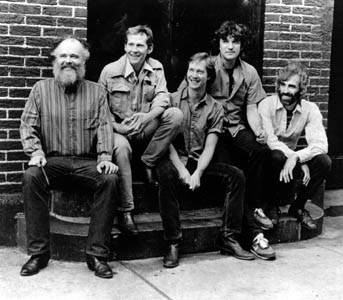
The Band was an acclaimed and influential roots rock group. The original group consisted of Rick Danko (bass guitar, double bass, fiddle, trombone, vocals), Garth Hudson (keyboard instruments, saxophones, trumpet), Richard Manuel (piano, drums, baritone saxophone, vocals), Robbie Robertson (guitar, vocals), and Levon Helm (drums, mandolin, guitar, vocals). All five members were notable musicians in their own right.

The members of the Band first came together as they joined rockabilly singer Ronnie Hawkins 's backing group, Ronnie Hawkins|The Hawks , one by one between 1958 and 1963. Upon leaving Hawkins in 1964, they were briefly known as the Levon Helm Sextet with sax player Jerry Penfound being the sixth member, then Levon and the Hawks after Penfound's departure. In 1965, they released a single on Ware Records under the name Canadian Squires , but returned as Levon and the Hawks for a recording session for Atco Records|Atco later in 1965.Gray, 33 and 37 At about the same time, Bob Dylan recruited Helm and Robertson for two concerts, then the entire group for his U.S. tour in 1965 and world tour in 1966,cite book | last = Heylin | first = Clinton | title = Behind the Shades Revisited | publisher = HarperCollins | year = 2003 | location = New York | pages = 223–260
| isbn = 0-06-052569-X
as well as the informal 1967 recordings that later became The Basement Tapes . Dylan continued to make various appearances with The Band, including a joint Bob Dylan and The Band 1974 Tour|1974 tour .

Because they were always "the band" to various frontmen, Helm said the name "The Band" worked well when the group came into its owncite book
|last = Hoskyns
|first = Barney
|authorlink =Barney Hoskyns
|title = Across the Great Divide - The Band and America
|publisher = Hyperion
|year = 1993
|isbn = 1562828363
|pages = 144–5
and left Saugerties (town), New York|Saugerties, New York , to begin recording their own material. They recorded two of the most acclaimed albums of the late 1960s: their 1968 debut Music from Big Pink (featuring the single (music)|single " The Weight ") and 1969's The Band (album)|The Band . In 2004, "The Weight" was ranked the 41st best song of all time in The 500 Greatest Songs of All Time| Rolling Stone s 500 Greatest Songs of All Time list.cite web|url= http://www.rollingstone.com/news/story/11028260/the_rs_500_greatest_songs_of_all_time/1|title=The RS 500 Greatest Songs of All Time|publisher=RollingStone.com|accessdate=2007-06-02

The Band broke up in 1976, but reformed in 1983 without founding guitar ist Robbie Robertson . They were recorded live in concert at Vancouver's Queen Elizabeth Theatre that year, assisted by four extra musicians. It was their first taped performance since The Last Waltz . That show has been released as The Band Reunion and The Band is Back in 59 and 87 minute versions.

Although the Band was always more popular with music journalists and fellow musicians than with the general public, they have remained an admired and influential group. The group was inducted into the Canadian Music Hall of Fame in 1989cite web | url= http://www.junoawards.ca/vhof/index.php
| title=Canadian Music Hall of Fame: Past Inductees | publisher=Canadian Academy of Recording Arts And Sciences (CARAS) | accessdate=2008-12-28
and the Rock and Roll Hall of Fame in 1994.cite web | url= http://www.rockhall.com/inductees/inductee-list/ | title=Inductee List | publisher=Rock and Roll Hall of Fame | accessdate=2008-12-28 In 2004, Rolling Stone ranked them #50 on their list of the 100 Greatest Artists of All Time,cite web| last=Williams | first=Lucinda | authorlink=Lucinda Williams | title=The Immortals - The Greatest Artists of All Time: 50) The Band | work=Issue 946 | publisher=Rolling Stone | date=April 15, 2004 | url= http://www.rollingstone.com/news/story/5939240/the_immortals__the_greatest_artists_of_all_time_50_the_band | accessdate=2008-12-28 and in 2008, they received the Grammy Awards|Grammy 's Lifetime Achievement Award.cite web | url= http://www.grammy.com/Recording_Academy/Awards/Lifetime_Awards/ | title=Lifetime Achievement Award | publisher=Grammy.com | accessdate=2008-12-28

Overview


The Band's music fused many elements: primarily old country music and early rock and roll , though the rhythm section often was reminiscent of Stax Records|Stax or Motown , and Robertson cites Curtis Mayfield and the Staple Singers as major influences, resulting in a wikt:synthesis|synthesis of many musical genre s. As to the group's songwriting, very few of their early compositions were based on conventional blues and doo-wop chord progression|chord change s.

Every member was a multi-instrumentalist. There was little instrument-switching when they played live, but when recording, the musicians could make up different configurations in service of the songs. Hudson in particular was able to coax a wide range of timbre s from his Lowrey organ ; on the choruses of " Tears of Rage ", for example, it sounds like a mellotron . Helm's drumming was often praised: critic Jon Carroll declared that Helm was "the only drummer who can make you cry," while prolific session drummer Jim Keltner admits to appropriating several of Helm's techniques.Hoskyns, 189

Singers Manuel, Danko, and Helm each brought a distinctive voice to the Band: Helm's Southern American English|southern voice had more than a hint of country music|country , Danko sang in a tenor, and Manuel alternated between falsetto and baritone. The singers regularly blended in harmonies. Though the singing was more or less evenly shared among the three men, both Danko and Helm have stated that they saw Manuel as the Band's "lead" singer.

Robertson was the group's chief songwriter, but he sang lead vocals on only three studio songs released by the Band ("To Kingdom Come", "Knockin' Lost John" and "Out Of The Blue"). This role, and Robertson's resulting claim to the copyright of most of the compositions, would later become a point of much antagonism, especially that directed towards Robertson by Helm, who, in his autobiography '' This Wheel's on Fire – Levon Helm and the Story of The Band '', disputes the validity of Robertson's place as chief songwriter, as the Band's songs were often honed and recorded through collaboration between all members. Robertson for his part angrily denied that Helm had written any of the songs attributed to Robertson http://theband.hiof.no/articles/bs_lw_ct_040702.html Chicago Tribune , Apr. 7, 2002 and his daughter later pointed out in a letter to the Los Angeles Times that Levon Helm's solo work consists almost entirely of songs written by others. http://theband.hiof.no/articles/bs_lw_ct_040702.html "Letters", Los Angeles Times , Feb. 17, 2008 Strains appeared in the 1980s, when the bulk of songwriting royalties were going to Robertson alone while the others had to rely on income from touring. This had not arisen as an issue in the late sixties and early seventies, when a number of Band songs, mostly credited to Robertson alone, were covered successfully by other artists - such as Smith (band)|Smith's version of " The Weight " for the Easy Rider (soundtrack)| Easy Rider soundtrack LP and Joan Baez 's cover of " The Night They Drove Old Dixie Down " in 1971.

Producer John Simon (record producer)|John Simon is citedcite book|url= http://books.google.com/books? id=fEA7MuMoLqcC& pg=PA239& lpg=PA239& dq=john+simon+sixth+member+of+the+band& source=bl& ots=3VXZ14r89e& sig=POwIWC_ghHeqcLMJmvPK6bA73Io& hl=en& ei=oXeRStv5NYSasgO9_6UM& sa=X& oi=book_result& ct=result& resnum=7#v=onepage& q=& f=false |title=Barney Hoskyns - '& #39;Across the Great Divide: The Band and America'& #39; |publisher=Books.google.com |date= |accessdate=2011-10-18 as a "sixth member" of the Band for producing and playing on Music from Big Pink , co-producing and playing on The Band (album)|The Band , and playing on other songs up through the Band's 1993 reunion album Jericho (album)|Jericho .

History


Early years: The Hawks


The members of The Band gradually came together as a part of Toronto -based, rockabilly singer Ronnie Hawkins 's backing group, the Hawks: Helm, an original Hawk who journeyed with Hawkins from Arkansas to Ontario, then Robertson, Danko, Manuel and finally, Hudson. Hawkins's act was popular in and around Toronto and he had an effective way of eliminating his musical competition: When a promising band appeared, Hawkins would often hire their best musicians for his own group;Citation needed|date=April 2009 Robertson, Danko, and Manuel came under Hawkins' tutelage this way.

While most of the Hawks were eager to join Hawkins's group, getting Hudson to join was a different story. He'd earned a college degree, planned on a career as a music teacher and was interested in playing rock music only as a hobby. The Hawks were in awe of his wild, full-bore organ sound and often begged him to join. Hudson finally relented, so long as the Hawks each paid him $10 per week to be their instructor; all music theory questions were directed to Hudson. While pocketing a little extra cash, Hudson was also able to mollify his family's fears that his education had gone to waste. The piano-organ combination was uncommon in rock music, and for all his aggressive playing, Hudson also brought a level of musical sophistication.

Blockquote|There is a view that jazz is 'evil' because it comes from evil people, but actually the greatest priests on 52nd Street, and on the streets of New York City were the musicians. They were doing the greatest healing work. And they knew how to punch through music which would cure and make people feel good.|Garth Hudson| The Last Waltz
With Hawkins, they recorded a few singles in this period and became well known as the best rock group in the thriving Toronto music scene.Citation needed|date=April 2009 Hawkins regularly convened all-night rehearsals following long club shows, with the result that the young musicians quickly developed great technical prowess on their instruments.

By 1964, the group had split from Hawkins over personal differences. They were tiring of playing the same songs so often and wanted to perform original material, and they were weary of Hawkins's somewhat dictatorial leadership. He would fine the Hawks if they brought their girlfriends to the clubs, fearing it might reduce the numbers of available girls who came to performances, or if they smoked marijuana. Alcohol and pills were acceptable but Canada then had stiff penalties against marijuana possession.

Robertson later said, "Eventually, Hawkins built us up to the point where we outgrew his music and had to leave. He shot himself in the foot, really, bless his heart, by sharpening us into such a crackerjack band that we had to go on out into the world, because we knew what his vision was for himself, and we were all younger and more ambitious musically."cite web|url= http://theband.hiof.no/articles/back_to_the_land.html |title=Andy Gill: Back To The Land |publisher=Theband.hiof.no |date= |accessdate=2009-01-21

They recorded two singles and toured frequently, usually billed as Levon and the Hawks, but found little success, partly because without Hawkins, they lacked a magnetic frontman.

In 1963, Levon Helm met the groupie Cathy Smith , with whom he and other members of the Band would have a long association.cite web| title = Book: "This Wheel's on Fire".| url= http://theband.hiof.no/books/this_wheels_on_fire.html| accessdate = 2007-01-30

In 1965, Helm and the band met blues singer and harmonica player Sonny Boy Williamson II|Sonny Boy Williamson . They wanted to record with him, offering to become his backing band, but Williamson died not long after their meeting.

With Bob Dylan


In late summer 1965, Bob Dylan was looking for a backup band for his first U.S. "electric" tour. Levon and the Hawks were recommended by blues singer John P. Hammond|John Hammond , who earlier that year had used Helm, Hudson and Robertson on his Vanguard Records|Vanguard album So Many Roads .Heylin, 173-174Gray, 292-293 Around the same time, one of their friends from Toronto was working as secretary to Dylan's manager Albert Grossman . Mary Martin, told Dylan to visit the group at the Yonge Street club called the Le Coq d'Or Tavern – though Robbie Robertson recollects it was the Friar's Tavern, just down the street.cite web|last=MacDonald|first=Bruce|title=Part 2 (1960-1965): Clip 6|url= http://watch.bravo.ca/yonge-street/yonge-street-toronto-rock--roll-stories/yonge-street---toronto-rock--roll-stories-part-2/#clip436570|work=Yonge Street: Toronto Rock & Roll Stories|publisher=Bravo Canada|accessdate=2011-05-14|location=Toronto|format=Video Her advice to Dylan: "You gotta see these guys."Hoskyns, 85-86

After hearing the band play and meeting with Robertson, Dylan invited Helm and Robertson to join his backing band. After two concerts backing Dylan, Helm and Robertson told Dylan of their loyalty to their bandmates, and told him that they would only continue with him if he hired all of the Hawks. Dylan accepted and invited Levon and the Hawks to tour with him. The group was receptive to the offer, knowing it could give them the wider exposure they craved, but they simultaneously feared that their music was too different from his. They thought of themselves as a tightly rehearsed rock and rhythm and blues group and knew Dylan mostly from his early acoustic folk and protest music. Furthermore, they had little inkling of how internationally popular Dylan had become.Hoskyns, 94-97

With Dylan, they played a tumultuous series of concerts from September 1965 through May 1966, marking Dylan's final transition from folkie to rocker. The tours, among the most storied in rock history, were also marked by Dylan's reportedly copious use of methamphetamines. Some, though not all, of the Hawks joined in the excesses.Hoskyns, 104 Most of the concerts were also met with the heckling of folk music purists. Helm was so affected by the negative reception that he left the tour within three months and sat out the rest of that year's concerts, as well as the world tour in 1966.Gray, 33 Helm spent much of this period working on an oil rig in the Gulf of Mexico.

During and between tours, Dylan and the Hawks attempted several recording sessions, but with less than satisfying results. Sessions in October and November yielded just one usable single ("Can You Please Crawl Out Your Window"), and two days of recording in January 1966 for what was intended to be Dylan's next album, Blonde on Blonde , were equally unsuccessful.cite book | last = Heylin | first = Clinton | title = Bob Dylan: Behind the Shades Revisited | publisher = HarperCollins Publishers, Inc. | year = 2003 | location = New York, NY | pages = 237–243 | isbn = 0-06-052569-X However, by the time the album's sessions were switched from Columbia's New York studios to Nashville, Robertson had replaced Mike Bloomfield as Dylan's primary guitarist. The other members of the Hawks were not invited to Nashville, though Blonde on Blonde s credits also list Danko on bass and Hudson on keyboards and sax.cite book | last = Sounes | first = Howard | author-link = Howard Sounes | title = Down the Highway: The Life of Bob Dylan | publisher = Grove Press | year = 2001 | location = New York | pages = 200–207 | isbn = 0-0821-1686-8

With Mickey Jones on drums (replacing Sandy Konikoff, who had taken over when Levon Helm departed), Dylan and the Hawks appeared at Free Trade Hall in Manchester , England , in May 1966. The gig became legendary when, near the end of Dylan's electric set, an audience member shouted " Judas Iscariot|Judas !". After a pause, Dylan replied, "I don't believe you. You're a liar!" He then turned to the Hawks and said "Play it fucking loud!" With that, they launched into an acidic version of " Like a Rolling Stone ".Sounes, 213-215

The Manchester performance was widely Bootleg recording|bootleg ged (and mistakenly placed at the Royal Albert Hall ). The recording of this gig became one of the most famous of Dylan's career, often inspiring a rapturous response in those who heard it. A 1971 review from Creem stated "My response is that crystallization of everything that is rock'n'roll music, at its finest, was to allow my jaw to drop, my body to move, to leap out of the chair ... It is an experience that one desires simply to share, to play over and over again for those he knows thirst for such pleasure. If I speak in an almost worshipful sense about this music, it is not because I have lost perspective, it is precisely because I have found it, within music, yes, that was made five years ago. But it is there and unignorable."cite web|url= http://theband.hiof.no/articles/creem_3_71.html |title=Review of Dylan/Hawks, 1966 |publisher=Theband.hiof.no |date=1971-06-03 |accessdate=2009-01-21 When it finally saw The Bootleg Series Vol. 4: Bob Dylan Live 1966, The "Royal Albert Hall" Concert|official release in 1998, critic Richie Unterberger declared the record "an important document of rock history."cite web|last=Unterberger |first=Richie |url=Allmusic|class=album|id=r377686|pure_url=yes |title=((( The Bootleg Series, Vol. 4: The "Royal Albert Hall" Concert > Overview ))) |publisher=allmusic |date=1966-05-17 |accessdate=2009-01-21

On July 29, 1966, while on a break from touring, Dylan was injured in a motorcycle accident, and retired into semi-seclusion in Woodstock (town), New York|Woodstock , New York .Sounes, 216-218 For a while, the Hawks returned to the bar and roadhouse touring circuit, sometimes backing other singers (including a brief stint with Tiny Tim (musician)|Tiny Tim ). Dylan invited the Hawks to join him in Woodstock, where they recorded a much-bootlegged and influential series of demos, subsequently released on LP as The Basement Tapes .

Music from Big Pink and The Band


Reunited with Helm, the Hawks began writing their own songs in a rented large pink house, which they affectionately named "Big Pink", in West Saugerties, New York|West Saugerties (near Woodstock). When they went into the recording studio, they still did not have a name for themselves. Stories vary as to the manner in which they ultimately adopted the name "The Band." In The Last Waltz, Manuel claimed that they wanted to call themselves either "The Honky|Honkies " or "The White cracker|Crackers ", but these names were vetoed by their record label; Robertson suggests that during their time with Dylan everyone just referred to them as "the band" and it stuck. Initially, they disliked the moniker, but eventually grew to like it, thinking it both humble and presumptuous. Rolling Stone referred to them as "The band from Big Pink."Cite news
| title = Big Pink Band To Tour U.S.
| newspaper = Rolling Stone
| page = 9
| date = April 5, 1969
| issue = 30


Their first album, Music from Big Pink (1968) was widely acclaimed. The album included three songs written or co-written by Dylan (" This Wheel's on Fire ", " Tears of Rage ", and " I Shall Be Released ") as well as " The Weight ", the use of which in the film Easy Rider would make it probably their best known song. While a continuity certainly ran through the music, there were stylistic leanings in a number of directions. Never a specifically " psychedelic rock|psychedelic " group, the Band's first record did contain at least one song ("Chest Fever") demonstrating some similarities with that genre. In contrast to his wild guitar playing with Hawkins and Dylan, Robertson opted for a more subdued, riff-oriented approach, often mixed low down in the song.

After the success of Big Pink , the band went on tour, including a performance at the Woodstock Festival (which was not included in the famed Woodstock (film)|Woodstock film due to legal complications) and an appearance with Dylan at the UK Isle of Wight Festival 1969|Isle of Wight Festival (several songs from which were subsequently included on Dylan's Self Portrait (Bob Dylan album)|Self Portrait album). That same year, they left for Los Angeles to record their follow-up, The Band (album)|The Band (1969). From their deliberately rustic appearance on the cover, to the songs and arrangements within, the album stood in contrast to other popular music of the day. Although it should be noted that, by this point, several acts, notably Dylan on John Wesley Harding (album)|John Wesley Harding and The Byrds on Sweetheart of the Rodeo , had made similar stylistic moves. The Band featured songs that evoked oldtime rural America, from the American Civil War|civil war in " The Night They Drove Old Dixie Down " to labor union|unionization of farm workers in " King Harvest (Has Surely Come) ".

These first two records were produced by John Simon (record producer)|John Simon , who was practically a group member: he aided in orchestration|arrangements , and played occasional instruments (piano or tuba ). Simon reported that he was often asked about the distinctive horn section s featured so effectively on the first two albums: people wanted to know how they had achieved such memorable sounds. Simon stated that, besides Hudson (an accomplished saxophonist), the others had only rudimentary horn skills, and achieved their sound simply by creatively utilizing their limited technique.citation needed|date=January 2011
Rolling Stone lavished praise on the Band in this era, giving them more attention than perhaps any other group in the magazine's history;Citation needed|date=January 2011 Greil Marcus's articles in particular contributed greatly to the Band's mystique. The Band was also featured on the cover of Time (magazine)|Time s January 12, 1970 issue.cite news | title=TIME Magazine Cover: The Band - Jan. 12, 1970 - Rock - Singers - Music | url= http://www.time.com/time/covers/0,16641,19700112,00.html | publisher=Time.com | date=1970-01-12 | accessdate=2009-01-21

A critical and commercial triumph, The Band , along with works by The Byrds and The Flying Burrito Brothers , established a musical template (sometimes dubbed country rock ) that later would be taken to even greater levels of commercial success by such artists as the Eagles (band)|Eagles . Both Big Pink and The Band also influenced their musical contemporaries, with both Eric Clapton and George Harrison citing the Band as a major influence on their musical direction in the late 1960s and early 1970s. Indeed, Clapton later revealed that he had wanted to join the group.cite web | url= http://www.uncut.co.uk/music/eric_clapton/reviews/8542 | title=Eric Clapton - Derek and The Dominos - Layla & Other Assorted... - Review - Uncut.co.uk | publisher=Uncut.co.uk | date= | accessdate=2009-01-21

Stage Fright , Cahoots , and Northern Lights - Southern Cross


Following their second album, the Band embarked on their first tour as a headlining act. The resulting anxiety from fame and its hang-ups was especially evidenced by the group as its songs turned to darker themes of fear and alienation: the influence on their next work is self-explanatory. Stage Fright (album)|Stage Fright (1970) was engineered by musician/engineer/producer Todd Rundgren and recorded on a theatre stage in Woodstock, New York, but the fraying of the group's once-fabled unity was beginning to show. As was the case with their previous, self-titled record, Robertson contributed the majority of the songwriting. However, the trademark vocal style of the Band's three lead singers was much less prominent on this work.
After recording Stage Fright , the Band was among the acts participating in the Festival Express , an all-star rock concert tour of Canada by train that also included Janis Joplin and the Grateful Dead . In the concert documentary film, released in 2003, Danko can be seen intoxicated participating in a drunken jam session with Jerry Garcia , Bob Weir and Joplin while singing "Ain't No More Cane."

At about this time, Robertson began exerting greater control over the Band. This has become a point of antipathy, especially between Helm and Robertson. Helm charges Robertson with authoritarianism and greed, while Robertson suggests his increased efforts in guiding the group were due largely to some of the other members being unreliable. In particular, Robertson insists he did his best to coax Manuel into writing or co-writing more songs, only to see Manuel's talents overtaken by addiction.
Despite mounting problems between the musicians, the Band forged ahead with their next album, Cahoots (album)|Cahoots (1971). Cahoots included tunes such as Bob Dylan 's "When I Paint My Masterpiece," "4% Pantomime" (with Van Morrison ), and "Life Is A Carnival," the last featuring a horn arrangement from Allen Toussaint . Toussaint's contribution was a critical addition to the Band's next project.

One of their most notable later albums is the live recording Rock of Ages (album)|Rock of Ages (1972), recorded at a 1971/1972 New Year's Eve concert and featuring the line-up, bolstered by the addition of a horn section , in exuberant form. The horn arrangements were written by Allen Toussaint. Bob Dylan appeared on stage for the concert's final four songs, including a version of the rare song "When I Paint My Masterpiece".

In 1973, the Band released Moondog Matinee , an album of cover songs. There was no tour in support of the album, which garnered mixed reviews. However, they did open for the Grateful Dead for two summer shows at Roosevelt Stadium in Jersey City , New Jersey . They also played at the legendary Summer Jam at Watkins Glen . This massive concert took place at the Grand Prix Raceway outside Watkins Glen, New York on July 28, 1973. The festival, which was attended by over 600,000 music fans, also featured the Grateful Dead and The Allman Brothers Band .

Next, the Band reunited with Dylan, first in recording Dylan's album Planet Waves , released in January 1974, and then for the Bob Dylan and The Band 1974 Tour , which played 40 shows in North America during January and February 1974. Later that year, the live album Before the Flood was released, documenting the tour.

In 1975, now relocated to California and having built their own studio, Shangri-La, The Band released Northern Lights - Southern Cross , their first album of all-new material since 1971's Cahoots (album)|Cahoots . All eight songs were written exclusively by Robertson. Despite poor record sales (due to the elongated period of inactivity by the band) the album is favored by critics and fans alike. Levon Helm regards this album highly in his book, '' This Wheel's on Fire : "It was the best album we had done since The Band''." Highlights from the album included the Helm sung New Orleans sounding "Ophelia" and Rick Danko's emotionally driven vocal on "It Makes no Difference," both of which were performed live in The Last Waltz . Another notable song from the album was the epic story " Acadian Driftwood " which was also performed at the Last Waltz, but not included in the movie. The album also produced more experimentation from Hudson switching to synthesizers, heavily showcased on "Jupiter Hollow."

The Last Waltz


Main|The Last Waltz
By 1976, Robbie Robertson was weary of touring. After having to cancel some tour dates due to Richard Manuel suffering a severe neck injury in a boating accident in Texas, Robertson urged the Band to retire from touring, and conceived of a massive Thanksgiving (United States)|Thanksgiving Day concert on November 25, 1976 at the Winterland Ballroom in San Francisco , California . David Fricke|Fricke, David , November 2001. The Last Waltz liner notes, 2002 CD re-issue, p. 17. The concert featured a horn section with arrangements by Allen Toussaint and a stellar list of guests, including other Canadian acts Joni Mitchell and Neil Young . Two of the guests were fundamental to The Band's existence and growth: Ronnie Hawkins and Bob Dylan . Other guests they admired (and in most cases had worked with before) included Muddy Waters , Dr. John , Van Morrison , Ringo Starr , Eric Clapton , Ronnie Wood , Paul Butterfield , and Neil Diamond .

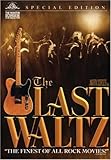
The concert was directed and filmed by Martin Scorsese . Concert footage and interviews with the band members and friends were combined with soundstage performances with country singer Emmylou Harris ("Evangeline") and gospel-soul group The Staple Singers ("The Weight"). The resulting concert film - documentary film|documentary was released in 1978, as was a triple-LP soundtrack.

Post-Waltz


Because of contractual obligations, The Band released one more album after recording the Last Waltz, although it was released before the Last Waltz film and soundtrack. 1977's Islands (The Band album)|Islands was the last with The Band's classic lineup. It contained a mix of originals and covers.

Reformation


In 1983, the Band reformed and recommenced touring, though without Robertson. Several different musicians were recruited to replace Robertson and to fill out the group. The reunited Band was generally well-received, but found themselves playing in smaller venues than during the peak of their popularity.

While the reunited Band was touring, on March 4, 1986, Manuel committed suicide in his Florida motel room. It was revealed later that he had suffered for many years from chronic alcoholism. According to Levon Helm's autobiography, in the later stages of his illness, Manuel was consuming eight bottles of Grand Marnier per day.

Helm, Danko and Hudson played in the 1989 version of Ringo Starr & His All-Starr Band performing The Weight and Up On Cripple Creek .

The band participated in former Pink Floyd member Roger Waters ' The Wall Live in Berlin concert in 1990, and in The 30th Anniversary Concert Celebration|Bob Dylan's 30th anniversary concert celebration in New York City in October 1992. The group was the opening band for the final Grateful Dead shows at Soldier Field , in Chicago , Illinois in July 1995.

Richard Manuel's position as pianist was filled first by old friend Stan Szelest (who died not long after), then by Richard Bell (Canadian musician)|Richard Bell . (Bell played with Ronnie Hawkins after the departure of the original Hawks, and was best known from his days as a member of Janis Joplin's Full Tilt Boogie Band .) The reformed group recorded Jericho (album)|Jericho in 1993 with much of the songwriting being handled outside the group. Two more post-reunion efforts followed, High on the Hog (The Band album)|High on the Hog and Jubilation (The Band album)|Jubilation , the latter including guest appearances from Eric Clapton and John Hiatt .

The Juno Awards of 1989 hosted a special reunion of several band members when The Band was inducted into the Canadian Music Hall of Fame . This was also the year that Robbie Robertson won three awards for his self titled album. With Canadian country rock superstars Blue Rodeo as a back-up band, Music Express called the 1989 Juno appearance with Robbie Robertson, Rick Danko , and Garth Hudson a symbolic "passing of the torch" from The Band to Blue Rodeo .

In 1994 Robertson appeared with Danko and Hudson as The Band for the second time since the original group broke up. The occasion was the induction of The Band into the Rock and Roll Hall of Fame . Helm, who has feuded with Robertson for years over accusations of stolen songwriting credits, did not attend.cite web|url= http://www.rockhall.com/inductee/the-band |title=Induction into Rock HoF |publisher=Rockhall.com |date= |accessdate=2011-10-18

On December 10, 1999, another member was lost when Rick Danko died in his sleep at the age of 55. Following his death, The Band broke up for good.

Post-reformation


Robertson bought all other former members' financial interests in the group in 2002, with the exception of Helm,cite news| url= http://www.sfgate.com/cgi-bin/article.cgi? f=/c/a/2002/04/04/DD64672.DTL& type=music& ao=2 | work=The San Francisco Chronicle | first=Joel | last=Selvin | title=The day the music lived / Rereleased 'Last Waltz' documents amazing night in 1976 when rock's royalty bid farewell to the Band – Page 2 of 2 | date=2011-01-08 giving him major control of the presentation of the group's material, including latter-day compilations.citation needed|date=September 2011
Richard Bell (Canadian musician)|Richard Bell , The Band's late-period keyboardist, passed away due to multiple myeloma in June 2007.

The Band received a Lifetime Achievement Grammy Award on February 9, 2008 but there was no reunion of all three living members. In honor of the event, Helm held a Levon Helm#The_Midnight_Ramble|Midnight Ramble in Woodstock, NY. http://www2.grammy.com/Recording_Academy/Awards/Lifetime_Awards/

At Helm's encouragement, Capitol re-issued the first three The Band albums as a box set called "Three of a Kind" in 2011.cite web|url= http://www.levonhelm.com/articles/three%20of%20a%20kind.htm|title=Classic albums by The Band released as "Three of a Kind"|publisher=LevonHelm.com|accessdate=December 12, 2011

Members' other endeavors


All of The Band's members remained active in music to one degree or another.

Robertson became a music producer and wrote movie soundtracks (including acting as music supervisor for several of Scorsese's films) before a highly praised comeback with a Daniel Lanois produced, eponymous solo album in 1987. He released a second solo album, Storyville , in 1991 and another album in 2010. He also released a newly remixed version of the already heavily overdubbed The Last Waltz.

Helm received many plaudits for his acting debut in '' Coal Miner's Daughter '', a biographical film about Loretta Lynn , and for his narration and small supporting role opposite Sam Shepard in 1983's The Right Stuff (film)|The Right Stuff . He has appeared in small roles in a number of other films.

In the late 70s and 80s, Helm released several solo albums and toured with a band called Levon Helm and the RCO Allstars. In 2007 Helm released a new album, a homage to his southern roots called Dirt Farmer , which was awarded a Grammy Award for Best Traditional Folk Album on February 9, 2008. Electric Dirt followed in 2009 and won the inaugural Grammy Award for Best Americana Album . His 2011 live album Ramble at the Ryman was nominated in the same category.cite web|url= http://www.grammy.com/nominees? year=2011& genre=59|title=Best Americana Album|publisher=Grammy.com|accessdate=December 9, 2011 Helm regularly performs Levon Helm#The_Midnight_Ramble|Midnight Ramble concerts at his home and studio in Woodstock, New York , and tours.cite web | author = Dawn LoBue | year = 2006 | url = http://levonhelm.com/biography.htm | title = Levon Helm Biography | publisher = LevonHelm.com | accessdate = December 12, 2011

In 1984, Rick Danko joined members of the Byrds , the Flying Burrito Brothers and others in the huge touring company that made up "The Byrds Twenty-Year Celebration." Several members of the band performed solo songs to start the show including Danko who performed "Mystery Train". Danko also released a number of solo albums.

Hudson played keyboards on the first three albums by The Call (band)|The Call . Hudson has released two acclaimed solo CDs, The Sea To The North in 2001, and LIVE at the WOLF in 2005, both featuring his wife, Maud, on vocals. He has also kept busy as an in-demand studio musician. He is featured extensively on recordings of Country/Indie star Neko Case. Hudson contributed an original electronic score to an Off-Broadway production of Dragon Slayers, written by Stanley Keyes and directed by Brad Mays in 1986 at the Union Square Theatre in New York, which was re-staged with a new cast in Los Angeles in 1990. In 2010, Hudson released Garth Hudson Presents: A Canadian Celebration of The Band featuring Canadian artists covering songs that were recorded by The Band. Participants included Neil Young, Bruce Cockburn, Blue Rodeo, Cowboy Junkies, The Trews, Great Big Sea, Hawksley Workman, Mary Margaret O'Hara, Chantal Kreviazuk, Raine Maida, Ian Thornley, The Sadies, Suzie McNeil, Kevin Hearn, Danny Brooks, Peter Katz and The Road Hammers.

Influence


The Band has influenced numerous bands, songwriters, and performers, from the Grateful Dead and The Beatles to Eric Clapton , Crosby, Stills, Nash & Young ,Gray, 36-37 Led Zeppelin , Mick Wall (2008), When Giants Walked the Earth: A Biography Of Led Zeppelin , London: Orion, p. 181 and Elvis Costello .Hoskyns, 169

The album Music from Big Pink , in particular, is credited with contributing to Clapton's decision to leave the Supergroup (music)|super group Cream (band)|Cream . In his introduction of The Band during the Bob Dylan 30th Anniversary Concert, Clapton announced that in 1968 he'd heard the album, "and it changed my life", he said.cite web|url= http://theband.hiof.no/articles/levons_next_waltz_rs.html |title=Scott Spencer: Levon's Next Waltz |publisher=Theband.hiof.no |date= |accessdate=2011-07-06 Guitarist Richard Thompson (musician)|Richard Thompson has openly acknowledged the album's influence on Fairport Convention 's Liege and Lief , and journalist John Harris has suggested that The Band's debut also influenced the spirit of The Beatles' back-to-basics album Let It Be as well as The Rolling Stones' string of roots-infused albums that began with Beggars Banquet .cite news | last = Harris | first = John | title = There was a manic feeling in the air | publisher = The Guardian | date = 2007-08-03 | url = http://www.guardian.co.uk/music/2007/aug/03/folk | accessdate = 2008-12-28 | location=London Meanwhile, the Big Pink song " The Weight " has been covered numerous times, and in various musical styles.

In the nineties, a new generation of bands influenced by The Band began to gain popularity, including Counting Crows and The Black Crowes . Counting Crows indicated this influence with their tribute to the late Richard Manuel , " If I Could Give All My Love (Richard Manuel Is Dead) " from their album Hard Candy (Counting Crows album)|Hard Candy . The Black Crowes frequently cover Band songs during live performances, such as "The Night They Drove Ol' Dixie Down", which appears on their DVD '' Freak 'n' Roll into the Fog ''.cite web|url= http://www.imdb.com/title/tt0496245/soundtrack |title=Soundtracks for The Black Crowes: Freak 'N' Roll... Into the Fog |accessdate=2009-12-06 |work=The Internet Movie Database They have also recorded at Helm's studio in Woodstock.

Chicago's Umphrey's McGee has covered both "Ophelia" and " Baby Don't You Do It|Don't Do It ". Both were covered for the first time at their New Year's Eve concert from 2004, Wrapped Around Chicago . "Ophelia" appears on that release. They have also covered "The Weight" twice with Huey Lewis on vocals.

Southern-based " jam band " Widespread Panic has covered "Ophelia" consistently from 1987 to 2007, and in 2006 they began covering " Chest Fever " as well.

In 2004 southern rock -revivalists Drive-By Truckers released the track "Danko/Manuel" on the album The Dirty South (album)|The Dirty South .

The inspiration for the classic rock-influenced band The Hold Steady came while members Craig Finn and Tad Kubler were watching The Last Waltz .cite web | url= http://dailycollegian.com/2007/01/24/hold-steady-returns-hope-to-rocknroll/ | last=Master | first=Dave | title=Hold Steady returns hope to rock'n'roll: Daily Collegian exclusive interview with Craig Finn | publisher=The Daily Collegian Rick Danko and Robbie Robertson are namechecked in the lyrics of "The Swish" from The Hold Steady's 2004 debut album Almost Killed Me .cite web | url= http://www.cloakanddaggermedia.com/features/craig_finn/features2.html | title=Feature: Craig Finn | publisher=Cloak & Dagger Media

In January 2007, a tribute album , entitled Endless Highway: The Music of The Band , was released which included contributions by My Morning Jacket , Death Cab for Cutie , Gomez (band)|Gomez , Guster , Bruce Hornsby , Jack Johnson (musician)|Jack Johnson and Animal Liberation Orchestra|ALO , Leanne Womack , The Allman Brothers Band , Blues Traveler , Jakob Dylan , and Rosanne Cash , amongst others.

In June, 2010, jam band Phish covered "Look out Cleveland" to open a show at Blossom Music Center outside of Cleveland, OH.

The 2010 Dukes of September Rhythm Revue tour ( Donald Fagen , Boz Scaggs and Michael McDonald (singer)|Michael McDonald ) features a mini-tribute to The Band including Caldonia Mission (Fagen), Rag Mama Rag (Scaggs) and The Shape I'm In (McDonald) in the middle of the set.

Discography


Main|The Band discography

Studio albums


Multicol
  • Music from Big Pink (1968)

  • The Band (album)|The Band (1969)

  • Stage Fright (album)|Stage Fright (1970)

  • Cahoots (album)|Cahoots (1971)

  • Moondog Matinee (1973)

  • Northern Lights – Southern Cross (1975)

  • Islands (The Band album)|Islands (1977)

  • Jericho (album)|Jericho (1993)

  • High on the Hog (The Band album)|High on the Hog (1996)

  • Jubilation (The Band album)|Jubilation (1998)

  • Multicol-break;with Bob Dylan
  • Planet Waves (1974)

  • The Basement Tapes (1975)

  • Multicol-end

    Live albums


    Multicol
  • Rock of Ages (album)|Rock of Ages (1972)

  • The Last Waltz (1978)

  • Live at Watkins Glen (1995)

  • Multicol-break;with Bob Dylan
  • Before the Flood (1974)

  • The Bootleg Series Vol. 4: Bob Dylan Live 1966, The "Royal Albert Hall" Concert (1998)

  • Multicol-end

    Personnel


    Timeline


    ImageSize = width:800 height:330
    PlotArea = left:100 bottom:60 top:5 right:100
    Alignbars = justify
    DateFormat = mm/dd/yyyy
    Period = from:01/01/1957 till:12/10/1999
    TimeAxis = orientation:hor format:yyyy
    Legend = orientation:vertical position:right
    ScaleMajor = increment:2 start:01/01/1957

    Colors =
    id:drumspre value:lavender
    id:guitarpre value:drabgreen
    id:basspre value:gray(0.70)
    id:keyboardspre value:coral
    id:pianopre value:skyblue
    id:Bass value:gray(0.40) legend:Bass
    id:Drums value:purple legend:Drums
    id:Keyboards value:red legend:Keyboards
    id:Piano value:brightblue legend:Piano
    id:Guitar value:teal legend:Guitar
    id:Collaborator value:black legend:Collaborator
    id:studio value:pink legend:Studio_album
    id:live value:dullyellow legend:Live_album

    BarData =
    bar:Danko text:"Rick Danko"
    bar:Helm text:"Levon Helm"
    bar:Hudson text:"Garth Hudson"
    bar:Manuel text:"Richard Manuel"
    bar:Robertson text:"Robbie Robertson"
    bar:Weider text:"Jim Weider"
    bar:Carter text:"Fred Carter, Jr."
    bar:Szelest text:"Stan Szelest"
    bar:Ciarlante text:"Randy Ciarlante"
    bar:Bell text:"Richard Bell"
    bar:Dylan text:"Bob Dylan"

    PlotData=
    width:10 textcolor:black align:left anchor:from shift:(10,-4)
    bar:Danko from:05/01/1960 till:09/01/1961 color:guitarpre
    bar:Danko from:09/01/1961 till:12/12/1963 color:basspre
    bar:Danko from:01/01/1964 till:11/25/1976 color:Bass
    bar:Danko from:06/25/1983 till:end color:Bass
    bar:Helm from:07/01/1957 till:12/12/1963 color:drumspre
    bar:Helm from:01/01/1964 till:05/01/1966 color:Drums
    bar:Helm from:10/01/1967 till:11/25/1976 color:Drums
    bar:Helm from:06/25/1983 till:end color:Drums
    bar:Hudson from:12/25/1961 till:12/12/1963 color:keyboardspre
    bar:Hudson from:01/01/1964 till:11/25/1976 color:Keyboards
    bar:Hudson from:06/25/1983 till:end color:Keyboards
    bar:Manuel from:07/01/1961 till:12/12/1963 color:pianopre
    bar:Manuel from:01/01/1964 till:11/25/1976 color:Piano
    bar:Manuel from:06/25/1983 till:03/04/1986 color:Piano
    bar:Robertson from:08/01/1959 till:12/12/1960 color:basspre
    bar:Robertson from:01/01/1961 till:12/12/1963 color:guitarpre
    bar:Robertson from:01/01/1964 till:11/25/1976 color:Guitar
    bar:Carter from:01/01/1959 till:12/12/1960 color:guitarpre
    bar:Carter from:01/01/1986 till:12/12/1989 color:Guitar
    bar:Szelest from:01/01/1960 till:01/01/1961 color:pianopre
    bar:Szelest from:01/01/1990 till:01/20/1991 color:Piano
    bar:Weider from:07/01/1985 till:end color:Guitar
    bar:Ciarlante from:10/01/1990 till:end color:Drums
    bar:Bell from:01/01/1992 till:end color:Piano
    bar:Dylan from:08/28/1965 till:02/14/1974 color: Collaborator

    LineData =
    at:01/01/1964 color:black layer:back width:0.1
    at:07/01/1968 color:pink layer:back width:2
    at:09/22/1969
    at:08/17/1970
    at:09/15/1971
    at:10/15/1973
    at:01/17/1974
    at:06/26/1975
    at:11/01/1975
    at:03/15/1977
    at:11/02/1993
    at:02/27/1996
    at:10/13/1998 color:dullyellow layer:back width:4.8
    at:09/15/1998 color:pink layer:back width:2
    at:08/15/1972 color:dullyellow layer:back width:2
    at:06/20/1974
    at:04/07/1978
    at:04/04/1995
    at:end color:black layer:back width:0.1
    points:(101,025)(101,030) color:brightblue width:1
    points:(198,025)(198,030) color:brightblue width:1
    points:(252,025)(252,030) color:brightblue width:1
    points:(378,025)(378,030) color:brightblue width:1
    points:(470,025)(470,030) color:brightblue width:1
    points:(700,025)(700,030) color:brightblue width:1

    TextData =
    pos:(106,025) textcolor:brightblue fontsize:7 text: w/ Hawkins' Hawks
    pos:(205,025) textcolor:brightblue fontsize:7 text: pre-Band
    pos:(273,025) textcolor:brightblue fontsize:7 text: original incarnation
    pos:(405,025) textcolor:brightblue fontsize:7 text: defunct
    pos:(558,025) textcolor:brightblue fontsize:7 text: reformed


    Lineups


    1967–1976
  • Robbie Robertson & nbsp;– guitar, vocals, autoharp, melodica
  • Rick Danko & nbsp;– bass, vocals, double bass, fiddle, trombone, guitar
  • Levon Helm & nbsp;– drums, vocals, mandolin, guitar, bass, double bass
  • Richard Manuel & nbsp;– piano, vocals, drums, organ, marimba, lap slide guitar
  • Garth Hudson & nbsp;– keyboards, saxophone, accordion, pedalboard, woodwinds, brass
  • 1976–1983Band Split
    1983–1985
  • Rick Danko& nbsp;– bass, vocals, guitar
  • Levon Helm& nbsp;– drums, vocals
  • Richard Manuel& nbsp;– piano, vocals
  • Garth Hudson& nbsp;– keyboards, saxophone, accordion
  • with
  • Cate Brothers|Earl Cate & nbsp;– guitar
  • Cate Brothers|Earnie Cate & nbsp;– keyboards
  • Ron Eoff& nbsp;– bass
  • Terry Cagle& nbsp;– drums
  • 1985–1986
  • Jim Weider & nbsp;– guitar
  • Rick Danko& nbsp;– bass, vocals
  • Levon Helm& nbsp;– drums, vocals
  • Richard Manuel& nbsp;– piano, vocals
  • Garth Hudson& nbsp;– keyboards, saxophone, accordion
  • Blondie Chaplin;- guitar, vocals
  • 1986–1989
  • Jim Weider& nbsp;– guitar
  • Fred Carter, Jr. & nbsp;– guitar
  • Rick Danko& nbsp;– bass, vocals
  • Levon Helm& nbsp;– drums, vocals
  • Garth Hudson& nbsp;– keyboards, saxophone, accordion
  • 1989–1990
  • Jim Weider& nbsp;– guitar
  • Rick Danko& nbsp;– bass, vocals
  • Levon Helm& nbsp;– drums, vocals
  • Garth Hudson& nbsp;– keyboards, saxophone, accordion
  • Stan Szelest & nbsp;– keyboards
  • 1990–1991
  • Jim Weider& nbsp;– guitar
  • Rick Danko& nbsp;– bass, vocals
  • Randy Ciarlante & nbsp;– bass, drums, vocals
  • Levon Helm& nbsp;– drums, vocals
  • Garth Hudson& nbsp;– keyboards, saxophone, accordion
  • Stan Szelest& nbsp;– keyboards
  • 1991–1992
  • Jim Weider& nbsp;– guitar
  • Rick Danko& nbsp;– bass, vocals
  • Randy Ciarlante& nbsp;– bass, drums, vocals
  • Levon Helm& nbsp;– drums, vocals
  • Garth Hudson& nbsp;– keyboards, saxophone, accordion
  • 1992–1999
  • Jim Weider& nbsp;– guitar
  • Rick Danko& nbsp;– bass, vocals
  • Randy Ciarlante& nbsp;– bass, drums, vocals
  • Levon Helm& nbsp;– drums, vocals
  • Garth Hudson& nbsp;– keyboards, saxophone, accordion
  • Richard Bell (Canadian musician)|Richard Bell & nbsp;– keyboards


  • See also


    Wikipedia books|The BandPortal|Music of Canada
  • Canadian rock

  • Music of Canada


  • References


    Refbegin
  • Across the Great Divide: The Band and America by Barney Hoskyns (ISBN 1-56282-836-3)

  • The Bob Dylan Encyclopedia by Michael Gray (ISBN 0-8264-6933-7)

  • ''Invisible Republic: Bob Dylan's Basement Tapes by Greil Marcus (ISBN 0-8050-5842-7)

  • ''This Wheel's on Fire by Levon Helm with Stephen Davis (ISBN 1-55652-405-6)

  • "The Band" by Kevin J. Bochynski in Popular Musicians edited by Steve Hochman. (ISBN 1-89356-986-0) Salem Press: Pasadena, Calif., 1999. Pages 61–64.

  • Refend

    Notes


    Reflist|2

    External links


  • A definitive http://theband.hiof.no The Band resource ("no longer active, but our massive archives will be kept on-line")

  • http://www.thebandmusic.net/ The Band - A Musical History, official site from Capitol Records

  • http://theband.hiof.no/band_pictures/brown/Brown3.jpg In Studio

  • http://www.rollingstone.com/artists/theband/biography The Band at Rolling Stone magazine

  • http://www.gadflyonline.com/archive/MarchApril01/archive-bigpink.html The Band and I by Barney Hoskyns


  • The BandWoodstock
    DEFAULTSORT:Band, The Category:The Band|
    Category:American rock music groups
    Category:Canadian Music Hall of Fame inductees
    Category:Canadian country rock groups
    Category:Canadian folk rock groups
    Category:Capitol Records artists
    Category:Rock and Roll Hall of Fame inductees
    Category:Grammy Lifetime Achievement Award winners
    Category:Bob Dylan
    Category:Musical quintets

    cs:The Band
    da:The Band
    de:The Band
    es:The Band
    fr:The Band
    it:The Band
    he:????
    hu:The Band
    nl:The Band
    ja:?·???
    no:The Band
    nn:The Band
    pl:The Band
    pt:The Band
    ru:The Band
    simple:The Band
    sk:The Band
    fi:The Band
    sv:The Band
    tr:The Band
    uk:The Band

    Copyright Citations

    This article is licensed under the GNU License
    Click here for original article: The Band


    The Band Photo by: theband.hiof.no


    Home  |  About Us  |  Privacy  |  Sitemap  |  FAQs  |  Terms and Conditions
     
    Copyright 2012, iCubator Labs, LLC, All Rights Reserved.