More Info on WalesSimilar Undetermined MusicSearch Artistopia
Biography
About|the countrygood articleUse British English|date=November 2010Use dmy dates|date=October 2010pp-semi|small=yespp-move-indefInfobox country|native_name = Cymru |conventional_long_name = Wales|common_name = Wales|image_flag = Flag of Wales 2.svg|alt_flag = A flag of a red dragon passant on a green and white field.|national_motto = Cymru am byth ( lang-en|Wales for ever )|national_anthem = Hen Wlad Fy Nhadau ( lang-en|Land of my fathers )|map_width = 250px|image_map = Europe location WAL2.png|map_caption = map_caption|location_color=orange|subregion=the United Kingdom |subregion_color=camel|region=the Europe|European continent |region_color=white|capital = Cardiff ( Caerdydd )|latd= 51|latm=29 |latNS= N|longd=3 |longm=11|longEW=W|largest_city = capital|languages_type = Official language s|languages = Welsh language|Welsh , English language|English |demonym = Welsh people|Welsh ( Cymry ) |government_type = Welsh devolution|Devolved Government in a Constitutional monarchy |leader_title2 = First Minister of Wales|First Minister |leader_name2 = Carwyn Jones Members of the National Assembly for Wales|AM |leader_title3 =|leader_name3 =|leader_title4 = Prime Minister of the United Kingdom |leader_name4 = David Cameron MPs elected in the United Kingdom general election, 2010|MP |leader_title5 = Secretary of State for Wales|Secretary of State (in the UK government )|leader_name5 = David Jones (Welsh politician)|David Jones MPs elected in the United Kingdom general election, 2010|MP |leader_title1 = Monarchy of the United Kingdom|Monarch |leader_name1 = Elizabeth II |legislature = Parliament of the United Kingdom|UK Parliament and National Assembly for Wales |sovereignty_type = Wales in the High Middle Ages|Unification |sovereignty_note =|established_event1 = nowrap|by Gruffydd ap Llywelyn |established_date1 = 1057|area_rank =|area_magnitude = 1 E10|area_km2 = 20,779|area_sq_mi = 8,022|percent_water =|population_estimate =|population_estimate_rank =|population_estimate_year =|population_census = 3,064,000|population_census_year = 2011|population_density_km2 = 148|population_density_sq_mi = 381|population_density_rank =|GDP_PPP = US$85.4 billion|GDP_PPP_rank =|GDP_PPP_year = 2006 (for national statistics)|GDP_PPP_per_capita = US$30,546|GDP_PPP_per_capita_rank =|GDP_nominal =|GDP_nominal_rank =|GDP_nominal_year =|GDP_nominal_per_capita =|GDP_nominal_per_capita_rank =|HDI =|HDI_rank =|HDI_year =|HDI_category =|currency = Pound sterling |currency_code = GBP|time_zone = GMT|utc_offset = 0|time_zone_DST = BST|DST_note =|utc_offset_DST = +1|cctld = .uk Also .eu , as part of the European Union. ISO 3166-1 is Great Britain|GB , but .gb is unused.|calling_code = 44|date_format = dd/mm/yyyy ( Anno Domini|AD or Common Era|CE )|drives_on =left|patron_saint = Saint David|Saint David, Dewi Sant
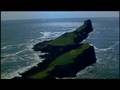
Wales IPAc-en|audio=en-us-Wales.ogg|'|w|e?|l|z (lang-cy|Cymru; IPA-cy|'k?m.r?|pron-cy|Cymru.ogg) is a country that is Countries of the United Kingdom|part of the United Kingdom and the island of Great Britain ,cite web|url= http://www.ons.gov.uk/ons/guide-method/geography/beginner-s-guide/administrative/the-countries-of-the-uk/index.html|title=The Countries of the UK|publisher=statistics.gov.uk |accessdate=10& nbsp;October 2008 Wales�England border|bordered by England to its east and the Atlantic Ocean and Irish Sea to its west. It had a population in 2011 of 3,064,000, and has a total area of convert|20779|km2|sqmi|abbr=on. Wales has over convert|1200|km|mi|abbr=on of coastline, and is largely mountainous, with its highest peaks in the north and central areas, including Snowdon (lang|cy| Yr Wyddfa ), its highest summit. The country lies within the Temperateness|north temperate zone , and has a changeable, maritime climate .
Welsh people|Welsh national identity emerged among the Celts|Celtic Britons (historical)|Britons after the Roman withdrawal from Britain in the 5th century, and Wales is regarded as one of the modern Celtic nations . Llywelyn the Last|Llywelyn ap Gruffydd 's death in 1282 marked the completion of Edward I of England 's Llywelyn the Last#Last campaign and death|conquest of Wales, though Owain Glyndwr briefly restored independence to what was to become modern Wales, in the early 15th century. The whole of Wales was annexed by England, and incorporated within the English law|English legal system , under the Laws in Wales Acts 1535�1542 . Distinctive Welsh politics developed in the 19th century. Welsh Liberal Party (UK)|Liberalism , exemplified in the early 20th century by David Lloyd George|Lloyd George , was displaced by the growth of socialism and the Labour Party (UK)|Labour Party . Welsh national feeling grew over the century; Plaid Cymru was formed in 1925 and the Welsh Language Society in 1962. Established under the Government of Wales Act 1998 , the National Assembly for Wales holds responsibility for a range of Contemporary Welsh Law#Areas to legislate:The devolved areas|devolved policy matters .
At the dawn of the Industrial Revolution , development of the mining in Wales|mining and metallurgy|metallurgical industries transformed the country from an agricultural society into an industrial nation; the south Wales coalfield 's exploitation causing a rapid expansion of Wales' population. Two-thirds of the population now live in south Wales , mainly in and around Cardiff (the capital), Swansea and Newport , and in the nearby South Wales valleys|valleys . Today, with the country's traditional extractive and heavy industries either gone or in decline, Wales' economy depends on the public sector , light and service industries, and Tourism in Wales|tourism . Wales' 2010 Gross Value Added|Gross Value Added (GVA) was �45.5 billion (�15,145 per head); 74.0 per cent of the average for the UK total, the lowest GVA per head in the UK.
Although Wales shares a close political and social history with the rest of Great Britain, and almost everyone speaks English language|English , the country has retained a distinct Welsh culture|cultural identity and is officially bilingual . Over 580,000 Welsh language speakers live in Wales, where it is spoken by a majority of the population in parts of the north and west. From the late 19th century onwards, Wales acquired its popular image as the "land of song", attributable in part to the eisteddfod tradition. At international sporting events, such as the FIFA World Cup , Rugby World Cup and the Commonwealth Games , Wales is represented by national teams, though at the Olympic Games , Welsh athletes compete as part of a Great Britain at the Olympics|Great Britain team . Rugby union is seen as a symbol of Welsh identity and an expression of national consciousness.
Etymology
See also|List of meanings of countries' names
Etymology of Wales
The English words "Wales" and "Welsh" derive from the same German languages|Germanic root (singular Walha|Walh , plural Walha ), meaning a "foreigner", or "stranger", who had been "Romanised". The Old English|�nglisc -speaking Anglo-Saxons used the term Waelisc when referring to the Celts|Celtic Britons (historical)|Britons , and Wealas when referring to their lands.John Davies, A History of Wales, p. 71 The modern names for some Continental Europe|Continental European lands (e.g., Wallonia and Wallachia ) and peoples (e.g., the Vlachs via a borrowing into Old Church Slavonic ), have a similar etymology.(French) Albert Henry, Histoire des mots Wallons et Wallonie, Institut Jules Destr�e, Coll. �Notre histoire�, Mont-sur-Marchienne, 1990, 3rd ed. (1st ed. 1965), footnote 13 p. 86. Henry wrote the same about Wallachia Davies (1994) p. 71cite book|last=Tolkien|first=J. R. R. |authorlink =J. R. R. Tolkien|title=Angles and Britons: O'Donnell Lectures|publisher=University of Wales Press|year=1963|location=Cardiff|pages=English and Welsh, an O'Donnell Lecture delivered at Oxford on October 21, 1955|nopp=truecite web| last = Gilleland| first = Michael| title = Laudator Temporis Acti: More on the Etymology of Walden| work = Laudator Temporis Acti website| publisher = Michael Gilleland| date = 12 December 2007| url = http://laudatortemporisacti.blogspot.com/2007/12/more-on-etymology-of-walden.html| accessdate=29& nbsp;October 2008
Historically in Great Britain|Britain , the words were not restricted to modern Wales or to the Welsh but were used to refer to anything that the Anglo-Saxons associated with the Britons, including other non-Germanic territories in Britain (e.g., Cornwall ) and Germanic territories particularly associated with Celtic Britons (e.g., Walworth, County Durham|Walworth in County Durham and Walton, Leeds|Walton in West Yorkshire ),Cite book|last=Rollason|first=David|author-link=David Rollason|year=2003|contribution=Origins of a People|title=Northumbria, 500�1100|publisher=Cambridge University Press|publication-date=2003|location=Cambridge|page=60|isbn=978-0-521-04102-7 as well as items associated with non-Germanic Europeans (e.g., the walnut ).
Etymology of Cymru
Wikisource|Moliant CadwallonThe modern Welsh name for themselves is Cymry , and Cymru is the Welsh name for Wales. These words (both of which are pronounced IPA-cy|'k?m.r?|) are descended from the British language (Celtic)|Brythonic word combrogi , meaning "fellow-countrymen".Davies (1994) p. 69 The use of the word Cymry as a self-designation derives from the Sub-Roman Britain|post-Roman Era relationship of the Welsh with the Brythonic-speaking peoples of northern England and southern Scotland, the peoples of " Hen Ogledd|Yr Hen Ogledd " (lang-en|The Old North). It emphasised a perception that the Welsh and the "Men of the North" were one people, exclusive of other peoples.Cite document |last=Lloyd |first=John Edward |author-link=John Edward Lloyd |year=1911 |contribution=Note to Chapter VI, the Name "Cymry" |contribution-url= http://books.google.com/books? id=NYwNAAAAIAAJ& pg=PA191 |title=A History of Wales from the Earliest Times to the Edwardian Conquest |volume=I |edition=Second |publisher=Longmans, Green, and Co. |publication-date=1912 |publication-place=London |pages=191�192 |url= In particular, the term was not applied to the Cornish people|Cornish or the Breton people|Breton peoples, who are of similar heritage, culture, and language to both the Welsh and the Men of the North. The word came into use as a self-description probably before the 7th century.Cite book|last=Phillimore|first=Egerton|year=1891|editor-last=Phillimore|editor-first=Egerton|contribution=Note (a) to The Settlement of Brittany|contribution-url= http://books.google.com/books? id=M35QO0vor-EC& pg=PA97|title=Y Cymmrodor|volume=XI|publisher= Honourable Society of Cymmrodorion |publication-date=1892|location=London|pages=97�101 It is attested in a praise poem to Cadwallon ap Cadfan ("Moliant Cadwallon", by Afan Ferddig) circa|633.Davies (1994) p. 71, The poem contains the line: 'Ar wynep Kymry Cadwallawn was'. In Literature of Wales (Welsh language)|Welsh literature , the word Cymry was used throughout the Middle Ages to describe the Welsh, though the older, more generic term Brythoniaid continued to be used to describe any of the Britons (historical)|Britonnic peoples (including the Welsh) and was the more common literary term until c. 1100. Thereafter Cymry prevailed as a reference to the Welsh. Until c. 1560 the word was spelt Cymry , regardless of whether it referred to the people or their homeland.
The Latinization (historical)|Latinised forms of these names, Cambrian , Cambric and Cambria , survive as lesser-used alternative names for Wales, Welsh and the Welsh people . Examples include the Cambrian Mountains (which cover most of Wales), the newspaper " Cambrian News ", as well as the organisations Cambrian Airways , Cambrian Railways and Cambrian Archaeological Association . Outside Wales, a related form survives as the name Cumbria in North West England , which was once a part of "Yr Hen Ogledd". This form also appears at times in literary references, perhaps most notably in the pseudohistory|pseudohistorical " Historia Regum Britanniae " of Geoffrey of Monmouth , where the character of Camber (legendary king)|Camber is described as the eponymous King of Cymru.
History
Main|History of Wales
Prehistoric origins
See also|Prehistoric WalesWales has been inhabited by anatomically modern humans|modern humans for at least 29,000 years.cite web|title=Welsh skeleton re-dated: even older!|url= http://www.archaeology.co.uk/articles/welsh-skeleton-re-dated-even-older.htm|accessdate=28& nbsp;September 2010 : see Red Lady of Paviland |publisher=Current Archaeology|date=6& nbsp;November 2007|work=archaeology.co.uk website Continuous human habitation dates from the end of the last ice age , between 12,000 and 10,000& nbsp; Before Present|years before present (BP) , when Mesolithic hunter-gatherers from central Europe began to migrate to Great Britain. At that time sea levels were much lower than today, and the shallower parts of what is now the North Sea were dry land. The east coast of present day England and the coasts of present day Denmark, Germany and the Netherlands were connected by the former landmass known as Doggerland , forming the British Peninsula on the central Europe|European mainland . Wales was free of glaciers by about 10,250& nbsp;BP, the warmer climate allowing the area to become heavily wooded. The post-glacial rise in sea level separated Wales and Ireland, forming the Irish Sea . Doggerland was submerged by the North Sea and, by 8,000 BP, the British Peninsula had become an island.cite book|editor1-last=Morgan|editor1-first=Prys |editor1-link=Prys Morgan |editor2-last=Aldhouse-Green |editor2-first=Stephen |last1=Pollard |first1=Joshua|authorlink=Joshua Pollard |title=History of Wales, 25,000& nbsp;BC AD& nbsp;2000|contribution=Wales' Hidden History, Hunter-Gatherer Communities in Wales: The Neolithic |pages=13�25 |publisher= Tempus Publishing |year=2001 |location=Stroud, Gloucestershire |isbn=0-7524-1983-8Davies (2008) pp. 647�648 By the beginning of the Neolithic (c.& nbsp;6,000& nbsp;BP) sea levels in the Bristol Channel were still about convert|33|ft|m|abbr=off lower than today.cite journal |last1=Evans |first1=Edith |last2=Lewis |first2=Richard |title=The Prehistoric Funerary and Ritual Monument Survey of Glamorgan and Gwent: Overviews. A Report for Cadw by Edith Evans BA PhD MIFA and Richard Lewis BA |journal=Proceedings of the Prehistoric Society |volume=64| page=4|publisher= Glamorgan-Gwent Archaeological Trust |year=2003|url= http://www.ggat.org.uk/cadw/cadw_reports/pdfs/GGAT%2072%20Overviews.pdf|accessdate=30 September 2009Davies (1994) p. 17cite web|title=Overview: From Neolithic to Bronze Age, 8000�800 BC (Page 1 of 6)|url= http://www.bbc.co.uk/history/ancient/british_prehistory/overview_british_prehistory_01.shtml|accessdate=5 August 2008|publisher=BBC|date=5 September 2006|work=BBC History website John Davies (historian)|John Davies has theorised that the story of Cantre'r Gwaelod 's drowning and tales in the Mabinogion , of the waters between Wales and Ireland being narrower and shallower, may be distant folk memories of this time.Davies (1994) pp. 4�6
Neolithic colonists integrated with the indigenous people, gradually changing their lifestyles from a nomadic life of hunting and gathering, to become settled farmers about 6,000& nbsp;BP � the Neolithic Revolution .cite web|title=GGAT 72 Overviews|url= http://www.ggat.org.uk/cadw/cadw_reports/pdfs/GGAT%2072%20Overviews.pdf|page= 47|accessdate=30& nbsp;December 2008|publisher=Glamorgan-Gwent Archaeological Trust|year=2003|work=A Report for Cadw by Edith Evans BA PhD MIFA and Richard Lewis BA They cleared the forests to establish pasture and to cultivate the land, developed new technologies such as ceramics and textile production, and built cromlechs such as Pentre Ifan , Bryn Celli Ddu and Parc Cwm long cairn between about 5,500& nbsp;BP and 5,800& nbsp;BP.cite web|title=Stones of Wales � Pentre Ifan Dolmen|url= http://www.stonepages.com/wales/pentreifan.html|accessdate=17& nbsp;November 2008|publisher=Paola Arosio/Diego Meozzi|year=2003|work=Stone Pages websitecite web|title=Stones of Wales � Bryn Celli Ddu Burial chamber|url= http://www.stonepages.com/wales/bryncelliddu.html|accessdate=17& nbsp;November 2008|publisher=Paola Arosio/Diego Meozzi|year=2003|work=Stone Pages websitecite web|title=Parc le Breos Burial Chamber; Parc CWM Long Cairn|url= http://www.coflein.gov.uk/en/site/93072/details/PARC+LE+BREOS+BURIAL+CHAMBER%3BPARC+CWM+LONG+CAIRN/ |accessdate=24& nbsp;October 2008|publisher=Royal Commission on the Ancient and Historical Monuments of Wales|year=2006|work=The Royal Commission on the Ancient and Historical Monuments of Wales websitecite web|title=Themes Prehistoric Wales: The Stone Age|url= http://www.bbc.co.uk/wales/history/sites/themes/periods/prehistoric02.shtml|accessdate=24& nbsp;October 2008|publisher= BBC Cymru Wales |year=2008|work= BBC Cymru Wales website In common with people living all over Great Britain, over the following centuries the people living in what was to become known as Wales assimilated immigrants and exchanged ideas of the Bronze Age and Iron Age Celts|Celtic cultures. According to John T. Koch and others, Wales in the Late Bronze Age was part of Atlantic Bronze Age|a maritime trading-networked culture that also included the other Celtic nations , England, France, Spain and Portugal where Celtic languages developed.cite web|url= http://www.wales.ac.uk/Resources/Documents/Research/ODonnell.pdf|title=O'Donnell Lecture 2008 Appendix| year=2008 |accessdate = 2& nbsp;October 2010cite book|last = Koch|first = John |authorlink =John T. Koch |title=Tartessian: Celtic from the Southwest at the Dawn of History in Acta Palaeohispanica X Palaeohispanica 9 (2009)| publisher=Palaeohispanica |year=2009|pages=339�351 |url= http://ifc.dpz.es/recursos/publicaciones/29/54/26koch.pdf|issn=1578-5386 |accessdate=17& nbsp;May 2010cite web|url= http://www.megalithic.co.uk/article.php? sid=2146413465|title=New research suggests Welsh Celtic roots lie in Spain and Portugal|last=Koch|first=John |authorlink =John T. Koch |accessdate=10& nbsp;May 2010cite book|last=Cunliffe, Karl, Guerra, McEvoy, Bradley; Oppenheimer, Rrvik, Isaac, Parsons, Koch, Freeman and Wodtko|title=Celtic from the West: Alternative Perspectives from Archaeology, Genetics, Language and Literature|year=2010|publisher=Oxbow Books and Celtic Studies Publications|isbn=978-1-84217-410-4|page=384|url= http://www.oxbowbooks.com/bookinfo.cfm/ID/88298//Location/DBBCcite book|last=Cunliffe|first=Barry |authorlink=Barry Cunliffe |title=A Race Apart: Insularity and Connectivity in Proceedings of the Prehistoric Society 75, 2009, pp. 55�64|year=2008| publisher= The Prehistoric Society |page=61 By the time of the Roman conquest of Britain|Roman invasion of Britain the area of modern Wales had been divided among the tribes of the Deceangli , Ordovices , Cornovii (Midlands)|Cornovii , Demetae and Silures for centuries.
Roman era
Main|Wales in the Roman eraThe Roman conquest of Wales began in AD 48 and took 30 years to complete. Roman rule lasted over 300 years. The campaigns of conquest are the most widely known feature of Wales during the Roman Empire|Roman era , due to the spirited, but ultimately unsuccessful, defence of their homelands by two native tribes: the Silures and the Ordovices . Roman rule in Wales was a military occupation, save for the southern coastal region of South Wales , east of the Gower Peninsula , where there is a legacy of Romanisation.Cite book |last1=Jones|first1=Barri|last2=Mattingly| first2=David|year=1990 |contribution=The Development of the Provinces|title=An Atlas of Roman Britain|publisher=Blackwell Publishers|publication-date=2007|location=Cambridge|page=151|isbn=978-1-84217-067-0 The only town in Wales founded by the Romans, Caerwent , is in South Wales. Both Caerwent and Carmarthen , also in southern Wales, became Roman civitas|civitates .Cite book|last1=Jones |first1=Barri |last2=Mattingly |first2=David |year=1990 |contribution=The Development of the Provinces |title=An Atlas of Roman Britain |publisher=Blackwell Publishers |publication-date=2007 |location=Cambridge |page=154 |isbn=978-1-84217-067-0 Wales had a rich mineral wealth. The Romans used their Roman engineering|engineering Roman technology|technology to extract large amounts of gold , copper and lead , as well as modest amounts of some other metals such as zinc and silver .Cite book|last1=Jones |first1=Barri |last2=Mattingly |first2=David |year=1990 |contribution=The Economy |title=An Atlas of Roman Britain |publisher=Blackwell Publishers |publication-date=2007 |location=Cambridge |pages=179�196 |isbn=978-1-84217-067-0 Roman economic development was concentrated in south-eastern Britain, and no significant industries located in Wales. This was largely a matter of circumstance, as Wales had none of the necessary materials in suitable combination, and the forested, mountainous countryside was not amenable to industrialisation. Although Latin became the official language of Wales, the people tended to continue to speak in British language (Celtic)|Brythonic . While Romanisation was far from complete, the upper classes of Wales began to consider themselves Roman, particularly after the Constitutio Antoniniana|ruling of 212 that granted Roman citizenship to all free men throughout the Empire.Davies (2008) p.915 Further Roman influence came through the spread of Christianity, which gained many followers after Christians were allowed to worship freely in 313.
Early historians, including the 6th century cleric Gildas , have noted 383 as a significant point in Welsh history,Davies (2008) p.531 as it is stated in literature as the foundation point of several medieval royal dynasties. In that year the Roman general Magnus Maximus , or Macsen Wledig, stripped all of western and northern Britain of troops and senior administrators, to launch a successful bid for imperial power; continuing to rule Britain from Gaul as Emperor. Cite book |last=Frere |first=Sheppard Sunderland |author-link=Sheppard Frere |year=1987 |contribution=The End of Roman Britain |title=Britannia: A History of Roman Britain |edition=3rd, revised |publisher=Routledge & Kegan Paul |publication-date=1987 |publication-place=London |page=354 |isbn=0-7102-1215-1Cite book |year=1841 |editor-last=Giles |editor-first=John Allen |contribution=The Works of Gildas, The History, Ch. 14 |contribution-url= http://books.google.com/books? id=3R1mCE7p44MC& pg=PA1 |title=The Works of Gildas and Nennius |publisher=James Bohn |publication-date=1841 |publication-place=London |page=13 Gildas, writing in about 540, says that Maximus left Britain not only with all of its Roman troops, but also with all of its armed bands, governors, and the flower of its youth, never to return. Having left with the troops and Roman administrators, and planning to continue as the ruler of Britain in the future, his practical course was to transfer local authority to local rulers. The earliest Welsh genealogies give Maximus the role of founding father for several royal dynasties, including those of Kingdom of Powys|Powys and Kingdom of Gwent|Gwent .Cite book|year=1887 |editor-last=Phillimore |editor-first=Egerton |contribution=Pedigrees from Jesus College MS. 20 |contribution-url= http://books.google.com/books? id=HlUrAAAAIAAJ& pg=PA83 |title=Y Cymmrodor |volume=VIII |publisher= Honourable Society of Cymmrodorion |publication-date=1887 |pages=83�92Cite book|last=Phillimore |first=Egerton|year=1888 |editor-last=Phillimore |editor-first=Egerton |contribution=The Annales Cambriae and Old Welsh Genealogies, from Harleian MS. 3859 |contribution-url= http://books.google.com/books? id=aFMrAAAAIAAJ& pg=PA141 |title=Y Cymmrodor |volume=IX |publisher= Honourable Society of Cymmrodorion |publication-date=1888 |pages=141�183 It was this transfer of power that has given rise to the belief that he was the father of the Welsh Nation. He is given as the ancestor of a Welsh king on the Pillar of Eliseg , erected nearly 500 years after he left Britain, and he figures in lists of the Fifteen Tribes of Wales .Rachel Bromwich, editor and translator. Trioedd Ynys Prydein: The Welsh Triads. Cardiff: University of Wales Press , Third Edition, 2006. 441�444
Post-Roman era
See also|Sub-Roman BritainThe 400 years following the collapse of Roman rule is the most difficult to interpret in the history of Wales. After the End of Roman rule in Britain|Roman departure from Britain in AD 410, much of the lowlands of Britain to the east and south-east were overrun by various Germanic peoples . Before extensive studies of the distribution of Haplogroup R1b (Y-DNA)|R1b Y-DNA subclades , some used to maintain that native Britons (historical)|Britons were displaced by the invaders.cite web|url= http://news.nationalgeographic.com/news/2006/07/060721-england.html |title=Ancient Britain Had Apartheid-Like Society, Study Suggests |publisher=National Geographic News |author=Kate Ravilious |date=21& nbsp;July 2006 |accessdate=9& nbsp;September 2010 This idea has been discarded in the face of evidence that the population has, mainly, at latest Hallstatt culture|Hallstatt era origins, but probably late European Neolithic|Neolithic , or at earliest Mesolithic origins with little contribution from Anglo-Saxon source areas.citation|title=A major Y-chromosome haplogroup R1b Holocene effect in Central and Western Europe - see discussion results at end of article, the distribution maps and the supplementary tables|year=2010|last1=Myres|first1=Natalie|journal=European Journal of Human Genetics|doi=10.1038/ejhg.2010.146|url= http://www.nature.com/ejhg/journal/v19/n1/full/ejhg2010146a.html|pmid=20736979|volume=19|issue=1|pmc=3039512 However, by AD 500, the land that would become Wales had divided into a number of kingdoms free from Anglo-Saxon rule. The kingdoms of kingdom of Gwynedd|Gwynedd , kingdom of Powys|Powys , kingdom of Deheubarth|Dyfed and Seisyllg , Glywysing|Morgannwg and Kingdom of Gwent|Gwent emerged as independent Welsh successor states . Archaeological evidence, in the Low Countries and what was to become England, shows early Anglo-Saxon migration to Great Britain reversed between 500 to 550, which concurs with Frankish chronicles.Davies (1994) pp. 56 John Davies notes this as consistent with the Britons (historical)|British victory at Battle of Mons Badonicus|Badon Hill , attributed to King Arthur|Arthur by Nennius . This tenacious survival by the Romano-Britons and their descendants in the western kingdoms was to become the foundation of what we now know as Wales. With the loss of the lowlands, England's kingdoms of Mercia and Northumbria , and later Wessex , wrestled with Powys, Gwent and Gwynedd to define the frontier between the two peoples.
Having lost much of what is now the West Midlands (region)|West Midlands to Mercia in the 6th and early 7th centuries, a resurgent late-seventh-century Powys checked Mercian advancement. Aethelbald of Mercia , looking to defend recently acquired lands, had built Wat's Dyke . According to John Davies (historian)|John Davies , this endeavour may have been with Powys king Elisedd ap Gwylog 's own agreement, however, for this boundary, extending north from the valley of the River Severn to the Dee estuary, gave Oswestry to Powys.Davies (1994) pp. 65�66 Another theory, after carbon dating placed the dyke's existence 300 years earlier, is that it may have been built by the post-Roman rulers of Wroxeter .Davies (2008) p. 926 King Offa of Mercia seems to have continued this consultative initiative when he created a larger earthwork, now known as Offa's Dyke (lang|cy| Clawdd Offa ). Davies wrote of Cyril Fox 's study of Offa's Dyke: "In the planning of it, there was a degree of consultation with the kings of Powys and Gwent. On the Long Mountain near Trelystan, the dyke veers to the east, leaving the fertile slopes in the hands of the Welsh; near Rhiwabon, it was designed to ensure that Cadell ap Brochwel retained possession of the Fortress of Penygadden." And, for Gwent, Offa had the dyke built "on the eastern crest of the gorge, clearly with the intention of recognizing that the River Wye and its traffic belonged to the kingdom of Gwent." However, Fox's interpretations of both the length and purpose of the Dyke have been questioned by more recent research.David Hill and Margaret Worthington, ''Offa's Dyke: history and guide'', Tempus, 2003, ISBN 0-7524-1958-7 Offa's Dyke largely remained the frontier between the Welsh and English, though the Welsh would recover by the 12th century the area between the River Dee (United Kingdom)|Dee (lang|cy| Afon Dyfrdwy ), and the Conwy known then as Perfeddwlad|Y Berfeddwlad . By the eighth century, the eastern borders with the Anglo-Saxon s had broadly been set.
In 853 the Viking s raided Anglesey, but in 856 Rhodri the Great|Rhodri Mawr defeated and killed their leader, Gorm.Davies (2008) p. 911 The Britons of Wales later made their peace with the Vikings and Anarawd ap Rhodri allied with the Norsemen occupying Northumbria to conquer the north.cite book|last=Charles-Edwards |first=T M |authorlink=Thomas Charles-Edwards |title=Mercia: an Anglo-Saxon kingdom in Europe |contribution= Wales and Mercia, 613�918 |editor1-last=Brown |editor1-first=Michelle P |editor1-link=Michelle P. Brown|editor2-last=Farr |editor2-first=Carol Ann |publisher= Leicester University Press |year=2001 |page=104 |url= http://books.google.com/books? id=H8Ke9acHFm4C& pg=PA176|isbn=0-7185-0231-0|accessdate=27& nbsp;November 2010 This alliance later broke down and Anarawd came to an agreement with Alfred the Great|Alfred , king of Wessex , with whom he fought against the west Welsh. According to Annales Cambriae , in 894, "Anarawd came with the Angles and laid waste Ceredigion and Ystrad Tywi."cite book|last=Hill |first=David |title=Mercia: an Anglo-Saxon kingdom in Europe |contribution= Wales and Mercia, 613�918 |editor1-last=Brown |editor1-first=Michelle P |editor1-link=Michelle P. Brown|editor2-last=Farr |editor2-first=Carol Ann |publisher= Leicester University Press |year=2001 |page=176|url= http://books.google.com/books? id=H8Ke9acHFm4C& pg=PA176|isbn=0-7185-0231-0|accessdate=27& nbsp;November 2010
Medieval Wales
See also|Norman invasion of Wales|Wales in the Late Middle AgesThe southern and eastern parts of Great Britain lost to English settlement became known in Welsh as Lloegyr (Modern Welsh Lloegr ), which may have referred to the kingdom of Mercia originally, and which came to refer to England as a whole.The earliest instance of Lloegyr occurs in the early 10th century prophetic poem Armes Prydein . It seems comparatively late as a place name, the nominative plural Lloegrwys , "men of Lloegr", being earlier and more common. The English were sometimes referred to as an entity in early poetry ( Saeson , as today) but just as often as Eingl (Angles), Iwys (Wessex-men), etc. Lloegr and Sacson became the norm later when England emerged as a kingdom. As for its origins, some scholars have suggested that it originally referred only to Mercia � at that time a powerful kingdom and for centuries the main foe of the Welsh. It was then applied to the new kingdom of England as a whole (see for instance Rachel Bromwich (ed.), Welsh Triads|Trioedd Ynys Prydein , University of Wales Press, 1987). "The lost land" and other fanciful meanings, such as Geoffrey of Monmouth 's monarch Locrinu s, have no etymological basis. (See also Discussion, article 40) The Germanic tribes who now dominated these lands were invariably called Saeson , meaning " Saxons ". The Anglo-Saxons called the Romano-British ' Walha ', meaning 'Romanised foreigner' or 'stranger'.Davies (1994) p. 2 The Welsh continued to call themselves Brythoniaid (Brythons or Britons) well into the Middle Ages , though the first written evidence of the use of Cymru and y Cymry is found in a praise poem to Cadwallon ap Cadfan ( Moliant Cadwallon , by Afan Ferddig) c. 633. In Armes Prydain , believed to be written around 930�942, the words Cymry and Cymro are used as often as 15 times.Davies (2008) p. 714 However, from the Anglo-Saxon settlement onwards, the people gradually begin to adopt the name Cymry over Brythoniad.Davies (2008) p. 186
From 800 onwards, a series of dynastic marriages led to Rhodri the Great|Rhodri Mawr 's (r. 844�77) inheritance of Gwynedd and Powys . His sons in turn would found three principal dynasties ( Aberffraw for Gwynedd, Dinefwr for Deheubarth , and Mathrafal for Powys). Rhodri's grandson Hywel Dda (r. 900�50) founded Deheubarth out of his maternal and paternal inheritances of Dyfed and Seisyllwg in 930, ousted the Aberffraw dynasty from Gwynedd and Powys, and then codified Welsh law in the 940s.Davies (2008) p. 388 Maredudd ab Owain (r. 986�99) of Deheubarth (Hywel's grandson) would, (again) temporarily oust the Aberffraw line from control of Gwynedd and Powys.
Maredudd's great-grandson (through his daughter Princess Angharad ) Gruffydd ap Llywelyn (r. 1039�63) would conquer his cousins' realms from his base in Powys, and even extend his authority into England. Historian John Davies (historian)|John Davies states that Gruffydd was "the only Welsh king ever to rule over the entire territory of Wales... Thus, from about 1057 until his death in 1063, the whole of Wales recognised the kingship of Gruffudd ap Llywelyn. For about seven brief years, Wales was one, under one ruler, a feat with neither precedent nor successor."Davies (1994) p. 100 Owain Gwynedd (1100�70) of the Aberffraw line was the first Welsh ruler to use the title princeps Wallensium (prince of the Welsh), a title of substance given his victory on the Berwyn Mountains , according to John Davies.Davies (1994) p. 128
Within four years of the Battle of Hastings England had been Norman conquest of England|completely subjugated by the Normans . William the Conqueror|William I of England established a series of lordships, allocated to his most powerful warriors along the Welsh border, the boundaries fixed only to the east.Davies (1994) p. 101 This frontier region, and any English-held lordships in Wales, became known as Marchia Wallie , the Welsh Marches , in which the Marcher Lord s were subject to neither English law|English nor Welsh law .Cite book|title=The Medieval March of Wales: The Creation and Perception of a Frontier, 1066�1283 |author= Max Lieberman |url= http://books.google.com/? id=2nda0A3pVYAC& pg=PA19|page= 6 |accessdate=4& nbsp;October 2010 |publisher= Cambridge University Press |year=2010 |location=Cambridge|isbn=0-521-76978-7 The area of the March varied as the fortunes of the Marcher Lords and the Welsh princes ebbed and flowed.cite web|title=Chapter 6: The Coming of the Normans |url= http://www.bbc.co.uk/wales/history/sites/themes/guide/ch6_coming_of_the_normans.shtml|accessdate=4& nbsp;October 2010 |publisher= BBC Cymru Wales |year=2008|work= BBC Cymru Wales website The March of Wales, which existed for over 450 years, was abolished under the Laws in Wales Acts 1535�1542|Acts of Union in 1536.Cite book|title=The Medieval March of Wales: The Creation and Perception of a Frontier, 1066�1283 |author= Max Lieberman |url= http://books.google.com/? id=2nda0A3pVYAC& pg=PA19|page= 4 |accessdate=4& nbsp;October 2010 |publisher= Cambridge University Press |year=2010 |location=Cambridge|isbn=0-521-76978-7
Owain Gwynedd's grandson Llywelyn the Great|Llywelyn Fawr (the Great, 1173�1240), wrested concessions out of the Magna Carta in 1215 and receiving the fealty of other Welsh lords in 1216 at the council at Aberdyfi , became the first Prince of Wales .Davies (1994) pp. 133�134 His grandson Llywelyn the Last|Llywelyn ap Gruffydd also secured the recognition of the title Prince of Wales from Henry III of England|Henry III with the Treaty of Montgomery in 1267.Davies (1994) pp. 143�144 Later however, a succession of disputes, including the imprisonment of Llywelyn's wife Eleanor de Montfort|Eleanor , daughter of Simon de Montfort, 6th Earl of Leicester|Simon de Montfort , culminated in the first invasion by Edward I of England|King Edward I of England .Davies (1994) pp. 151�152 As a result of military defeat, the Treaty of Aberconwy exacted Llywelyn's fealty to England in 1277.Peace was short lived and, with the 1282 Llywelyn the Last#Last campaign and death|Edwardian conquest , the rule of the Welsh princes permanently ended. With Llywelyn's death and his brother prince Dafydd ap Gruffydd|Dafydd 's execution, the few remaining Welsh Peers|Welsh lords did homage for their lands to Edward I . Llywelyn's head was carried through London on a spear; his baby daughter Gwenllian ferch Llywelyn|Gwenllian was locked in the priory at Sempringham , where she remained until her death 54& nbsp;years later.cite news|url= http://news.bbc.co.uk/2/hi/uk_news/wales/786625.stm |title=Tribute to lost Welsh princess |publisher=BBC News |date=12 June 2000|accessdate=5& nbsp;March 2007
To help maintain his dominance, Edward constructed a series of great stone castles. Beaumaris Castle|Beaumaris , Caernarfon Castle|Caernarfon and Conwy Castle|Conwy . His son, the future Edward II of England|King Edward II of England , was born at Edward's new castle at Caernarfon in 1284.Davies (1994) p. 162 He became the first English Prince of Wales , not as an infant, but in 1301. The apocryphal story that Edward tricked the Welsh by offering them a Welsh-born Prince who could speak no English, was first recorded in 1584.Davies (1994) p. 175 The title also provided an income from the north�west part of Wales known as the Principality of Wales , until the Act of Union (1536), after which the term principality , when used, was associated with the whole of Wales.Davies (2008) p. 711cite book|title=Illustrated Encyclopedia of Britain |page=459 |publisher=Reader's Digest|year=1999 |location=London |isbn=0-276-42412-3 |quote=A country and principality within the mainland of Britain& nbsp;... about half a millioncite book |title=The Oxford Illustrated Dictionary|page=949 |publisher=Oxford University Press |year=1976 |origyear=1975|location=Great Britain |quote=Wales (-lz). Principality occupying extreme W. of central southern portion of Gt Britain After the failed revolt in 1294�95 of Madog ap Llywelyn � who styled himself Prince of Wales in the so-called Penmachno Document � there was no major uprising until that led by Owain Glyndwr a century later, against Henry IV of England . In 1404, Owain was reputedly crowned Prince of Wales in the presence of emissaries from France, Spain and Scotland.Davies (1994) p. 194 Glyndwr went on to hold parliamentary assemblies at several Welsh towns, including Machynlleth . The rebellion was ultimately to founder, however, and Owain went into hiding in 1412, with peace being essentially restored in Wales by 1415. Although the English conquest of Wales took place under the 1284 Statute of Rhuddlan , a formal Union did not occur until 1536, shortly after which Welsh law, which continued to be used in Wales after the conquest, was fully replaced by English law, under what would become known as the Laws in Wales Acts 1535�1542|Act of Union .cite web|title=BBC � History � British History in Depth � Wales under the Tudors |url= http://www.bbc.co.uk/history/british/tudors/wales_tudors_01.shtml|accessdate=21& nbsp;September 2010|publisher=BBC|date=5 November 2009|work=BBC website
Industrial Wales
See also|Glamorgan||Lower Swansea valleyPrior to the British Industrial Revolution , which saw a rapid economic expansion between 1750 and 1850, there were signs of small-scale industries scattered throughout Wales.Davies (2008) p. 392 These ranged from industries connected to agriculture, such as milling and the manufacture of woollen textiles, through to mining and quarrying. Until the Industrial Revolution, Wales had always been reliant on its agricultural output for its wealth and employment and the earliest industrial businesses were small scale and localised in manner. The emerging industrial period commenced around the development of copper smelting in the Swansea area. With access to local coal deposits and a harbour that could take advantage of Cornwall's copper mines and the copper deposits being extracted from the then largest copper mine in the world at Parys Mountain on Anglesey, Swansea developed into the world's major centre for non-ferrous metal smelting in the 19th century. The second metal industry to expand in Wales was iron smelting, and iron manufacturing became prevalent in both the north and the south of the country.Davies (2008) p. 393 In the north of Wales, John Wilkinson (industrialist)|John Wilkinson 's Ironworks at Bersham was a significant industry, while in the south, a second world centre of metallurgy was founded in Merthyr Tydfil , where the four ironworks of Dowlais Ironworks|Dowlais , Cyfarthfa Ironworks|Cyfarthfa , Plymouth and Penydarren Ironworks|Penydarren became the most significant hub of iron manufacture in Wales. In the 1820s, south Wales alone accounted for 40% of all pig iron manufactured in Britain.
In the late 18th century, slate quarrying began to expand rapidly, most notably in north Wales. The most notable site, opened in 1770 by Richard Pennant , is Penrhyn Quarry which, by the late 19th century, was employing 15,000 men;Davies (2008) p. 818 and along with Dinorwic Quarry , dominated the Welsh slate trade. Although slate quarrying has been described as 'the most Welsh of Welsh industries','the most Welsh of Welsh industries' attributed to historian A. H. Dodd . Davies (2008) p. 819 it is coal mining which has become the single industry synonymous with Wales and its people. Initially, coal seams were exploited to provide energy for local metal industries but, with the opening of canal systems and later the railways, Welsh coal mining saw a boom in its demand. As the south Wales coalfield was exploited, mainly in the upland valleys around Aberdare and later the Rhondda , the ports of Swansea, Cardiff and later Penarth, grew into world exporters of coal and, with them, came a population boom. By its height in 1913, Wales was producing almost 61 million tons of coal. As well as in South Wales, there was also a significant coalfield in the north-east of the country, particularly around Wrexham.cite web |url= http://www.museumwales.ac.uk/en/rhagor/article/1912/|title=Wales � the first industrial nation of the World|publisher= National Museum Wales|Amgueddfa Cymru � National Museum Wales |date=5& nbsp;October 2008|accessdate=9& nbsp;September 2010 As Wales was reliant on the production of capital goods rather than consumer goods, it possessed few of the skilled craftspeople and artisans found in the workshops of Birmingham or Sheffield in England and had few factories producing finished goods � a key feature of most regions associated with the Industrial Revolution. However, there is increasing support that the industrial revolution was reliant on harnessing the energy and materials provided by Wales and, in that sense, Wales was of central importance.
Modern Wales
Historian Kenneth O. Morgan|Kenneth Morgan described Wales on the eve of the First World War as a "relatively placid, self-confident, and successful nation". Output from the coalfields continued to increase, with the Rhondda Valley recording a peak of 9.6 million tons of coal extracted in 1913.cite book |last=John |first=Arthur H. |title=Glamorgan County History, Volume V, Industrial Glamorgan from 1700 to 1970 |year=1980 |publisher=University of Wales Press |location=Cardiff|page=183 The outbreak of the First World War (1914�1918) saw Wales, as part of the United Kingdom, enter hostilities with Germany. A total of 272,924 Welshmen served in the war, representing 21.5% of the male population.Davies (2008) p. 284 Of these, roughly 35,000 were killed. The two most notable battles of the War to include 38th (Welsh) Infantry Division|Welsh forces were those at Mametz Wood Memorial|Mametz Wood on the Somme and Battle of Passchendaele|Third Ypres .Davies (2008) p. 285
The first quarter of the 20th century also saw a shift in the political landscape of Wales. Since 1865, the Liberal Party (UK)|Liberal Party had held a parliamentary majority in Wales and, following the United Kingdom general election, 1906|general election of 1906 , only one non-Liberal Member of Parliament, Keir Hardie of Merthyr Tydfil (UK Parliament constituency)|Merthyr Tydfil , represented a Welsh constituency in Westminster.Davies (2008) p. 461 Yet by 1906, industrial dissension and political militancy had begun to undermine Liberal consensus in the Southern coalfields. In 1916, David Lloyd George became the first Welshman to become Prime Minister of Britain when he was made head of the United Kingdom coalition government (1916�1922)|1916 coalition government .cite web|title=David Lloyd George (1863�1945)|url= http://www.bbc.co.uk/wales/history/sites/themes/figures/lloyd_george.shtml |accessdate=26& nbsp;September 2010|publisher= BBC Cymru Wales |work= BBC Cymru Wales website In December 1918, Lloyd George was re-elected at the head of a Conservative-dominated coalition government, and his poor handling of the 1919 coalminers' strike was a key factor in destroying support for the Liberal party in south Wales.Davies (2008) p. 515 The industrial workers of Wales began shifting towards a new political organisation, established by Hardie and others to ensure an elected representation for the working class, and now called the Labour party.Davies (2008) p. 439 When in 1908 the National Union of Mineworkers (Great Britain)|Miners' Federation of Great Britain became affiliated to the Labour Party the four Labour candidates sponsored by miners were all elected as MPs. By 1922, half of the Welsh seats in Westminster were held by Labour politicians, which was the beginning of a Labour hegemony which would dominate Wales into the 21st century.
Despite economic growth in the first two decades of the 20th century, from the early 1920s to the late 1930s, Wales' staple industries endured a prolonged slump, leading to widespread unemployment and poverty in the South Wales valleys.cite book|last=Morgan|first=Kenneth O.|title=Rebirth of a Nation: Wales 1880�1980|year=1982|publisher=Oxford University Press|isbn=0-19-821760-9|pages=208�210|location=Oxford For the first time in centuries, the population of Wales went into decline; the scourge of unemployment only relented with the production demands of the Second World War .Davies (2008), p. 918 The Second World War (1939�1945) saw Welsh servicemen and women fight in all the major theatres of war, with some 15,000 of them killed.Davies (2008) p. 807 Bombing raids brought major loss of life as the Luftwaffe|German Air Force targeted the docks at Swansea Blitz|Swansea , Cardiff Blitz|Cardiff and Pembroke Dock|Pembroke . After 1943, 10% of Welsh conscripts aged 18 were sent to work in the coal mines to rectify labour shortages; they became known as Bevin Boys . Pacifism|Pacifist numbers during both World Wars were fairly low, especially in the Second World War, which was seen as a fight against fascism. Of the political parties active in Wales, only Plaid Cymru advocated a neutral stance, on the grounds that it was an 'imperialist war'.
The 20th century saw a revival in Welsh national feeling. Plaid Cymru was formed in 1925, seeking greater autonomy or independence from the rest of the UK.cite web|title=Disestablishment, Cymru Fydd and Plaid Cymru |url= http://www.llgc.org.uk/ymgyrchu/Datganoli/PlaidCymru/index-e.htm |accessdate=25& nbsp;November 2010 |publisher=llgc.org.uk|work=National Library of Wales In 1955, the term England and Wales became common for describing the area to which English law applied, and Cardiff was proclaimed as capital city of Wales. Cymdeithas yr Iaith Gymraeg (lang|en|The Welsh Language Society) was formed in 1962, in response to fears that the language may soon die out.cite web|title=Cymdeithas yr Iaith Gymraeg's first protest, 1963 |url= http://www.gtj.org.uk/index.php? id=5192 |accessdate=25& nbsp;November 2010 |publisher=gtj.org.uk |work=Gathering the Jewels Nationalist sentiment grew following the flooding of the Tryweryn valley in 1965 to create a reservoir supplying water to the English city of Liverpool .cite web|title=Wales on Air: The drowning of Tryweryn and Capel Celyn |url= http://www.bbc.co.uk/wales/walesonair/database/trywerin.shtml|accessdate=25& nbsp;November 2010|publisher=BBC|work=BBc.co.uk Despite 35 of the 36 Welsh Members of Parliament voting against the bill, with the other abstaining, Parliament still passed the bill and the village of Capel Celyn was submerged, highlighting Wales' powerlessness in her own affairs in the face of the numerical superiority of English MPs in the Westminster Parliament.cite web|title=Flooding Apology|url= http://www.bbc.co.uk/liverpool/content/articles/2005/10/17/feature_welsh_reservoir_feature.shtml |accessdate=18& nbsp;October 2008 |publisher=BBC|date=19& nbsp;October 2005|work= BBC website Both the Free Wales Army and Mudiad Amddiffyn Cymru (lang|en|Welsh Defence Movement, abbreviated as MAC) were formed as a direct result of the Tryweryn destruction, conducting campaigns from 1963.Cite book |last=Clews|first=Roy|title=To Dream of Freedom � The story of MAC and the Free Wales Army |publisher=Y Lolfa Cyf., Talybont |year=1980 |isbn=0-86243-586-2|pages=15, 21 & 26�31 In the years leading up to the investiture of Charles, Prince of Wales|Prince Charles as Prince of Wales in 1969, these groups were responsible for a number of bomb blasts�destroying water pipes, tax and other offices, and part of the dam at the new Clywedog reservoir project in Montgomeryshire; being built to supply water to the English Midlands.cite web|title=Our history � Clywedog Dam, Wales -1967 |url= http://www.halcrow.com/Who-we-are/History/Clywedog-dam-Wales-1967/ |accessdate=8& nbsp;January 2012 |year=2011 |publisher= Halcrow Group|Halcrow Group Ltd |work=Halcrow websitecite book |last=Clews|first=Roy|title=To Dream of Freedom � The story of MAC and the Free Wales Army|publisher=Y Lolfa Cyf., Talybont |year=1980 |isbn=0-86243-586-2|pages=22, 59, 60 & 216 In 1966 the Carmarthen (UK Parliament constituency)|Carmarthen Parliamentary seat was won by Gwynfor Evans at a by-election, Plaid Cymru's first Parliamentary seat.cite book|last=Gwynfor |first=Evans |authorlink =Gwynfor Evans |title=The Fight for Welsh Freedom |publisher=Y Lolfa Cyf., Talybont |year=2000 |isbn=08624351532 Please check ISBN|reason=Invalid length.|page=152 In the following year, the Wales and Berwick Act 1746 was repealed and a legal definition of Wales and of the boundary with England was stated.
By the end of the 1960s, the regional policy of bringing firms into disadvantaged areas of Wales through financial incentives, had proven very successful in diversifying the once industrial landscape.Davies (2008) p. 236 This policy, begun in 1934, was enhanced by the construction of industrial estates and improving transport communications, most notably the M4 motorway linking Wales directly to London. There was a belief that the foundations for stable economic growth had been firmly established in Wales during this period; but these views were shown to be wildly optimistic after the Early 1980s recession|recession of the early 1980s saw the collapse of much of the manufacturing base that had been built over the preceding forty years.Davies (2008) p. 237
The first Wales referendum, 1979|referendum , in 1979, in which the Welsh electorate voted on the creation of an assembly for Wales resulted in a large majority for the "no" vote.cite news|first=Betsan|last=Powys|title=The long Welsh walk to devolution|url= http://news.bbc.co.uk/1/hi/wales/wales_politics/7813837.stm|accessdate=26& nbsp;September 2010|publisher=BBC |date=12& nbsp;January 2010 |work= BBC News website However, in 1997, a referendum on the same issue secured a "yes", although by a very narrow majority. The National Assembly for Wales ( Cynulliad Cenedlaethol Cymru ) was set up in 1999 (as a consequence of the Government of Wales Act 1998 ) and possesses the power to determine how the central government budget for Wales is spent and administered, although the UK parliament reserves the right to set limits on the powers of the Welsh Assembly.
The governments of the United Kingdom and of Wales almost invariably define Wales as a country.cite web|url= http://www.number10.gov.uk/Page823 |title=countries within a country:number10.gov.uk|publisher= 10 Downing Street |date=10& nbsp;January 2003 |accessdate=5& nbsp;November 2010 |work=10 Downing Street website|quote=The United Kingdom is made up of four countries: England, Scotland, Wales and Northern Ireland.cite web |url = http://www.walesonline.co.uk/news/welsh-politics/welsh-politics-news/2010/07/03/un-report-causes-stir-with-wales-dubbed-principality-91466-26777027/|title = UN report causes stir with Wales dubbed 'Principality' |accessdate = 25 July 2010 |date =3 July 2010 |publisher = Media Wales|Media Wales Ltd |work= WalesOnline website |quote= ... the Assembly�s Counsel General, John Griffiths, said: "I agree that, in relation to Wales, Principality is a misnomer and that Wales should properly be referred to as a country. The Welsh Assembly Government says: "Wales is not a Principality. Although we are joined with England by land, and we are part of Great Britain, Wales is a country in its own right."cite web|title=Wales.com FAQs|url= http://www.wales.com/en/content/cms/faqs/faqs.aspx#Question%2011 |publisher= Welsh Assembly Government |year=2008 |accessdate=15& nbsp;October 2010 |work=Wales.com website The title Prince of Wales is still conferred on the heir apparent to the British throne, currently Prince Charles . However the Prince of Wales has no constitutional role in modern Wales.cite book |last=Bogdanor |first=Vernon|author-link=Vernon Bogdanor |title=The Monarchy and the Constitution |page=52 |quote=In his autobiography, the Duke of Windsor complained that, as Prince of Wales, there was 'no specific routine job in the sense, for example, that a vice-president has a job ... Though I was next in line to the Throne, with all that position implied, I actually possessed no formal state duties or responsibilities.' 'This constitutional vacuum' Jonathon Dimbleby, biographer of the Prince of Wales, has noted, 'was not an oversight, but documentary evidence of the peculiar position that the heir apparent occupies; there is no formal "role", except to wait.' |publisher= Oxford University Press |year=1995|location=London |isbn=0-19-827769-5|url= http://books.google.com/? id=lTnHwWWKAR8C& pg=PA52|accessdate=05& nbsp;November 2010 According to the Welsh Assembly Government: "Our Prince of Wales at the moment is Prince Charles, who is the present heir to the throne. But he does not have a role in the governance of Wales, even though his title might suggest that he does."
Government and politics
Main|Politics of WalesSee also|Politics of the United Kingdom| National Assembly for Wales election, 2007 Wales is a country that is part of the United Kingdom. http://www.iso.org/iso/iso_3166-2_newsletter_ii-3_2011-12-13.pdf ISO 3166-2 NEWSLETTER, 2011, p.27. Accessed 8 March 2012 Constitutionally, the UK is a de jure , unitary state , its parliament and government in United Kingdom Parliament|Westminster . In the House of Commons of the United Kingdom|House of Commons � the lower house of the UK government � Wales is represented by 40 Member of Parliament|MPs (of 650) from United Kingdom constituencies#Wales|Welsh constituencies . Labour Party (UK)|Labour MPs hold 26 of the 40 seats, the Liberal Democrats hold three seats, Plaid Cymru , three and the Conservative Party (UK)|Conservatives , eight. A Secretary of State for Wales sits in the Cabinet of the United Kingdom|UK cabinet and is responsible for representing matters pertaining to Wales. The Wales Office is a department of the United Kingdom government, responsible for Wales. Cheryl Gillan has been Secretary of State for Wales since 12 May 2010, replacing Peter Hain of the previous Labour administration. Gillan was appointed to the new Conservative � Liberal Democrat Coalition Agreement|Conservative-Liberal Democrat coalition Westminster government following the United Kingdom general election of 2010 .cite news|title=David Cameron appoints Cheryl Gillan as Welsh Secretary|url= http://news.bbc.co.uk/1/hi/wales/8677418.stm |accessdate=12& nbsp;May 2010|publisher=BBC|date=12& nbsp;May 2010|work= BBC News website
Referendums held in Wales and Scotland in Welsh devolution referendum, 1997|1997 chose to establish a form of self-government in both countries. In Wales, the consequent process of Devolution in the United Kingdom|devolution began with the Government of Wales Act 1998 , which created the National Assembly for Wales (lang-cy|Cynulliad Cenedlaethol Cymru).cite web|title=UK Parliament -Parliament's role|url= http://www.parliament.uk/about/how/role.cfm|accessdate=1& nbsp;September 2009|publisher= Parliament of the United Kingdom|United Kingdom Parliament |date=29& nbsp;June 2009|work=United Kingdom Parliament website Powers of the Secretary of State for Wales were transferred to the devolved government on 1 July 1999, granting the Assembly responsibility to decide how the Westminster government's budget for Reserved and excepted matters#Wales|devolved areas is spent and administered.cite web|url= https://www.justice.gov.uk/guidance/docs/dgn04.pdf|title=The role of the Secretary of State for Wales |accessdate=28& nbsp;September 2010 |publisher= Welsh Assembly Government |year=2005|work= Welsh Assembly Government website The 1998 Act was amended by the Government of Wales Act 2006 which enhanced the Assembly's powers, giving it legislative powers akin to the Scottish Parliament and Northern Ireland Assembly . The Assembly consists of 60 members, known as Member of the National Assembly for Wales|Assembly Members (lang|cy| Aelodau y Cynulliad ). Members (AMs (lang|cy| ACau )) are elected for four year terms under an Mixed member proportional representation|additional member system . Forty of the AMs represent geographical National Assembly for Wales constituencies and electoral regions|constituencies , elected under the Plurality voting system|First Past the Post system. The remaining twenty AMs represent National Assembly for Wales constituencies and electoral regions|five electoral regions , each representing between seven and nine constituencies, using the d'Hondt method of proportional representation .cite web|title=How the Assembly is elected |url= http://www.assemblywales.org/abthome/abt-nafw/abt-assembly-elections-2/abt-nafw-how-assembly-elected.htm |accessdate=6& nbsp;October 2010|publisher= National Assembly for Wales |year=2010 |work= National Assembly for Wales website The Assembly must elect a First Minister of Wales|First Minister , who selects ministers to form the Welsh Government .
Labour remained the largest Assembly party following the National Assembly for Wales election, 2007|2007 election , winning 26 of the 60 seats.cite news|url= http://news.bbc.co.uk/1/hi/wales/6622157.stm |title=Plaid gamble pays off in Llanelli |publisher= BBC |date=4& nbsp;May 2007|accessdate=6& nbsp;October 2010 |work= BBC News website Having insufficient support to form a government, the Labour Party entered into the ' One Wales ' agreement with Plaid Cymru, forming a coalition , with the Labour leader as First Minister.cite news|url= http://news.bbc.co.uk/1/hi/wales/6278848.stm |title=Labour-Plaid coalition is sealed|publisher= BBC |date=7& nbsp;July 2007 |accessdate=29& nbsp;September 2010 |work= BBC News website Carwyn Jones has been First Minister and leader of Welsh Labour since Rhodri Morgan retired from office in December 2009, after nine years and ten months as First Minister.cite web |url= http://www.walesonline.co.uk/news/welsh-politics/welsh-politics-news/2009/12/09/carwyn-jones-officially-nominated-as-first-minister-91466-25357282/|title=Carwyn Jones officially nominated as First Minister |publisher= Media Wales|Media Wales Ltd |date=9& nbsp;December 2009 |accessdate=9& nbsp;December 2009 |work= WalesOnline website Ieuan Wyn Jones , Deputy First Minister for Wales|Deputy First Minister in the coalition government, was leader of Plaid Cymru, the second-largest party in the Assembly with 14 of the 60 seats. Under the 'One Wales' agreement, a Welsh devolution referendum, 2011|referendum on giving the Welsh assembly full law-making powers was promised "as soon as practicable, at or before the end of the assembly term (in 2011)" and both parties have agreed "in good faith to campaign for a successful outcome to such a referendum".cite news|url= http://news.bbc.co.uk/2/hi/uk_news/wales/6246428.stm |title=Wales & #124; Details of Labour-Plaid Agreement |publisher=BBC |date=27& nbsp;June 2007 |accessdate=19& nbsp;June 2010 |work= BBC News website
Welsh Labour again remained the largest party within the Assembly following the National Assembly for Wales election, 2011 winning 30 of the 60 seats. Other parties represented in the assembly are the Welsh Covervatives , the loyal opposition with 14 seats, Plaid Cymru which have 11 seats and the Welsh Liberal Democrats with five seats. Carwyn Jones remained First Minister following the election, this time leading a Welsh Labour ministerial team. The Presiding Officer of the National Assembly for Wales|Presiding Officer of the Assembly is Rosemary Butler (politician)|Rosemary Butler of Welsh Labour.
The twenty areas of responsibility devolved to the Welsh Government, known as "subjects", include agriculture, economic development, education, health, housing, local government, social services, tourism, transport and the Welsh language.cite web|title=Making laws for Wales |url= http://www.assemblywales.org/abthome/making-laws-for-wales.htm |accessdate=6& nbsp;October 2010|publisher= National Assembly for Wales |year=2010 |work= National Assembly for Wales websitecite web|title=Schedule 5 to the Government of Wales Act 2006 (as amended) |url= http://www.assemblywales.org/bus-home/bus-legislation/bus-legislation-guidance/bus-legislation-guidance-documents/legislation_fields/schedule-5.htm |accessdate=6& nbsp;October 2010|publisher= National Assembly for Wales |year=2006 |work= National Assembly for Wales website On its creation in 1999, the National Assembly for Wales had no primary legislative powers.cite web|title=Government of Wales Act 1998 |url= http://www.legislation.gov.uk/ukpga/1998/38/contents |accessdate=6& nbsp;October 2010|publisher= Her Majesty's Government|HM Government |year=2010 |work= The National Archives website However, since the Government of Wales Act 2006 (GoWA 2006) came into effect in 2007, the Assembly had power to pass primary legislation as Measure of the National Assembly for Wales|Assembly Measures on some specific matters within the areas of devolved responsibility. Further matters have been added subsequently, either directly by the UK Parliament or by the UK Parliament approving a Legislative Competence Order (LCO); a request from the National Assembly for additional powers. The GoWA 2006 allows for the Assembly to gain primary lawmaking powers on a more extensive range of matters within the same devolved areas if approved in a referendum.cite web|title=Government of Wales Act 2006 |url= http://www.legislation.gov.uk/ukpga/2006/32/contents |accessdate=6& nbsp;October 2010|publisher= Her Majesty's Government|HM Government |year=2010 |work= The National Archives website
A Welsh devolution referendum, 2011|referendum on extending the law-making powers of the National Assembly was accordingly held on 3 March 2011. It asked the question: "Do you want the Assembly now to be able to make laws on all matters in the 20 subject areas it has powers for? " The result of the vote was that 63.49% voted 'yes', and 36.51% voted 'no'. Consequently, the Assembly is now able to make laws, known as Act of the National Assembly for Wales|Acts of the Assembly , on all matters in the subject areas, without needing the UK Parliament's agreement.cite web|url= http://www.bbc.co.uk/news/uk-wales-politics-12648649 |title=Wales says Yes in referendum vote|publisher=BBC|date=4 March 2011 |accessdate=3 November 2011
Wales is also a distinct UK Wales (European Parliament constituency)|electoral region of the European Union represented by four Members of the European Parliament .
Local government
Main|Local government in WalesSee also|History of local government in WalesFor the purposes of local government, Wales has been divided into 22 council areas since 1996. These "principal areas"Part 1, Local Government (Wales) Act 1994 are responsible for the provision of all local government services, including education, social work, environment and roads services.cite web|url= http://new.wales.gov.uk/topics/localgovernment/localauthorities/? lang=en |title=Local Authorities |publisher= Welsh Assembly Government |accessdate=9& nbsp;September 2010
Blaenau Gwent �
Bridgend (county borough)|Bridgend ( Pen-y-bont ar Ogwr ) �
Areas are Counties, unless marked *(for Cities) or � (for County Boroughs). Welsh language|Welsh-language forms are given in parentheses, where they differ from the English. .
Note: Wales has six cities. In addition to Cardiff, Newport and Swansea , the communities of Bangor, Wales|Bangor , St Asaph and St Davids also have city status in the United Kingdom .
Law and order
Main|Welsh Law|English law|Contemporary Welsh LawSee also|Marcher Lord By tradition, Welsh Law was compiled during an assembly held at Whitland around 930& nbsp; Common Era|CE by Hywel Dda , king of most of Wales between 942 and his death in 950. The 'law of Hywel Dda' (lang-cy|Cyfraith Hywel), as it became known, codified the previously existing Celtic Law|folk laws and legal customs that had evolved in Wales over centuries. Welsh Law emphasised the payment of compensation for a crime to the victim, or the victim's kin, rather than on punishment by the ruler.cite web|title=History and Development of the Welsh Language in the Courts |url= http://www.hmcourts-service.gov.uk/cms/12003.htm#1 |accessdate=7& nbsp;October 2010|publisher= Her Majesty's Courts Service |date=11& nbsp;June 2007|work= Her Majesty's Courts Service websiteDavies (2008) p. 450Davies (1994) p. 86 Other than in the Welsh Marches|Marches , where law was imposed by the Marcher Lords, Welsh Law remained in force in Wales until the Statute of Rhuddlan in 1284. Edward I of England annexed the Principality of Wales following the death of Llywelyn the Last and Welsh Law was replaced for criminal cases under the Statute. Marcher Law and Welsh Law (for civil cases) remained in force until Henry VIII of England annexed the whole of Wales under the Laws in Wales Acts 1535-1542 (often referred to as the Acts of Union of 1536 and 1543), after which English Law applied to the whole of Wales.Davies (1994) p. 225 The Wales and Berwick Act 1746 provided that all laws that applied to England would automatically apply to Wales (and the Anglo-Scottish border town of Berwick-upon-Tweed|Berwick ) unless the law explicitly stated otherwise. This act, with regard to Wales, was repealed in 1967. However, excluding those Contemporary Welsh Law#Areas to legislate: The devolved areas|matters Welsh devolution|devolved to Wales since 1999, English law has been the legal system of England and Wales|Wales and England since 1536.Davies (1994) p. 263
English law is regarded as a common law system, with no major Codification (law)|codification of the law, and legal precedent s are binding as opposed to persuasive. The court system is headed by the Supreme Court of the United Kingdom which is the highest court of appeal in the land for criminal and civil cases. The Supreme Court of Judicature of England and Wales is the highest Trial court|court of first instance as well as an appellate court . The three divisions are the Court of Appeal of England and Wales|Court of Appeal ; the High Court of Justice of England and Wales|High Court of Justice and the Crown Court . Minor cases are heard by the Magistrates' Court (England and Wales)|Magistrates' Courts or the County Court . In 2007 the Wales and Cheshire Region (known as the Wales and Cheshire Circuit before 2005) came to an end when Cheshire was attached to the North-Western England Region. From that point Wales became a legal unit in its own right.Davies (2008) p. 453
The Welsh Assembly has the authority to draft and approve laws outside of the Parliament of the United Kingdom|UK Parliamentary system to meet the specific needs of Wales. Under powers approved by a Welsh devolution referendum, 2011|referendum held in March 2011 , it is able to pass primary legislation known as Act of the National Assembly for Wales|Acts of the Assembly in relation to twenty subjects listed in the Government of Wales Act 2006 such as health and education. Through this primary legislation, the Welsh Government can then also draft more specific secondary legislation .
Wales is served by four regional police forces, Dyfed-Powys Police , Gwent Police , North Wales Police and South Wales Police . There are four prisons in Wales , though all are based in the southern half of the country. As well as no northern provision for Welsh prisoners, there are no female prisons in Wales, with inmates being housed in prisons in England.cite news|url= http://news.bbc.co.uk/1/hi/wales/north_east/8545805.stm|title=MPs urge UK government to build north Wales prison|work=BBC News|date=3 March 2010|accessdate=31 December 2010cite web|url= http://www.hmprisonservice.gov.uk/adviceandsupport/prison_life/femaleprisoners/|title=Female Prisoners|work=hmprisonservice.gov.uk|author=HM Prison Service|date=21 September 2000|accessdate=31 December 2010
Geography and natural history
Main|Geography of WalesSee also|List of settlements in Wales by population|List of towns in WalesWales is a generally mountainous country on the western side of central southern Great Britain .Cite book|url= http://www.ons.gov.uk/ons/rel/social-trends-rd/the-official-yearbook-of-the-united-kingdom/2005-edition/the-official-yearbook-of-the-united-kingdom---2005-edition.pdf|publisher= Office for National Statistics |year=2004 |title=UK 2005 � The Official Yearbook of the United Kingdom of Great Britain and Northern Ireland |pages=2 & 30|accessdate=10& nbsp;February 2012 |isbn=0-11-621738-3 It is about convert|274|km|mi|abbr=on north�south and convert|97|km|mi|abbr=on east�west.cite web|url= http://www.visitwales.co.uk/about-wales-guide-to-wales-culture-people-and-language/welsh-geography/ |title=Geography: About Wales|publisher= Welsh Assembly Government |year= 2010 |accessdate=3& nbsp;October 2010 |work= Visit Wales website The oft-quoted ' The size of Wales|size of Wales ' is about convert|20779|km2|sqmi|abbr=on.cite web|title=Size of Wales project |url= http://more.sizeofwales.org.uk/index.php/aboutus/what-is-size/|accessdate=10& nbsp;February 2012|publisher=Size of Wales |year=cite web|url= http://eulis.eu/service/countries-profile/england-and-wales/ |publisher= EULIS|European Land Information Service |title=England and Wales |accessdate=2& nbsp;October 2010 Wales is bordered by England to the east and by sea in all other directions: the Irish Sea to the north and west, St George's Channel and the Celtic Sea to the southwest and the Bristol Channel to the south.cite hansard |url= http://hansard.millbanksystems.com/written_answers/1974/dec/16/celtic-sea#S5CV0883P0-06989 |house=House of Commons |date=16 December 1974 |volume=883 |column=317Wcite web|url= http://www.iho-ohi.net/iho_pubs/standard/S-23/S23_1953.pdf|title=Limits of Oceans and Seas, 3rd edition + corrections|year=1971|publisher= International Hydrographic Organization |accessdate=12& nbsp;November 2010|page=42 corrections to page 13 Altogether, Wales has over convert|1180|km|mi|abbr=on of coastline.cite web|url= http://www.naturalengland.org.uk/Images/heritage-coasts-review-exec-summary-tcm2-31057_tcm6-2799.pdf |title = Review and evaluation of heritage coasts in England |year = 2006 |date = 10 February 2012 |publisher = naturalengland.org.uk | work=Countryside Agency List of islands of Wales|Over 50 islands lie off the Welsh mainland; the largest being Isle of Anglesey|Anglesey , in the northwest.
Much of Wales' diverse landscape is mountainous, particularly in the north and central regions. The mountains were shaped during the last ice age , the Devensian glaciation . The highest mountains in Wales are in Snowdonia (lang|cy| Eryri ), of which five are over convert|1000|m|ft|abbr=on. The highest of these is Snowdon (lang|cy| Yr Wyddfa ), at convert|1085|m|ft|abbr=on.cite news|url= http://www.guardian.co.uk/artanddesign/2009/aug/02/mount-snowdon-cafe |publisher= guardian.co.uk |date=2& nbsp;August 2009|title=High tea: Mount Snowdon's magical mountaintop cafe |accessdate=28& nbsp;September 2010 |location=London |first=Jonathan |last=Glanceycite web |url = http://www.walesonline.co.uk/news/wales-news/2010/09/22/mountain-upgraded-to-super-status-91466-27315826/ |title = Mountain upgraded to 'super' status |accessdate = 30& nbsp;September 2010 |date = 22& nbsp;September 2010 |publisher = Media Wales|Media Wales Ltd |work= WalesOnline website The 14 (or 15 if including Garnedd Uchaf; often discounted due to its low topographic prominence ) Welsh mountains over convert|3000|ft|m|abbr=off high are known collectively as the Welsh 3000s and are located in a small area in the north-west.cite web|url= http://www.welsh3000s.co.uk/ |publisher=welsh3000s.co.uk |title=The Welsh 3000s Challenge |accessdate=28& nbsp;September 2010
The highest outside the 3000s is Aran Fawddwy , at convert|905|m|ft|abbr=off, in the south of Snowdonia.cite web|url= http://www.snowdoniaguide.com/aran_fawddwy.html |publisher=snowdoniaguide.com |title=Aran Fawddwy |accessdate=2& nbsp;October 2010 The Brecon Beacons (lang|cy| Bannau Brycheiniog ) are in the south (highest point Pen-y-Fan , at convert|886|m|ft|abbr=off), and are joined by the Cambrian Mountains in Mid Wales . The highest point being Pumlumon at convert|752|m|ft|abbr=off.
Wales has three national park s: Snowdonia, Brecon Beacons and Pembrokeshire Coast National Park|Pembrokeshire Coast . It has five Areas of Outstanding Natural Beauty .cite web|url= http://wales.gov.uk/topics/environmentcountryside/consmanagement/aonb/? lang=en |publisher= Welsh Assembly Government |work= Welsh Assembly Government website |title=Areas of Outstanding Natural Beauty|accessdate=6& nbsp;October 2010 These areas include Anglesey, the Clwydian Range , the Gower Peninsula and the Wye Valley . The Gower Peninsula was the first area in the United Kingdom to be designated as an Area of Outstanding Natural Beauty, in 1956. Forty two percent of the coastline of South and West Wales is designated as Heritage Coast , with 13 specific designated strips of coastline maintained by the Countryside Council of Wales.cite web|url= http://www.britainexpress.com/countryside/coast/ |publisher=britainexpress.com |title=Heritage Coasts|accessdate=29& nbsp;September 2010 As from 2012 the coastline of Wales has 43 Blue Flag beach es and five Blue Flag marinas.cite news|url= http://www.bbc.co.uk/news/uk-wales-18100203 |publisher=BBC |date=17 May 2012|title=43 Welsh beaches get blue flag status but six lose the award |accessdate=18 May 2012 |work= BBC News website Despite its Heritage and award winning beaches; the south and west coasts of Wales, along with the Irish and Cornish coasts, are frequently blasted by Atlantic westerlies /south westerlies that, over the years, have sunk and wrecked many vessels. On the night of 25 October 1859, over 110 ships were destroyed off the coast of Wales when a hurricane blew in from the Atlantic.Davies (2008) p.778 More than 800 lives were lost across Britain due to the storm but the greatest tragedy was the sinking of the Royal Charter (ship)|Royal Charter off the coast of Anglesey in which 459 people died.cite web|url= http://www.bbc.co.uk/wales/northwest/sites/history/pages/tomparryllandudnopier.shtml |publisher=BBC |date=28& nbsp;April 2006|title=Stormy Weather|accessdate=26& nbsp;September 2010 |work= BBC North West Wales website The number of shipwrecks around the coast of Wales reached a peak in the 19th century with over 100 craft losses and an average loss of life of about 78 sailors per year.Davies (2008) p.814 Wartime action caused losses near Holyhead, Milford Haven and Swansea. Due to offshore rocks and unlit islands, Anglesey and Pembrokeshire are still notorious for shipwrecks, most notably the Sea Empress Disaster in 1996.cite news|url= http://news.bbc.co.uk/1/shared/spl/hi/picture_gallery/06/uk_the_sea_empress_disaster/html/1.stm |publisher=BBC |year= 2000|title=In detail: The Sea Empress disaster|accessdate=26& nbsp;September 2010 |work= BBC News website
The first border between Wales and England was zonal, apart from around the River Wye, which was the first accepted boundary.Davies (2008) p. 75 Offa's Dyke was supposed to form an early distinct line but this was thwarted by Gruffudd ap Llewellyn, who reclaimed swathes of land beyond the dyke. The Act of Union of 1536 formed a linear border stretching from the mouth of the Dee to the mouth of the Wye. Even after the Act of Union, many of the borders remained vague and moveable until the Welsh Sunday Closing act of 1881, which forced local businesses to decide which country they fell within to accept either the Welsh or English law.
The Seven Wonders of Wales is a list in doggerel verse of seven geographic and cultural landmarks in Wales probably composed in the late 18th century under the influence of tourism from England.See Meic Stephens (ed.), Companion to Welsh Literature . The doggerel verse was composed in English, probably for the benefit of visitors from across Offa's Dyke . All the "wonders" are in north Wales: Snowdon (the highest mountain), the Gresford bells (the peal of bells in the medieval church of All Saints' Church, Gresford|All Saints at Gresford), the Llangollen bridge (built in 1347 over the River Dee), St Winefride's Well (a pilgrimage site at Holywell ) in Flintshire , the Wrexham (lang|cy| Wrecsam ) steeple (architecture)|steeple (16th-century tower of St Giles' Church, Wrexham ), the Overton-on-Dee|Overton taxus|Yew trees (ancient yew trees in the churchyard of St. Mary's at Overton-on-Dee) and Pistyll Rhaeadr � a tall waterfall, at convert|240|ft|m|abbr=on. The wonders are part of the rhyme: : Pistyll Rhaeadr and Wrexham steeple, :''Snowdon's mountain without its people, :''Overton yew trees, St Winefride's Wells, : Llangollen bridge and Gresford bells.
Geology
See also|Geology of WalesThe earliest geology|geological period of the Paleozoic era, the Cambrian , takes its name from the Cambrian Mountains in mid-Wales where geologists first identified Cambrian remnants.cite web|url= http://palaeos.com/paleozoic/cambrian/cambrian.htm |publisher= palaeos .com |date=11& nbsp;April 2002|title=The Cambrian Period of the Paleozoic Era: 542 to 488 Million Years Ago |accessdate=2& nbsp;October 2010cite journal|doi=10.1144/GSL.JGS.1852.008.01-02.20|author=Sedgwick, A. |year=1852|title=On the classification and nomenclature of the Lower Paleozoic rocks of England and Wales|journal=Q. J. Geol. Soc. Land. |volume=8|pages=136�138 In evolutionary studies the Cambrian is the period when most major groups of complex animals appeared (the Cambrian explosion ). The older rocks underlying the Cambrian rocks in Wales lacked fossils which could be used to differentiate their various groups and were referred to as Precambrian|Pre-cambrian .
In the mid-19th century, two prominent geologists, Roderick Murchison and Adam Sedgwick (who first proposed the name of the Cambrian period), independently used their studies of the geology of Wales to establish certain principles of stratigraphy and palaeontology . The next two periods of the Paleozoic era, the Ordovician and Silurian , were named after ancient Celtic tribes from this area based on Murchison's and Sedgwick's work.cite web|url= http://palaeos.com/paleozoic/silurian/silurian.htm |publisher= palaeos .com |date=11 April 2002|title=The Silurian: The Silurian Period of the Paleozoic Era: 444 to 416 Mya|accessdate=10& nbsp;February 2012cite web|url= http://palaeos.com/paleozoic/ordovician/ordovician.htm |publisher= palaeos .com |date=11& nbsp;April 2002|title=The Ordovician: The Ordovician Period of the Paleozoic Era: 488 to 444 million years ago|accessdate=10& nbsp;February 2012
Climate
See also|Climate of the United Kingdom#Wales|climate chart|Wales |1.3|6.5|158.6 |1.1|6.6|114 |2.4|8.6|118.8 |3.4|11|85.9 |6|14.5|80.7 |8.6|16.8|86.2 |10.9|19.1|78.4 |10.7|18.8|106 |8.8|16.2|124 |6.5|12.8|153.2 |3.7|9.3|156.8 |2.2|7.4|173.3 |source= http://www.metoffice.gov.uk/climate/uk/averages/19712000/areal/wales.html Met Office|float=right
Wales lies within the Temperateness|north temperate zone . It has a changeable, maritime climate and is one of the wettest countries in Europe.cite web|url= http://www.metoffice.gov.uk/climate/uk/wl/ |publisher= Met Office |year=2010|title=Met Office: Regional Climate: Wales|accessdate=26& nbsp;September 2010 |work= Met Office websiteDavies (2008) pp. 148�150 Welsh weather is often cloudy, wet and windy, with warm summers and mild winters. cite web|url= http://icwales.icnetwork.co.uk/0100news/0200wales/tm_objectid=14140027& method=full& siteid=50082& headline=soggiest-city-in-britain-pays-high-price-for-rain-name_page.html|title=Soggiest city in Britain pays high price for rain|publisher= Media Wales|Media Wales Ltd |author=Turner, Robert|accessdate = 26& nbsp;September 2010|date = 26& nbsp;July 2010 The long summer days and short winter days result from Wales' northerly latitude s (between 53� 43' N and 51� 38' N). Aberystwyth , at the mid-point of the country's west coast, has nearly 17& nbsp;hours of daylight at the summer solstice. Daylight at midwinter there falls to just over seven& nbsp;and& nbsp;a& nbsp;half hours. cite web|title=Sun or Moon Rise/Set Table for One Year: Locations Worldwide � Navy Oceanography Portal |url= http://www.usno.navy.mil/USNO/astronomical-applications/data-services/rs-one-year-world |accessdate=29& nbsp;September 2010|quote=Aberystwyth: 52� 41' N 4� 09' W 21& nbsp;June sunrise: 03:52, sunset: 20:44; 24& nbsp;December sunrise: 08:27, sunset: 16:05 |publisher= US Navy |date=29& nbsp;September 2010 |work= US Navy websiteThe country's wide geographic variations cause localised differences in sunshine, rainfall and temperature. Average annual coastal temperatures reach convert|10.5|�C|0|abbr=on and in low lying inland areas, 1 �C (1.8 �F) lower. It becomes cooler at higher altitudes; annual temperatures decrease on average approximately 0.5 �C (0.9 �F) each convert|100|m|ft|abbr=off of altitude. Consequently, the higher parts of Snowdonia experience average annual temperatures of convert|5|�C|0|abbr=on. Temperatures in Wales remain higher than would otherwise be expected at its latitude due to the North Atlantic Current|North Atlantic Drift , a branch of the Gulf Stream . The ocean current, bringing warmer water to northerly latitudes, has a similar effect on most of north-west Europe. As well as its influence on Wales' coastal areas, air warmed by the Gulf Stream blows further inland with the prevailing winds. cite web|url= http://www.metoffice.gov.uk/climate-change/guide/glossary |publisher= Met Office |year=2010|title=Met Office: Climate: change glossary |accessdate=10& nbsp;February 2012 |work= Met Office website At low elevations, summers tend to be warm and sunny. Average maximum temperatures range between convert|19|�C|0|abbr=on and convert|22|�C|0|abbr=on. Winters tend to be fairly wet, but rainfall is rarely excessive and the temperature usually stays above freezing. Spring and autumn feel quite similar and the temperatures tend to stay above convert|14|�C|0|abbr=on � also the average annual daytime temperature.cite web|url= http://www.cardiff-cwl.airports-guides.com/cwl_climate.html|publisher=TravelSmart Ltd|year=2010|title=Weather at Cardiff Airport (CWL):Weather and Climate in Cardiff Area, Wales, U|accessdate= 26& nbsp;September 2010 |work=Airports guides website
The sunniest time of year tends to be between May and August. The south-western coast is the sunniest part of Wales, averaging over 1700 hours of sunshine annually. Wales' sunniest town is Tenby , Pembrokeshire. The dullest time of year tends to be between November and January. The least sunny areas are the mountains, some parts of which average less than 1200 hours of sunshine annually. The prevailing wind is south-westerly. Coastal areas are the windiest, Beaufort scale|gales occur most often during winter, on average between 15 and 30 days each year, depending on location. Inland, gales average fewer than six days annually.
Rainfall patterns show significant variation. The further west, the higher the expected rainfall; up to 40% more. At low elevations, rain is unpredictable at any time of year, although the showers tend to be shorter in summer. The uplands of Wales have most rain, normally more than 50 days of rain during the winter months (December to February), falling to around 35 rainy days during the summer months (June to August). Annual rainfall in Snowdonia averages between 3,000 millimetres (120& nbsp;in) ( Blaenau Ffestiniog ) and 5,000 millimetres (200& nbsp;in) ( Snowdon 's summit). The likelihood is that it will fall as sleet or snow when the temperature falls below convert|5|�C|0|abbr=on, and snow tends to be lying on the ground there for an average of 30 days a year. Snow falls several times each winter in inland areas, but is relatively uncommon around the coast. Average annual rainfall in those areas can be less than 1,000 millimetres (39& nbsp;in). Met Office statistics show Swansea to be the wettest city in Great Britain, with an average annual rainfall of 1,360.8 millimetres (53.57& nbsp;in). This has led to the old adage "If you can see Mumbles|Mumbles Head it is going to rain � if you can't, it is raining". Cardiff is Great Britain's fifth wettest city, with 908 millimetres (35.7& nbsp;in). Rhyl is Wales' driest town, its average annual rainfall 640 millimetres (25& nbsp;in).
Highest maximum temperature: convert|35.2|�C|0|abbr=on at Hawarden Bridge , Flintshire on 2 August 1990.cite web|url= http://www.metoffice.gov.uk/climate/uk/wl/ |title=Wales: climate |publisher= Met Office |accessdate=9 September 2010
Lowest minimum temperature: convert|-23.3|�C|0|abbr=on at Rhayader , Radnorshire (now Powys ) on 21 January 1940.
Maximum number of hours of sunshine in a month: 354.3 hours at Dale Fort , Pembrokeshire in July 1955.cite web|url= http://www.metoffice.gov.uk/climate/uk/wl/
|title=Met Office:Regional Climate: Wales|year=2009|publisher= Met Office |accessdate=6 October 2009|work=Met Office website
Minimum number of hours of sunshine in a month: 2.7 hours at Llwynon, Brecknockshire in January 1962.
Maximum rainfall in a day (0900 UTC � 0900 UTC): 211 millimetres (8& nbsp;in) at Rhondda , Glamorgan, on 11 November 1929.Cite news|title=Digital Archive of Extreme UK Rainfall Events|url= http://www.hydro-gis.co.uk/pdf_files/digital_archive_flyer.pdf|publisher=Hydro-GIS Ltd.|accessdate=2 October 2010
Wettest spot � an average of 4,473 millimetres (176& nbsp;in) rain a year at Crib Goch in Snowdonia, Gwynedd (making it also the wettest spot in the United Kingdom).
Cite news|url= http://www.telegraph.co.uk/property/3354276/The-wetter-the-better.html|title=The wetter, the better|publisher= The Independent |last=Clark|first=Ross|date=28& nbsp;October 2006|accessdate=2& nbsp;September 2009|location=London
Flora and fauna
Wales� wildlife is typical of Britain with several distinctions. Due to its long coastline Wales hosts a variety of seabirds. The coasts and surrounding islands are home to colonies of gannet s, Manx Shearwater , puffin s, kittiwakes , shag (bird)|shags and razorbill s. In comparison, with 60% of Wales above the 150m contour, the country also supports a variety of upland habitat birds, including raven and ring ouzel .cite web|url= http://www.ecologymatters.co.uk/pdf/Wales_Ring_Ouzel_paper.pdf|title=Wales Ring Ouzel Survey 2006 |publisher=Ecology Matters Ltd. |author=Green, Mick |year=2007 |accessdate=6& nbsp;September 2010cite news|url= http://news.bbc.co.uk/1/hi/wales/north_east/4644626.stm |title=Black ravens return to the roost |publisher=BBC |date=24& nbsp;January 2006 |accessdate=6& nbsp;September 2010 | BBC News website Birds of prey include the merlin (bird)|merlin , hen harrier and the red kite , a national symbol of Welsh wildlife.cite web|url= http://www.rspb.org.uk/news/details.asp? view=print& id=tcm:9-176206 |title=Red kite voted Wales' Favourite Bird |publisher= Royal Society for the Protection of Birds |date=11& nbsp;October 2007 |accessdate=6& nbsp;September 2010 In total, more than 200 different species of bird have been seen at the RSPB reserve at Conwy , including seasonal visitors.cite web|url= http://www.rspb.org.uk/reserves/guide/c/conwy/about.aspx |title=About Conwy |publisher=RSPB.org.uk |date=16& nbsp;April 2010 |accessdate=6& nbsp;September 2010
The larger Welsh mammals died out during the Norman period, including the brown bear, wolf and the wildcat.Davies (2008) p. 533 Today, mammals of note include shrews, voles, badgers, otters, hedgehogs and fifteen species of bat. Two species of small rodent, the yellow-necked mouse and the Hazel dormouse|dormouse , are of special Welsh note being found at the historically undisturbed border area. Other animals of note include, otter , stoat and weasel . The Pine Marten which has the occasional sighting, has not been officially recorded since the 1950s. The European Polecat|polecat was nearly driven to extinction in Britain, but hung on in Wales and is now rapidly spreading. Feral goat s can be found in Snowdonia.cite news|url= http://www.guardian.co.uk/environment/2006/nov/13/conservationandendangeredspecies.uknews |title=Goats have roamed Snowdonia for 10,000 years; now they face secret cull |first=John|last=Vidal|publisher=guardian.co.uk |date=13& nbsp;November 2006 |accessdate=14& nbsp;August 2011 |location=London
Like Cornwall, Brittany and Ireland, the waters of South-west Wales of Gower, Pembrokeshire and Cardigan Bay attract marine animals including basking sharks , Atlantic grey seal s, leatherback turtles, dolphins , porpoises , jellyfish, crabs and lobsters. Pembrokeshire and Ceredigion in particular are recognised as an area of international importance for Bottlenose dolphin s, and New Quay has the only summer residence of bottlenose dolphins in the whole of the UK. River fish of note include Salvelinus|char , eel , salmon , shad , sparling and Arctic char , whilst the Gwyniad is unique to Wales, found only in Bala Lake .Davies (1994) pp. 286�288 Wales is also known for its shellfish, including Cockle (bivalve)|cockles , limpet , mussel s and Common periwinkle|periwinkles . Herring , mackerel and hake are the more common of the country's seafish.
The north facing high grounds of Snowdonia support a relict pre-glacial flora including the iconic Snowdon lily - Lloydia serotina � and other alpine climate|alpine species such as Saxifraga cespitosa , Saxifraga oppositifolia and Silene acaulis � an eco-system not found elsewhere in the UK. Wales also hosts a number of plant species not found elsewhere in the UK including the Spotted Rock-rose Tuberaria guttata on Anglesey and Draba aizoides Cite book |title=Atlas of the British Flora|coauthors= Perring E.H. & Walters S.M. (Ed)|year=1990 |publisher=BSBI |location= Melksham, Great Britain|isbn=0-901158-19-4 |page=43 on the Gower.
Education
Main|Education in WalesSee also|List of universities in Wales The Aberystwyth University|University College of Wales opened in Aberystwyth in 1872. Cardiff University|Cardiff and Bangor University|Bangor followed, and the three colleges came together in 1893 to form the University of Wales . The Welsh Intermediate Education Act of 1889 created 95 secondary schools. The Welsh Department for the Board of Education followed in 1907, which gave Wales its first significant educational devolution. A resurgence in Welsh-language schools in the later half of the 20th century at nursery and primary level saw attitudes shift towards teaching in the medium of Welsh.Davies (2008) p. 240 In schools where English is the first language, Welsh is a compulsory subject until the age of 16.cite web|title=Language|url= http://www.wales.com/en/content/cms/English/About_Wales/Wales_Fact_File/Language/Language.aspx |publisher= Welsh Government |year=2008 |accessdate=31& nbsp;July 2011|work=Wales.com website However, there has never been a Welsh-language college, and in the University of Wales, at the start of the 21st century only 100 of its 5000 academic staff were teaching through the medium of Welsh. In 2006 there were 33 nursery, 1555 primary, 244 secondary comprehensive and 43 special schools with 56 independent schools in Wales. In 2004 the country had 505,208 pupils taught by 27,378 teachers.Davies (2008) p. 241
Economy
Main|Economy of Walessee also|Tourism in WalesOver the last 250 years, Wales has been transformed first from a predominantly agricultural country to an industrial, and now a post-industrial economy.Davies (2008), p.233cite book|last=Day|first=Graham|title=Making sense of Wales|year=2002|publisher=University of Wales Press|isbn=0-7083-1771-5|page=87|location=Cardiff Since the Second World War, the service sector has come to account for the majority of jobs, a feature typifying most advanced economies.Davies (2008), p.233�4 Total headline Gross Value Added (GVA) in Wales in 2010 was �45.5 billion, or �15,145 per head of population; 74.0 per cent of the average for the UK total, the lowest GVA per head in the UK.cite web|title=Key Economic Statistics � September 2012 |url= http://wales.gov.uk/docs/statistics/2012/120914sb882012en.pdf |format=PDF |page 10 |date=14& nbsp;September 2012 |publisher= Welsh Government |accessdate=26& nbsp;September 2012 |work= Welsh Government website In the three months to July 2010, the employment rate for working-age adults in Wales was 67 per cent, compared to 70.7 per cent across the UK as a whole.cite web|title=Key Economic Statistics � September 2010|url= http://wales.gov.uk/docs/statistics/2010/100917sb772010en.pdf |date=September 2010 |publisher= Welsh Government |accessdate=28& nbsp;September 2010 |work=Stats Wales for the Welsh Government
From the middle of the 19th century until the post-war era, the mining and export of coal was a dominant industry. At its peak of production in 1913, nearly 233,000 men and women were employed in the South Wales coalfield , mining 56 million tons of coal.cite web|title=South Wales coalfield timeline|url= http://www.agor.org.uk/cwm/timeline.asp|publisher=University of Wales Swansea|accessdate=11 September 2010|year=2002 Cardiff was once the largest coal-exporting port in the world and, for a few years before the First World War, handled a greater tonnage of cargo than either London or Liverpool.cite news|title= Coal Exchange to 'stock exchange'|url= http://news.bbc.co.uk/1/hi/wales/6586105.stm |publisher=BBC|accessdate=11& nbsp;October 2008|date=26& nbsp;April 2007|work= BBC News websitecite web|title=Coal and Shipping Metropolis of the World|url= http://www.museumwales.ac.uk/en/rhagor/article/1911/ |accessdate=11& nbsp;October 2008|publisher= National Museum Wales|Amgueddfa Cymru � National Museum Wales |date=18& nbsp;April 2007|work= National Museum Wales|Amgueddfa Cymru � National Museum Wales website In the 1920s, over 40% of the male Welsh population worked in heavy industry .Cite book|last=Williams |first=Professor Phil |authorlink=Phil Williams (politician) |url= http://books.google.com/books? id=6oXtL_7xFssC& pg=PA31|title=The psychology of distance: Wales: one nation |series=Papurau Gregynog |volume=3 |publisher= Institute of Welsh Affairs |publication-date=2003 |location=Cardiff |page=31 |isbn=1-86057-066-6|year=2003|month=September According to Phil Williams (politician)|Professor Phil Williams , the Great Depression "devastated Wales", north and south, due to its "overwhelming dependence on coal and steel". From the mid 1970s, the Welsh economy faced massive restructuring with large numbers of jobs in traditional heavy industry disappearing and being replaced eventually by new ones in light industry and in services. In the late 1970s and early 1980s, Wales was successful in attracting an above average share of foreign direct investment in the UK.cite web|last=Massey|first=Glenn|title=Review of International Business Wales|url= http://wales.gov.uk/docs/det/publications/091013reviewofibwen.pdf|publisher= Welsh Assembly Government |accessdate=11& nbsp;September 2010|page=10|date=August 2009 However, much of the new industry was essentially of a "branch factory" ("screwdriver factory") type where a manufacturing plant or call centre is located in Wales but the most highly-paid jobs in the company are retained elsewhere.cite web|title=A Review of Local Economic and Employment Development Policy Approaches in OECD Countries|url= http://wales.gov.uk/docs//dfm/research/090617oecden.pdf|work=OECD Local Economic and Employment Development (LEED) Programme|publisher=OECD|accessdate=11 September 2010|page=8cite web|title=Wales A Vibrant Economy|url= http://wales.gov.uk/deet/publications/bande/wave/wavee.pdf? lang=en|publisher= Welsh Assembly Government |pages=12, 22, 40, 42|year=2005|accessdate=2& nbsp;October 2010
Due to poor-quality soil, much of Wales is unsuitable for crop-growing and livestock farming has traditionally been the focus of agriculture. The Welsh landscape (protected by three national parks) and 45 Blue Flag beach es, as well as the unique culture of Wales, attract large numbers of tourists, who play an especially vital role in the economy of rural areas.cite news|url= http://news.bbc.co.uk/1/hi/wales/south_west/8672318.stm |title=Tourism hope over record 45 beach flags in Wales |publisher=BBC|date=11& nbsp;May 2010|accessdate=7& nbsp;September 2010|work= BBC News websitecite web|url= http://www.gowales.co.uk/en/graduate/workingInWales/keyIndustryProfiles/tourism/index.html |title=Tourism � Sector Overview Wales |publisher= GO Wales |accessdate=7& nbsp;September 2010|work= GO Wales website Wales has struggled to develop or attract high value-added employment in sectors such as finance and research and development, attributable in part to a comparative lack of 'economic mass' (i.e. population) � Wales lacks a large metropolitan centre. The lack of high value-added employment is reflected in lower economic output per head relative to other regions of the UK � in 2002 it stood at 90% of the EU25 average and around 80% of the UK average. In June 2008, Wales made history by becoming the first nation in the world to be awarded Fairtrade certification|Fairtrade Status .cite web|url= http://wales.gov.uk/about/cabinet/cabinetstatements/2008/wft/? lang=en |title=Welsh Assembly Government & #124; Written � Wales � the world�s first �Fair Trade Nation� |publisher= Welsh Assembly Government |date=6& nbsp;June 2008 |accessdate=19& nbsp;June 2010|work= Welsh Assembly Government website
The pound sterling is the currency used in Wales. Numerous Welsh banks issued their own banknotes in the 19th century. The last bank to do so closed in 1908, since when, although banks in Scotland and Northern Ireland continue to have the right to issue banknotes in their own countries, the Bank of England has a monopoly on the issue of banknotes in Wales.cite web|title=The man who printed his own money |author=Dr A.H. Stamp |url= http://www.katespapermoney.com/page.asp? ID=11 |date=1& nbsp;June 2001 |accessdate=30& nbsp;September 2010 |work=Country Quest Magazinecite web|last=Carradice|first=Phil|title=The collapse of the Welsh banks|url= http://www.bbc.co.uk/blogs/waleshistory/2010/03/collapse_of_welsh_banks.html#more/|publisher=BBC|accessdate=30& nbsp;September 2010 |work= BBC Cymru Wales websitecite web|url= http://www.bankofengland.co.uk/about/index.htm# |title=About the Bank |quote=The Bank (of England) has had a monopoly on the issue of banknotes in England and Wales since the early 20th century. |publisher= Bank of England |year=2010 |accessdate=30& nbsp;September 2010 |work= Bank of England websitecite web|url= http://www.bankofengland.co.uk/banknotes/about/scottish_northernireland.htm |title=The Bank of England's Role in Regulating the Issue of Scottish and Northern Ireland Banknotes |publisher= Bank of England |year=2010 |accessdate=30& nbsp;September 2010 |work= Bank of England website The Bank of Wales|Commercial Bank of Wales , established in Cardiff by Julian Hodge|Sir Julian Hodge in 1971, was taken over by the Bank of Scotland in 1988 and absorbed into its parent company in 2002.cite web|url= http://www.archiveswales.org.uk/anw/get_collection.php? inst_id=30& coll_id=1738& expand=|title=Commercial Bank of Wales, Carmarthen Branch, Papers|publisher=Archives Wales |accessdate=8& nbsp;September 2010 The Royal Mint , who issue the Coins of the pound sterling|coinage circulated through the whole of the UK, have been based at a single site in Llantrisant since 1980.cite web |title=www.royalmint.gov.uk |url= http://www.royalmint.com/Corporate/History/OurHistory.aspx |accessdate=26& nbsp;September 2010 |publisher= Royal Mint |year=2010 |work= Royal Mint website Since decimalisation , in 1971, at least one of the coins in UK circulation has depicted a Welsh design, e.g. the 1995 and 2000 one Pound coin (above). However, Wales has not been represented on any coin minted from 2008.cite web|title=The New Designs Revealed|url= http://webarchive.nationalarchives.gov.uk/20080522150734/ http://www.royalmint.com/newdesigns/designsRevealed.aspx |accessdate=11& nbsp;October 2008|publisher= Royal Mint |date=10& nbsp;February 2012|work= Royal Mint website
Healthcare
Main|NHS WalesPublic healthcare in Wales is provided by NHS Wales ( lang|cy|GIG Cymru ), which was originally formed as part of the NHS structure for England and Wales created by the National Health Service Act 1946 , but with powers over the NHS in Wales coming under the Secretary of State for Wales in 1969.cite web|url= http://www.wales.nhs.uk/nhswalesaboutus/historycontext/1960s |title=health in Wales � 1960's |publisher= NHS Wales |accessdate=8& nbsp;September 2010 |work= NHS Wales website In turn, responsibility for NHS Wales was passed to the Welsh Assembly and Executive under devolution in 1999. Historically, Wales was served by smaller 'cottage' hospitals, built as voluntary institutions.Davies (2008), p.361 As newer more expensive diagnostic techniques and treatments became available through medical advancement, much of the clinical work of the country has been concentrated in newer, larger district hospitals. As of 2006, there were seventeen district hospitals in Wales, although none situated in Powys. NHS Wales provides public healthcare in Wales and employs some 90,000 staff, making it Wales� biggest employer.cite web|url= http://www.wales.nhs.uk/nhswalesaboutus |title=NHS Wales � About Us |publisher= NHS Wales |accessdate=8& nbsp;September 2010 |work= NHS Wales website The Minister for Health and Social Services is the person within the Welsh Assembly Government who holds cabinet responsibilities for both health and social care in Wales.cite web|title=Edwina Hart MBE AM|url= http://wales.gov.uk/about/cabinet/cabinetm/edwinahart;jsessionid=QJJfMMhBDBQpMsbkHp2J50txLztJBrC2xfT9NzQxGrm245RLn6Th!82924164? lang=en|publisher= Welsh Assembly Government |accessdate=12& nbsp;September 2010 |work= Welsh Assembly Government website
A 2009 Welsh health survey, conducted by the Welsh Assembly, reported that 51% of adults reported their health good or excellent, while 21% described their health as fair or poor.cite web|title=Welsh Health Survey 2009|url= http://wales.gov.uk/docs/statistics/2010/100915healthsurvey09en.pdf|publisher= Welsh Assembly Government |accessdate=26& nbsp;September 2010 |work= Welsh Assembly Government website The survey also recorded that 27% of Welsh adults had a long-term chronic illness, such as arthritis, asthma, diabetes and heart disease.cite news|title=Chronic condition of our health |author=Hywel Griffith |url= http://news.bbc.co.uk/1/hi/wales/6059256.stm|publisher=BBC |date=21& nbsp;October 2006|accessdate=26& nbsp;September 2010 |work= BBC News website Enquiries into health related lifestyle choices report 27% of the adult population are smoking|smokers , 45% admit drinking alcohol above recommended guidelines at least once a week, while 29% undertake the recommended weekly physical activity.
Demographics
Main|Demography of Wales|Demography of the United Kingdom In 2011, Wales' population was estimated to have risen to 3,064,000, http://www.ons.gov.uk/ons/dcp171778_270487.pdf 2011 Census - Population and household estimates for England and Wales, March 2011. Accessed 16 July 2012 the highest in its history. The United Kingdom Census 2001|2001 census reported the population as 2,903,085,cite web|title=Doing it Different in Wales|url= http://www.wales.nhs.uk/sitesplus/documents/888/DiDiWBooklet1.pdf|publisher= NHS Wales |accessdate=26& nbsp;September 2010|page=5 The main population and industrial areas are in South Wales , consisting of the cities of Cardiff, Swansea and Newport and surrounding areas, with another significant population in the north-east around Wrexham. According to the 2001 census, 96% of the population was White British , and 2.1% non-white (mainly of British Asian origin).cite web|url= http://www.esds.ac.uk/government/themes/ethnicity/sb53-2004.pdf |title=A Statistical Focus on Ethnicity in Wales |publisher=National Assembly for Wales| page=1| year=2004 |accessdate=10& nbsp;February 2012 Most non-white groups were concentrated in the southern port cities of Cardiff, Newport and Swansea. Welsh Asian and African communities developed mainly through immigration since the Second World War.Davies (2008) p. 391 In the early 21st century, parts of Wales saw an increased number of immigrants settle from recent Enlargement of the European Union|EU accession countries such as Poland;cite web|url= http://www.walesonline.co.uk/news/wales-news/tm_headline=poles-immigrate-to-welsh-town-by-thousands& method=full& objectid=18855717& siteid=50082-name_page.html |title=Poles immigrate to Welsh town by thousands|author= Turner, Robin|work= Western Mail |publisher=WalesOnline |date=8& nbsp;January 2004 |accessdate=25& nbsp;November 2010 though a 2007 study showed a relatively low number of employed immigrant workers from the former Eastern bloc countries in Wales compared to other regions of the United Kingdom.cite news|url= http://www.timesonline.co.uk/tol/news/uk/article2641310.ece |title=Break out the golabki as Polish workers spread across map of Britain|author= Ford, Richard|work= The Times |publisher=TimesOnline |date=12& nbsp;October 2007 |accessdate=25& nbsp;November 2010 |location=London
In the 2001 Labour Force Survey , 72% of adults in Wales considered their national identity as wholly Welsh and another 7% considered themselves to be partly Welsh (Welsh and British were the most common combination). A recent study estimated that 35% of the Welsh population have Welsh surnames|surnames of Welsh origin (5.4% of the English and 1.6% of the Scottish population also bore 'Welsh' names).cite web|last=Webber|first=Richard|title=The Welsh diaspora: Analysis of the geography of Welsh names|url= http://wales.gov.uk/firstminister/research/economic/completed/placenames/analysisgeographywelshnames.pdf? lang=en|publisher= Welsh Assembly Government |accessdate=11& nbsp;September 2010|page=4 However, many modern surnames derived from old Welsh personal names actually arose in England.cite book|last1=Reaney|first1=P H |last2=Wilson |first2=R M |title=A Dictionary of English Surnames|publisher= Oxford University Press |location=Oxford|year=1997|edition=3rd|pages=1ii|isbn=0-19-860092-5 In 2001, a quarter of the Welsh population were born outside Wales, mainly in England; about 3% were born outside the UK. The proportion of people who were born in Wales differs across the country, with the highest percentages in the South Wales Valleys and the lowest in Mid Wales and parts of the north-east. In both Blaenau Gwent and Merthyr Tydfil , 92% were Welsh-born, compared to only 51% and 56% in the Wales�England border|border counties of Flintshire and Powys .cite web|url= http://sasi.group.shef.ac.uk/publications/2004/higgs_et_al_welsh.pdf |title=Use of the census of population to discern trends in the Welsh language: an aggregate analysis| work= Office for National Statistics |date=8& nbsp;January 2004 |accessdate=10& nbsp;February 2012 Just over 1.75 million Americans report themselves to have Welsh American|Welsh ancestry, as did 440,965 Canadians in Canada's 2006 census.cite web|url= http://www.census.gov/prod/2002pubs/c2kprof00-us.pdf|title=Profile of General Demographic Characteristics: 2000 |publisher= United States Census Bureau |date=July 2002|accessdate=2& nbsp;October 2010cite web|url= http://www12.statcan.ca/english/census06/data/highlights/ethnic/pages/Page.cfm? Lang=E& Geo=PR& Code=01& Data=Count& Table=2& StartRec=1& Sort=3& Display=All& CSDFilter=5000 |title=Ethnic origins, 2006 counts, for Canada, provinces and territories � 20% sample data|publisher= Statistics Canada |date=8& nbsp;January 2004 |accessdate=19& nbsp;June 2010 clear
Languages
Main|Languages of Wales|Welsh language|Welsh EnglishIn his 1707 work Archaeologia Britannica Edward Lhuyd , Curator|keeper of the Ashmolean Museum , noted the similarity between the two Celtic language families: Brythonic languages|Brythonic or P-Celtic and Q-Celtic languages|P�Celtic ( Breton language|Breton , Cornish language|Cornish and Welsh language|Welsh ); and Goidelic languages|Goidelic or Q�Celtic ( Irish language|Irish , Manx language|Manx and Scottish Gaelic ). He argued that the Brythonic languages originated in Gaul (France), and that the Goidelic languages originated in the Iberian Peninsula . Lhuyd concluded that as the languages had been of Celt ic origin, the people who spoke those languages were Celts. (According to a more recent hypothesis, also widely embraced today, Goidelic and Brythonic languages, collectively known as Insular Celtic languages , evolved together for some time separately from Continental Celtic languages such as Gaulish and Celtiberian.) From the 18th century, the peoples of Brittany , Cornwall , Ireland , Isle of Man , Scotland and Wales were known increasingly as Celts, and they are regarded as the modern Celtic nations today.Davies (1994) p. 54cite web|title=Who were the Celts? ... Rhagor|url= http://www.museumwales.ac.uk/en/rhagor/article/1939/|accessdate=14 October 2009|publisher= National Museum Cardiff|Amgueddfa Cymru� National Museum Wales |date=4 May 2007|work=Amgueddfa Cymru � National Museum Wales website
The Welsh Language Act 1993 and the Government of Wales Act 1998 provide that the English and Welsh languages be treated on a basis of equality. English is spoken by almost all people in Wales and is the de facto main language. Code-switching is common in all parts of Wales and is known by various terms, though none is recognised by professional linguists.Davies (2008) p. 262 " Welsh English|Wenglish " is the Welsh English language dialect. It has been influenced significantly by Welsh grammar and includes words derived from Welsh. According to John Davies, Wenglish has "been the object of far greater prejudice than anything suffered by Welsh".Davies (1994) p. 623cite news |url = http://www.walesonline.co.uk/news/wales-news/tm_objectid=17853095& method=full& siteid=50082& headline=why-butty-rarely-leaves-wales-name_page.html|author=Claire Hill |title =Why butty rarely leaves Wales |accessdate= 15& nbsp;November 2010 |date=2& nbsp;October 2006 |publisher= Media Wales|Media Wales Ltd |work= WalesOnline website Northern and western Wales retain many areas where Welsh is spoken as a first language by the majority of the population, and English learnt as a second language. The 2001 census showed 582,400 people, 20.8% of the Welsh population, were able to speak Welsh, an increase from the 19.0% shown in the 1981 census.cite web|url= http://www.byig-wlb.org.uk/English/publications/Publications/332.doc |title=Census 2001: Main statistics about Welsh |publisher= Welsh Language Board |accessdate=30& nbsp;September 2010 According to language surveys conducted in 2004 and 2006, that number has dropped slightly to 20.5%, and the number of fluent speakers dropped by 3% between 1992 and 2006.cite web|url= http://www.byig-wlb.org.uk/English/publications/Publications/Welsh%20Language%20Use%20Surveys%202004-06.pdf|title=2004 Welsh Language Survey |year=2004 |publisher= Welsh Language Board |accessdate=30& nbsp;September 2010cite web|url= http://www.byig-wlb.org.uk/English/publications/Publications/The%20Vitality%20of%20Welsh%20A%20Statistical%20Balance%20Sheet%20August%202010.pdf|title=The Vitality of Welsh: A Statistical Balance Sheet |publisher= Welsh Language Board |date=August 2010|accessdate=5& nbsp;October 2010 Although Monolingualism|monoglotism in young children continues, life-long monoglotism in Welsh is recognised to be a thing of the past.Davies (2008) p. 940
Road signs in Wales are generally in both English and Welsh; where Welsh placenames|place names differ in the two languages, both versions are used (e.g. "Cardiff" and "Caerdydd"). Welsh placenames#Official policy on placenames in Wales|The decision as to which is placed first being that of the local authority. During the 20th century, a number of small communities of speakers of languages other than Welsh or English, such as Bengali language|Bengali or Canton dialect|Cantonese , established themselves in Wales as a result of immigration.
Religion
The largest religion in Wales is Christianity, with 71.9% of the population describing themselves as Christian in the 2001 census.cite web|url= http://www.ons.gov.uk/ons/rel/census/census-2001-key-statistics/local-authorities-in-wales/local-authorities-in-wales-.pdf |title=Key Statistics for local authorities in Wales| publisher= Office for National Statistics |year=2003|page=15 |accessdate=10& nbsp;February 2012 The Church in Wales with 56,000 adherents has the largest attendance of the denominations.cite web|url= http://www.gweini.org.uk/download/English%2003_03%20comp%20smaller.pdf |title=Faith in Wales, Counting for Communities |page=21 |year=2008 |accessdate=6& nbsp;September 2010 It is a province of the Anglican Communion, and was part of the Church of England until disestablishment in 1920 under the Welsh Church Act 1914 . The Presbyterian Church of Wales was born out of the Welsh Methodist revival in the 18th century and seceded from the Church of England in 1811.cite web|url= http://www.archiveswales.org.uk/anw/get_collection.php? inst_id=33& coll_id=76790& expand= |title=Glamorgan Archives, Glamorgan Presbyterian Church Marriage registers |publisher=Archives Wales |accessdate=9& nbsp;September 2010
The second largest attending faith in Wales is Roman Catholicism|Roman Catholic , with an estimated 43,000 adherents. Non-Christian religions are small in Wales, making up approximately 1.5% of the population. The 2001 census recorded 18.5% of people declaring no religion, while 8% did not reply to the question. The patron saint of Wales is Saint David ( lang|cy|Dewi Sant ), with Saint David's Day|St David's Day ( lang|cy|Dydd Gwyl Dewi Sant ) celebrated annually on 1 March.
In 1904, there was a religious revival (known by some as the 1904-1905 Welsh Revival or simply The 1904 Revival) which started through the evangelism of Evan Roberts (minister)|Evan Roberts and saw large numbers of people converting to nonconformist and Anglican Christianity, sometimes whole communities.Davies (2008), p. 739 Robert's style of preaching became the blueprint for new religious bodies such as Pentecostalism and the Apostolic Church (denomination)|Apostolic Church .cite web|url= http://www.llgc.org.uk/index.php? id=4403 |title=Evan Roberts (1878�1951)|publisher= National Library of Wales |year=2007 |accessdate=2& nbsp;October 2010 The Apostolic Church holds its annual Apostolic Conference in Swansea each year, usually in August.
Islam is the largest non-Christian religion in Wales, with more than 30,000 reported Muslims in the 2001 census. 2 Glynrhondda Street in Cathays , Cardiff is accepted as the first mosque in the United Kingdomcite web|url= http://www.guardian.co.uk/uk/2002/jun/18/september11.religion|title=From scholarship, sailors and sects to the mills and the mosques|publisher=The Guardian|date=18& nbsp;June 2002|accessdate=22& nbsp;February 2012cite web|url= http://www.bbc.co.uk/religion/religions/islam/history/uk_1.shtml|title=Islam and Britain|publisher=BBC|year=2002|accessdate=22& nbsp;February 2012cite web|url= http://www.islamfortoday.com/british.htm|title=Islam in the British Isles|publisher=islamfortoday.com|accessdate=22& nbsp;February 2012 founded by Yemen i and Somalia|Somali sailor s on their trips between Aden and Cardiff Docks .cite web|url= http://www.islamcan.com/cgi-bin/increaseiman/htmlfiles/static/11319277925439.shtml|title=Did You Know? |publisher=Islam Can|accessdate=22& nbsp;February 2012
There are also communities of Hinduism|Hindus and Sikhism|Sikhs , mainly in the South Wales cities of Newport, Cardiff and Swansea, while the largest concentration of Buddhism|Buddhists is in the western rural county of Ceredigion .cite web|url= http://www.diversiton.com/religion/census/britain.asp |title=Religion in Britain |publisher=diversiton.com |accessdate=21& nbsp;September 2010 Judaism was the first non-Christian faith to be established in Wales since Roman times, however, as of the year 2001, the community has declined to approximately 2,000.cite web|url= http://www.bbc.co.uk/wales/religion/sites/timeline/pages/religion_in_wales_15.shtml |title=History of religion: Multicultural Wales |publisher=BBC |date=15& nbsp;June 2006 |accessdate=19& nbsp;June 2010
Culture
Main|Culture of Wales Culture of WalesWales has a distinctive culture including its own language, customs, holidays and music.
Wales has three UNESCO World Heritage Site s: Castles and Town Walls of King Edward in Gwynedd|The Castles and Town walls of King Edward I in Gwynedd ; Pontcysyllte Aqueduct ; and the Blaenavon Industrial Landscape .cite web|url= http://whc.unesco.org/en/statesparties/gb |title=World Heritage � United Kingdom of Great Britain and Northern Ireland |publisher= UNESCO |year=2010 |accessdate=9& nbsp;September 2010 |work= World Heritage Site|UNESCO World Heritage Convention website
Mythology
main|Welsh mythologyThe remnants of the native Celtic mythology of the pre-Christian Britons (historic)|Britons was passed down orally, in much altered form, by the cynfeirdd (lang|en|the early poets).cite book|url= http://books.google.com/books? id=QI_-cR_nZYsC& pg=PA258|last=Snyder|first=Christopher Allen |authorlink=Christopher Snyder |title=The Britons |year=2003|accessdate=26& nbsp;November 2010 |pages=258�261| publisher= Wiley-Blackwell |isbn=0-631-22260-X Some of their work survives in much later Medieval Welsh literature|medieval Welsh manuscripts , known as: the Black Book of Carmarthen and the Book of Aneirin (both 13th century); the Book of Taliesin and the White Book of Rhydderch (both 14th century); and the Red Book of Hergest (c.& nbsp;1400). The prose stories from the White and Red Books are known as the Mabinogion , a title given to them by their first translator, Lady Charlotte Guest , and also used by subsequent translators.Davies (2008) p. 525 Poems such as Cad Goddeu (The Battle of the Trees) and mnemonic list-texts like the Welsh Triads and the Thirteen Treasures of the Island of Britain , also contain mythological material.cite book|url= http://books.google.com/books? id=DeaGo-Qkf2kC& pg=PA183 |last=Ford |first=Patrick K |title=The Mabinogi and Other Medieval Welsh Tales |year=2008|edition=2nd| accessdate=26& nbsp;November 2010|page=183|publisher= University of California Press |location=Berkley and Los Angeles |isbn=978-0-520-25396-4cite book|url= http://books.google.com/books? id=f899xH_quaMC& pg=PA1324 |last=Koch |first=John Thomas |authorlink=John T. Koch |title=Celtic culture: a historical encyclopedia |year=2006 |accessdate=26& nbsp;November 2010 |pages=359& nbsp;& & nbsp;1324|publisher= ABC-CLIO |location=Santa Barbara| isbn=1-85109-440-7cite book|url= http://books.google.com/books? id=yDVykkOOP6QC& pg=PA123 |last=White |first=Donna R |title=A century of Welsh myth in children's literature |year=1998|accessdate=26& nbsp;November 2010 |page=123|publisher= Greenwood Publishing Group |location=Westport, CT |isbn=0-313-30570-6 These texts also include the earliest forms of the Arthurian legend and the traditional history of post- Roman Britain .
Other sources of Welsh folklore include the 9th century Latin historical compilation Historia Britonum (the History of the Britons) and Geoffrey of Monmouth 's 12th century Latin chronicle Historia Regum Britanniae (the History of the Kings of Britain), as well as later folklore, such as The Welsh Fairy Book by W. Jenkyn Thomas.cite book|url= http://books.google.com/books? id=f899xH_quaMC& pg=PA927 |last=Koch |first=John Thomas |authorlink=John T. Koch |title=Celtic culture: a historical encyclopedia |year=2006 |accessdate=26& nbsp;November 2010 |pages=925�927|publisher= ABC-CLIO |location=Santa Barbara| isbn=1-85109-440-7cite book|url= http://books.google.com/books? id=f899xH_quaMC& pg=PA760 |last=Koch |first=John Thomas |authorlink=John T. Koch |title=Celtic culture: a historical encyclopedia |year=2006 |accessdate=26& nbsp;November 2010 |pages=759�760|publisher= ABC-CLIO |location=Santa Barbara| isbn=1-85109-440-7
Visual arts
Main|Welsh artMany works of Celtic art have been found in Wales.cite web|url= http://www.museumwales.ac.uk/en/rhagor/article/1938/ |title=Celtic Art in Iron Age Wales, NMOW |publisher= National Museum Wales|Amgueddfa Cymru � National Museum Wales |accessdate=19& nbsp;June 2010 In the Early Medieval period, the Celtic Christianity of Wales was part of the Insular art of the British Isles . A number of illuminated manuscript s :Category:Illuminated manuscripts of Welsh origin|from Wales survive, of which the 8th century Hereford Gospels and Lichfield Gospels are the most notable. The 11th century Ricemarch Psalter (now in Dublin ) is certainly Welsh, made in St David's , and shows a late Insular style with unusual Viking influence.cite book|last1=Moody|first1=Theodore William |authorlink1=Theodore William Moody|last2=Cr�in�n|first2= D�ibh� � |authorlink2=D�ibh� � Cr�in�n |last3=Martin|first3= Francis X |authorlink3=F. X. Martin |last4=Byrne|first4= Francis John |authorlink4=Francis John Byrne |title=A New History of Ireland: Prehistoric and early Ireland|year=2005|publisher= Oxford University Press |isbn=0-19-821737-4|page=540|location=London |url= http://books.google.co.uk/books? id=SJSDj1dDvNUC& pg=PA540|accessdate=21& nbsp;November 2010cite book|last=Walsh|first=Alexander |title=Scandinavian Relations with Ireland during the Viking Period |year=1922|publisher=Talbot Press|isbn=1-152-77368-2|page=20|location=Dublin |url= http://runeberg.org/irescan/0032.html |accessdate=21& nbsp;November 2010
The best of the few Welsh artists of the 16th�18th centuries tended to leave the country to work, many of them moving to London and Italy. Richard Wilson (painter)|Richard Wilson (1714�82) is arguably the first major British landscapist. Although more notable for his Italian scenes, he painted several Welsh scenes on visits from London. By the late 18th century, the popularity of landscape art grew and clients were found in the larger Welsh towns, allowing more Welsh artists to stay in their homeland. Artists from outside Wales were also drawn to paint Welsh scenery, at first due to the Celtic Revival . Then in the early 19th century, the Napoleonic Wars preventing the Grand Tour to continental Europe, travel through Wales came to be considered more accessible.cite web|url= http://www.museumwales.ac.uk/en/2249/ |title=NMOW, Art in 18th Century Britain |publisher= National Museum Wales|Amgueddfa Cymru � National Museum Wales |accessdate=22& nbsp;June 2010cite web|url= http://www.museumwales.ac.uk/en/2261/ |title=NMOW, Welsh Artists of the 18th Century |publisher= National Museum Wales|Amgueddfa Cymru � National Museum Wales |accessdate=19& nbsp;June 2010 An Act of Parliament in 1857 provided for the establishment of a number of art schools throughout the United Kingdom and the University of Wales Institute, Cardiff|Cardiff School of Art opened in 1865. Graduates still very often had to leave Wales to work but Betws-y-Coed became a popular centre for artists and its artist's colony helped form the Royal Cambrian Academy of Art in 1881.cite web|url= http://www.rcaconwy.org/our_history-5.aspx |title=Royal Cambrian Academy |publisher= Royal Cambrian Academy of Art |accessdate=19& nbsp;June 2010 The sculptor Sir William Goscombe John made many works for Welsh commissions, although he had settled in London. Christopher Williams (Welsh artist)|Christopher Williams , whose subjects were mostly resolutely Welsh, was also based in London. Thomas E. Stephens and Andrew Vicari had very successful careers as portraitists based respectively in the United States and France.cite news|url= http://www.guardian.co.uk/education/2001/nov/16/arts.highereducation |title='I am the king of painters' |publisher=The Guardian |date=16& nbsp;November 2001 |accessdate=30& nbsp;September 2010 |location=Londoncite web|url= http://www.stamfordhistory.org/dav_lockwood.htm |title=Charles Davenport Lockwood 1877�1949 |publisher=stamfordhistory.org |accessdate=30& nbsp;September 2010 Sir Frank Brangwyn was Welsh by origin but spent little time in Wales.
Many Welsh painters gravitated towards the art capitals of Europe. Augustus John and his sister Gwen John , lived mostly in London and Paris. However, the landscapists Sir Kyffin Williams and Peter Prendergast (artist)|Peter Prendergast lived in Wales for most of their lives, though remaining in touch with the wider art world. Ceri Richards was very engaged in the Welsh art scene; as a teacher in Cardiff and even after moving to London. He was a figurative painter in international styles including Surrealism . Various artists have moved to Wales, including Eric Gill , the London-Welshman David Jones (poet)|David Jones and the sculptor Jonah Jones (sculptor)|Jonah Jones . The Kardomah Gang was an intellectual circle centred on the poet Dylan Thomas and poet and artist Vernon Watkins in Swansea, which also included the painter Alfred Janes .cite web|url= http://www.dylanthomas.com/index.cfm? articleid=10657 |title=The Kardomah |work=dylanthomas.com|publisher= City and County of Swansea Council |accessdate=5& nbsp;October 2010
South Wales had several notable ceramics|potteries , one of the first important sites being the Ewenny#Potteries|Ewenny Pottery in Bridgend , which began producing earthenware in the 17th century.Davies (2008) pp. 701�702 In the 18th and 19th centuries, with more scientific methods becoming available more refined ceramics were produced led by the Cambrian Pottery (1764�1870, also known as "Swansea pottery") and later Nantgarw Pottery near Cardiff, which was in operation from 1813 to 1822 making fine porcelain and then utilitarian pottery until 1920. Portmeirion Pottery , founded in 1960 by Susan Williams-Ellis , daughter of Clough Williams-Ellis , creator of the italianate village of Portmeirion , Gwynedd , is based in Stoke-on-Trent , England.cite news|url= http://www.guardian.co.uk/culture/2008/jan/28/2 |last=Cooper |first=Emmanuel |title=Obituary-Susan Williams-Ellis |accessdate=29& nbsp;November 2010 |date=28& nbsp;January 2008 |publisher=The Guardian |location=London |work= The Guardian website
Literature in Wales
Main|Literature of Wales (Welsh language)|List of Welsh writers|Literature of Wales (English language) Wales can claim one of the oldest unbroken literary traditions in Europe.Davies (2008) p. 464 The literary tradition of Wales stretches back to the sixth century and, with the inclusion of Geoffrey of Monmouth and Gerald of Wales , boasts two of the finest Latin authors of the Middle Ages. The earliest body of Welsh verse, by poets Taliesin and Aneirin , survive not in their original form, but in medieval versions and have undergone significant linguistic changes. Welsh poetry and native lore and learning survived the Dark Ages, through the era of the Medieval Welsh literature#Poets of the Princes (ca. 1100 � ca. 1300)|Poets of the Princes (c1100�1280) and then the Medieval Welsh literature#Poets of the Nobility, or, Cywyddwyr (ca. 1300 � ca. 1600)|Poets of the Gentry (c1350-1650). The Poets of the Princes were professional poets who composed eulogies and elegies to the Welsh princes while the Poets of the Gentry were a school of poets that favoured the cywydd metre.Davies (2008) pp. 688�689 The period is notable for producing one of Wales' greatest poets, Dafydd ap Gwilym .Davies (2008) p. 191 After the Anglicisation of the gentry the tradition declined.
Despite the extinction of the professional poet, the integration of the native elite into a wider cultural world did bring other literary benefits.Davies (2008) p. 465 Humanists such as William Salesbury and John Davies (Mallwyd)|John Davies brought Renaissance ideals from English universities when they returned to Wales. While in 1588 William Morgan (Bible translator)|William Morgan became the first person to translate the Welsh Bible|Bible into Welsh . From the 16th Century onwards the proliferation of the 'free-metre' verse became the most important development in Welsh poetry, but from the middle of the 17th century a host of imported accentual metres from England became very popular. By the 19th century the creation of a Welsh epic, fuelled by the eisteddfod, became an obsession with Welsh-language writers.Davies (2008) p. 466 The output of this period was prolific in quantity but unequal in quality.cite book |last=Willaims |first=David |title=A Short History of Modern Wales |year=1961 |publisher=John Murray |location=London|page=121 Initially the eisteddfod was askance with the religious denominations, but in time these bodies came to dominate the competitions, with the bardic themes becoming increasingly scriptural and didactic. The period is notable for the adoption by Welsh poets of bardic name s, made popular by the eisteddfod movement.
Major developments in 19th century Welsh literature include Lady Charlotte Guest's translation of the Mabinogion, one of the most important medieval Welsh prose tales of Celtic mythology, into English. 1885 saw the publication of Rhys Lewis by Daniel Owen , credited as the first novel written in the Welsh language. The 20th century experienced an important shift away from the stilted and long-winded Victorian Welsh prose, with Thomas Gwynn Jones leading the way with his 1902 work Ymadawiad Arthur . The slaughter in the trenches of the First World War, had a profound effect on Welsh literature with a more pessimistic style of prose championed by T. H. Parry-Williams and R. Williams Parry . The industrialisation of south Wales saw a further shift with the likes of Rhydwen Williams who used the poetry and metre of a bygone rural Wales but in the context of an industrial landscape. Though the inter-war period is dominated by Saunders Lewis , for his political and reactionary views as much as his plays, poetry and criticism.
After the end of the Second World War, several Welsh poets and writers in the English language came to note. These included Alexander Cordell , whose novels are often set within a historic Wales, while Gwyn Thomas (novelist)|Gwyn Thomas became the voice of the English-speaking Welsh valleys with his humorous take on grim lives. At the same time the post war period saw the emergence of one of the most notable and popular Welsh writers of the 20th century; Dylan Thomas one of the most innovative poets of his time.Davies (2008) p. 861 Other important authors born in Wales, but not writing in the Welsh language or with a 'Welsh' style, include Nobel Prize winner Bertrand Russell and children's writer Roald Dahl .
Sport
Main|Sport in Wales Over fifty Governing bodies of sports in Wales|national governing bodies regulate and organise their sports in Wales.cite web|url= http://www.sportwales.org.uk/about-us/how-we-can-help/working-in-partnership/national-governing-bodies-of-sport/ngb-websites.aspx? lang=en& |title=NGB websites: About us: Sport Wales � Chwaraeon Cymru|publisher= Sport Wales |year=2010|accessdate=29& nbsp;November 2010 |work= Sport Wales website Most of those involved in competitive sports select, organise and manage individuals or teams to represent their country at international events or fixtures against other countries. Wales is represented at major world sporting events such as the FIFA World Cup , Rugby World Cup , Rugby League World Cup and the Commonwealth Games . At the Olympics Games , Welsh athletes compete alongside those of Scotland, England and Northern Ireland as part of a Great Britain at the Olympics|Great Britain team.
Although football has traditionally been the more popular sport in North Wales , rugby union is seen as a symbol of Welsh identity and an expression of national consciousness.Davies (2008) p. 782 Wales national rugby union team|The Welsh national rugby union team takes part in the annual Six Nations Championship and has also competed in every Rugby World Cup , hosting the tournament in 1999 Rugby World Cup|1999 . The five professional sides that replaced the traditional club sides in major competitions in 2003 were replaced in 2004 by the four regions: Scarlets ; Cardiff Blues ; Newport Gwent Dragons ; and the Ospreys (rugby team)|Ospreys .cite news|url= http://news.bbc.co.uk/sport1/hi/rugby_union/welsh/2913753.stm |title=Questions facing Wales' regional plans |accessdate=2& nbsp;October 2010 |date=3& nbsp;April 2003 |publisher =BBC |work= BBC Sport websitecite news|url= http://news.bbc.co.uk/sport1/hi/rugby_union/welsh/3754959.stm |title=WRU axe falls on Warriors |accessdate=2& nbsp;October 2010 |date=1& nbsp;June 2004 |publisher=BBC |work= BBC Sport website The Welsh regional teams play in the Magners League , the Anglo-Welsh Cup (LV Cup), the Heineken Cup|European Heineken Cup and the European Challenge Cup|European (Amlin) Challenge Cup .
Wales has had its own football league , the Welsh Premier League , since 1992.cite web|url = http://www.welshpremier.com/History.ink |title = A Brief History of the League |accessdate = 23& nbsp;November 2010 |publisher= Welsh Premier League |author=Evans, Alun For historical reasons, two Welsh clubs ( Swansea City A.F.C.|Swansea City and Cardiff City F.C.|Cardiff City ) play in the The Football League|English Football League .cite web|url= http://www.bbc.co.uk/blogs/waleshistory/2010/11/the_cardiff_and_swansea_derby.html |title=The Cardiff and Swansea Derby |accessdate=23& nbsp;November 2010|date=5& nbsp;November 2010 |publisher=BBC |work= BBC Cymru Wales website Another four Welsh clubs play in English football's feeder leagues: Wrexham A.F.C.|Wrexham , Newport County A.F.C|Newport County , Merthyr Town F.C.|Merthyr Town and Colwyn Bay F.C.|Colwyn Bay .
In international cricket , Wales and England field a single representative team, administered by the England and Wales Cricket Board (ECB), called the England cricket team , or simply 'England'.cite web|url = http://www.ecb.co.uk/ecb/ |title =What we do at the ECB |accessdate = 23& nbsp;November 2010 |publisher= England and Wales Cricket Board Occasionally, a separate Wales cricket team|Wales team play limited-overs competitions. Glamorgan County Cricket Club is the only Welsh participant in the England and Wales County Championship.cite web|url = http://www.glamorgancricket.com/detail-item.php? int_id=54& str_page_name=13 |title =History of Welsh county cricket |accessdate = 23& nbsp;November 2010 |publisher= Glamorgan County Cricket Club|Glamorgan Cricket
Wales has produced several world-class participants of individual sports including snooker players Ray Reardon , Terry Griffiths , Mark Williams (snooker player)|Mark Williams and Matthew Stevens .cite web|url = http://www.bbc.co.uk/wales/southeast/sport/community/pages/snooker.shtml |title=Snooker |accessdate=23& nbsp;November 2010|date= |publisher=BBC|work=BBC Wales south east Track athletes who have made a mark on the world stage, including the 110-metre hurdler Colin Jackson who is a former world record holder and the winner of numerous Olympic, World and European medals as well as Tanni Grey-Thompson who has won 11 Paralympic gold medals.cite news|url = http://www.bbc.co.uk/wales/southeast/halloffame/sport/colin_jackson.shtml |title=Colin Jackson, Record breaking 110m hurdler |accessdate=23& nbsp;November 2010|year=2009 |publisher=BBC|work=BBC Wales south eastcite news|url = http://news.bbc.co.uk/1/hi/uk_politics/wales/8593755.stm |title=Paralympian Tanni Grey-Thompson becomes people's peer |accessdate=23& nbsp;November 2010|date=29& nbsp;March 2010 |publisher=BBC|work= BBC News website Wales also has a tradition of producing world-class boxers. Joe Calzaghe was WBO World Super-Middleweight Champion who then won the WBA, WBC and Ring Magazine super middleweight and Ring Magazine Light-Heavyweight titles.cite web|url = http://www.bbc.co.uk/wales/southeast/halloffame/sport/joe_calzaghe.shtml |title = Joe Calzaghe, Wales's greatest ever boxer? |accessdate = 23& nbsp;November 2010|publisher=BBC|work=BBC Wales south east Other former boxing World champions include Enzo Maccarinelli , Freddie Welsh , Howard Winstone , Percy Jones (boxer)|Percy Jones , Jimmy Wilde , Steve Robinson (boxer)|Steve Robinson and Robbie Regan .cite news|url= http://news.bbc.co.uk/sport1/hi/boxing/7313653.stm |author=Davies, Sean |title=Wales' boxing world champions |accessdate=23& nbsp;November 2010|publisher=BBC|work= BBC Sport website |date=25 March 2008
Media
Main|Media in Walessee also|List of newspapers in WalesAll Welsh television broadcasts are Digital Terrestrial Television|digital . The last of the Analog television|analogue transmitters ceased broadcasts in April 2010, and Wales became the UK's first Digital television|digital nation.cite web|url= http://www.walesonline.co.uk/news/wales-news/2010/04/01/celebration-for-uk-s-first-digital-country-91466-26152342/ |title=Celebration for UK�s first digital country |author=Turner, Helen |accessdate=25& nbsp;November 2010|date=1& nbsp;April 2010 |publisher= Media Wales|Media Wales Ltd |work= WalesOnline website Cardiff is home to the television output of Wales. BBC Cymru Wales is the national broadcaster.cite web|url= http://www.bbc.co.uk/wales/info/ |title=About BBC Cymru Wales |accessdate=30& nbsp;September 2010 |year=2010|publisher=BBC |work= BBC website Based in Llandaff , Cardiff, it produces Welsh-oriented English and Welsh-language television for BBC One Wales|BBC ONE Wales , BBC Two|BBC TWO Wales and S4C channels.cite book|url= http://books.google.co.uk/books? id=iry9n9RFnbsC& pg=PA606|title=Globalisation and Its Impact on Wales |accessdate=24& nbsp;November 2010 |page=624 |year=2009 |publisher= British House of Commons|House of Commons |isbn=0-215-52634-1|work= Welsh Affairs Select Committee , Second Report of Session 2008�09 BBC Cymru Wales has also produced programmes, such as Life on Mars (British TV series)|Life on Mars , Doctor Who and Torchwood , shown worldwide.cite web |url= http://www.walesonline.co.uk/whats-on/whats-on-news/2008/03/18/bafta-tv-award-nominees-announced-91466-20639892/ |title=Bafta TV award nominees announced |accessdate=30& nbsp;September 2010 |date=18& nbsp;March 2008 |publisher= Media Wales|Media Wales Ltd |work= WalesOnline website ITV the UK's main commercial broadcaster has a Welsh-oriented service branded as ITV Wales, whose studios are in Culverhouse Cross , Cardiff.cite book|url= http://books.google.co.uk/books? id=iry9n9RFnbsC& pg=PA606|title=Globalisation and Its Impact on Wales |accessdate=24& nbsp;November 2010 |page=598 |year=2009 |publisher= British House of Commons|House of Commons |isbn=0-215-52634-1|work= Welsh Affairs Select Committee , Second Report of Session 2008�09 S4C, based in Llanishen , Cardiff, first broadcast on 1& nbsp;November 1982. Its output was mostly Welsh-language at peak hours, but shared English-language content with Channel 4 at other times. Since the digital television transition|digital switchover in April 2010, the channel has broadcast exclusively in Welsh. BBC Cymru Wales provide S4C with ten hours of programming per week. Their remaining output is commissioned from ITV and independent producers.cite web|url= http://www.aber.ac.uk/~merwww/images/MonograffCymraeg231006.pdf |author=ap Dyfrig, Rhodri|author2=Jones, George |title= The Welsh Language in the Media |pages=13�14 |accessdate=25& nbsp;November 2010 |year=2006|publisher= Aberystwyth University |work=Mercator Institute for Media, Languages and Culture
BBC Cymru Wales is Wales' only national radio broadcaster. BBC Radio Wales is their English-language radio service, broadcasting throughout Wales in English. BBC Radio Cymru is their Welsh-language radio service, broadcasting throughout Wales in Welsh. A number of independent radio stations broadcast to the Welsh regions, predominantly in English. Several regional radio stations broadcast in Welsh: output ranges from two, two minute news bulletins each weekday ( Radio Maldwyn ), through over 14 hours of Welsh-language programmes weekly ( Swansea Sound ), to essentially bilingual stations offering between 37% and 44% of programme content ( Heart Cymru (formerly Champion 103) and Radio Ceredigion respectively).cite web|url= http://www.aber.ac.uk/~merwww/images/MonograffCymraeg231006.pdf |author=ap Dyfrig, Rhodri|author2=Jones, George |title= The Welsh Language in the Media |pages=16�18 |accessdate=25& nbsp;November 2010 |year=2006 |publisher= Aberystwyth University |work=Mercator Institute for Media, Languages and Culture
Most of the newspapers sold and read in Wales are national newspapers available throughout Britain, unlike in Scotland where many newspapers have rebranded into Scottish based titles. The Western Mail (Wales)|Western Mail is Wales' only national daily newspaper.cite news|url= http://www.bbc.co.uk/news/uk-wales-11111396 |title=Concern over newspapers' decline in Wales |accessdate=25& nbsp;November 2010 |date=28& nbsp;August 2010|publisher=BBC|work= BBC News website Wales-based regional daily newspapers include: Liverpool Daily Post|Daily Post (which covers north Wales); South Wales Evening Post (Swansea); South Wales Echo (Cardiff); and South Wales Argus (Newport). Y Cymro is a Welsh-language newspaper, published weekly.cite web|url= http://www.aber.ac.uk/~merwww/images/MonograffCymraeg231006.pdf |author=ap Dyfrig, Rhodri|author2=Jones, George |title= The Welsh Language in the Media|pages=22�23 |accessdate=25& nbsp;November 2010 |year=2006 |publisher= Aberystwyth University |work=Mercator Institute for Media, Languages and Culture Wales on Sunday is the only Welsh Sunday newspaper to cover the whole of Wales.cite web|url= http://www.pressgazette.co.uk/story.asp? sectioncode=1& storycode=46290 |author=Luft, Oliver |title=Wales on Sunday to unveil redesign this weekend |accessdate=25& nbsp;November 2010 |date=12& nbsp;November 2010|publisher= Press Gazette |work= Press Gazette website
The Welsh Books Council (WBC) is the Welsh Assembly Government funded body tasked with promoting Welsh literature.cite web|url= http://wales.gov.uk/docs/drah/publications/20100304welshbookscouncilremitlettereng.pdf |author=Jones AC/AM, Alun Ffred|title=Remit letter for the Welsh Books Council 2010�11 |accessdate=25& nbsp;November 2010 |date=4& nbsp;March 2010 |publisher= Welsh Assembly Government The WBC provides publishing grants for qualifying English- and Welsh-language publications.cite web|url= http://www.cllc.org.uk/hafan-home? diablo.lang=eng |title=What is the Welsh Books Council? |accessdate=25& nbsp;November 2010 |year=2009|publisher= Welsh Books Council |work= Welsh Books Council website Around 600�650 books are published each year, by some of the dozens of Welsh publishers.cite web|url= http://www.aber.ac.uk/~merwww/images/MonograffCymraeg231006.pdf |author=ap Dyfrig, Rhodri|author2=Jones, George |title= The Welsh Language in the Media|page=34|accessdate=25& nbsp;November 2010 |year=2006|publisher= Aberystwyth University |work=Mercator Institute for Media, Languages and Culturecite web|url= http://www.wbti.org.uk/directorydetails.html? id=10100 |title=Y Fasnach Lyfrau Ar-Lein � Welsh Book Trade Info |accessdate=25& nbsp;November 2010 |date=22& nbsp;November 2010 |publisher= Welsh Books Council |work= Welsh Books Council website Wales' main publishing houses include Gomer Press , Gwasg Carreg Gwalch , Honno (press)|Honno , the University of Wales Press and Y Lolfa .
Magazines published in Welsh and English cover general and specialist subjects. Cambria , a Welsh affairs magazine published bi-monthly in English, has subscribers in over 30 countries.cite news|url= http://news.bbc.co.uk/1/hi/wales/south_west/4371472.stm |title=Phone fault hits Welsh magazine |accessdate=25& nbsp;November 2010 |date=24& nbsp;October 2005|publisher=BBC|work= BBC News website Titles published quarterly in English include Planet and Poetry Wales .cite web|url= http://poetrywales.co.uk/wp/about/ |title=About|accessdate=25& nbsp;November 2010 |year=2010 |publisher= Poetry Wales |work= Poetry Wales websitecite web|url= http://www.planetmagazine.org.uk/html/newsite/index.htm |title=Planet: The International Magazine for Wales |accessdate=25& nbsp;November 2010 |year=2010 |publisher= Poetry Wales |work= Poetry Wales website Welsh-language magazines include the current affairs titles Golwg (lang|en|View) (published weekly) and Barn (Welsh magazine)|Barn (lang|en|Opinion) (monthly). Among the specialist magazines, Y Wawr (lang|en|The Dawn) is published quarterly by Merched y Wawr , the national organisation for women. Y Traethodydd (lang|en|The Essayist), a quarterly publication by Presbyterian Church of Wales|The Presbyterian Church of Wales , first appeared in 1845; the oldest Welsh publication still in print.
Cuisine
Main|Welsh cuisineSee also|Cuisine of GowerAbout 78% of the land surface of Wales is given over to agricultural use.cite web|url= http://www.statswales.wales.gov.uk/TableViewer/tableView.aspx? ReportId=2829| title=Area of agricultural land, by type of crop and grass (Thousand Hectares) |work=StatsWales| accessdate=2& nbsp;October 2010 Total agricultural area (2004): 1633.5 thousand hectares (16,335 km2), Wales area 20,779 km2 However, very little of this is arable land; the vast majority consists of permanent grass pasture or rough grazing for herd animals such as sheep and cows. Although both beef and dairy cattle are raised widely, especially in Carmarthenshire and Pembrokeshire, Wales is more well-known for its sheep farming and thus lamb is the meat traditionally associated with Welsh cooking.
Traditional dishes include laverbread (made from Laver (seaweed)|laver (porphyra umbilicalis), an edible seaweed ); bara brith (fruit bread); Cawl (a lamb stew); cawl cennin ( leek soup ); Welsh cake s; and Welsh Mountain sheep|Welsh lamb . Cockle (bivalve)|Cockles are sometimes served as a traditional breakfast with bacon and laverbread.cite news|url= http://www.walesonline.co.uk/news/wales-news/tm_objectid=14828141& method=full& siteid=50082& headline=laverbread-name_page.html |title=laverbread |last=Turner |first=Robin |accessdate=27& nbsp;November 2010 |date=3& nbsp;November 2004 |publisher= Media Wales|Media Wales Ltd |work= WalesOnline website
Although Wales has its own traditional food, and has absorbed much of the cuisine of England, Welsh diets now owe more to the countries of Indian cuisine|India , Chinese cuisine|China and the Cuisine of the United States|United States .Davies (2008) p.293 Chicken Tikka Masala is the country's favourite dish while hamburgers and Chinese food outsell fish and chips as a takeaway.
Performing arts
Music
Main|Music of Walessee also|Music of Cardiff Wales is often referred to as "the land of song",cite encyclopedia|encyclopedia=Britannica|edition=Online|year=2006|title=Wales: Cultural life: Music, literature and film and is notable for its harpists, male choirs, and solo artists. The principal Welsh festival of music and poetry is the annual National Eisteddfod . The Llangollen International Eisteddfod echoes the National Eisteddfod but provides an opportunity for the singers and musicians of the world to perform. Traditional music and dance in Wales is supported by a myriad of societies. The Welsh Folk Song Society has published a number of collections of songs and tunes.
Traditional instruments of Wales include telyn deires ( triple harp ), fiddle, crwth , pibgorn (hornpipe) and other instruments.Davies (2008) p. 179Davies (2008) p. 281Davies (2008) p. 353Davies (2008) p. 677 The Cerdd Dant Society promotes its specific singing art primarily through an annual one-day festival.
The BBC National Orchestra of Wales performs in Wales and internationally. The Welsh National Opera is based at the Wales Millennium Centre in Cardiff Bay , while the National Youth Orchestra of Wales was the first of its type in the world.cite news|title=Music Preview: National Youth Orchestra of Wales|url= http://www.walesonline.co.uk/showbiz-and-lifestyle/music-in-wales/2010/08/03/music-preview-national-youth-orchestra-of-wales-91466-26982123/ |accessdate=26& nbsp;September 2010|date=3& nbsp;August 2010|publisher= Media Wales|Media Wales Ltd |work= WalesOnline website
Wales has a tradition for producing notable singing artists including Geraint Evans|Sir Geraint Evans , Gwyneth Jones (soprano)|Dame Gwyneth Jones , Anne Evans|Dame Anne Evans , Margaret Price|Dame Margaret Price , Tom Jones (singer)|Sir Tom Jones , Bonnie Tyler , Bryn Terfel , Mary Hopkin , Charlotte Church , Katherine Jenkins , Meic Stevens , Shirley Bassey|Dame Shirley Bassey and Duffy (singer)|Duffy .
Popular bands to have emerged from Wales have included the Beatles-nurtured power pop group Badfinger in the 1960s, Man (band)|Man and Budgie (band)|Budgie in the 1970s and The Alarm in the 1980s. Wales experienced a strong emergence of groups during the 1990s led by Manic Street Preachers , followed by the likes of the Stereophonics and Feeder ; notable during this period were Catatonia (band)|Catatonia , Super Furry Animals , and Gorky's Zygotic Mynci who gained popular success as dual-language artists. Recently successful Welsh bands include Lostprophets , Bullet for My Valentine , Funeral for a Friend and Kids in Glass Houses . The Welsh traditional and folk music scene is in resurgence with performers and bands such as Crasdant , Carreg Lafar , Fernhill (band)|Fernhill , Si�n James (musician)|Si�n James and The Hennessys .
The emergence of male voice choirs in the 19th century, has remained a lasting tradition in Wales. Originally these choirs where formed as the tenor and bass sections of chapel choirs, and embraced the popular secular hymns of the day.Davies (2008), p. 532. Many of the historic choirs continue to survive in modern Wales singing a mixture of traditional and popular songs.
Drama
see also|Cinema of WalesThe earliest surviving Welsh plays are two medieval miracle play s, Y Tri Brenin o Gwlen and ''Y Dioddefaint a'r Atgyfodiad .Davies (2008) p. 222 A recognised Welsh tradition of theatre emerged on the 18th century, in the form of an Play (theatre)|interlude , a metrical play performed at fairs and markets.Davies (2008) p. 223 The larger Welsh towns began building theatres during the 19th century, and drew in the likes of James Sheridan Knowles and William Charles Macready to Wales. Along with the playhouses, there existed mobile companies at visiting fairs, though from 1912, most of these travelling theatres settled, purchasing theatres to perform in.
Drama in the early 20th century thrived, but the country failed to produce a Welsh National Theatre company. After the Second World War the substantial number of amateur companies that existed before the outbreak of hostilities, reduced by two thirds.Davies (2008) p. 224 Though the increasing competition of television in the 1950s and 1960s, saw a need for greater professionalism in the theatre. The result of which saw the plays of the likes of Emlyn Williams and Alun Owen staged, while Welsh actors, including Richard Burton , Rachel Roberts (actress)|Rachel Roberts , Donald Houston and Stanley Baker were establishing themselves as artistic talents. Welsh actors to have crossed the Atlantic more recently to star in Hollywood Cinema of the United States|films include: Ioan Gruffudd ; John Rhys-Davies ; Anthony Hopkins ; Matthew Rhys ; Michael Sheen ; and Catherine Zeta-Jones .cite news|url= http://www.walesonline.co.uk/showbiz-and-lifestyle/showbiz/2010/01/22/movers-and-shakers-revitalising-our-arts-91466-25656653/2/ |title=Movers and shakers revitalising our arts � Cont. |last=Price |first=Karen |accessdate=27& nbsp;November 2010 |date=22& nbsp;January 2010 |publisher= Media Wales|Media Wales Ltd |work= WalesOnline website
Dance as a pastime is a popular hobby in Wales, while the country's traditional dance lie in folk dancing and Clogging|clog dancing . The first mention of dancing in Wales was recorded in a 12th Century account by Gerald of Wales|Giraldus Cambrensis , but by the 19th Century traditional dance had all but died out; attributed to the influence of Nonconformists and their belief that any physical diversion was worthless and satanic, especially mixed dancing.Davies (2008) p. 192 These ancient dances, orally passed down, were almost single-handedly rescued by Lois Blake (1890�1974) who recorded them in numerous instruction pamphlets, recording both Dance move|steps and music. In a similar vein, clog dancing was preserved and developed by the likes of Howel Wood (1882�1967) who perpetuated the art at local and national stages.Davies (2008) p. 193 Clog dancing, traditionally a male dominated art, is now a common part of eisteddfodau. In 2010, a 30 year traditional dance festival held in Caernarvon came to an end after a lack of attending participants,cite news|title=Caernarfon festival to have its last dance|url= http://www.bbc.co.uk/news/uk-wales-north-west-wales-11455844|accessdate=2& nbsp;October 2010|publisher=BBC|date=2& nbsp;October 2010|work= BBC News website though clog dancing has seen a revival during the early part of the 21st century.cite news|title=Clog maker hot-foots to new home| url= http://news.bbc.co.uk/1/hi/wales/north_west/7162566.stm|accessdate=2& nbsp;October 2010|publisher=BBC|date=28& nbsp;December 2007|work= BBC News website
The Welsh Folk Dance Society was founded in 1949, and it supports a network of national amateur dance teams and publishes support material. Contemporary dance grew out of the capital in the 1970s, one of the earliest companies, Moving Being, came from London to Cardiff in 1973. Jumpers Dance Company was formed in 1978, eventually becoming The Dance Company of Wales. Conversely, Wales does not have its own national ballet company.
Museums and libraries
The National Museum of Wales was founded by royal charter in 1907 and is now a Welsh Government Sponsored Bodies|Welsh Government sponsored body . The National Museum is made up of seven sites across the country, including the National Museum Cardiff , St Fagans National History Museum and Big Pit National Coal Museum . In April 2001, the attractions attached to the National Museum were granted free entry by the Assembly, and this action saw the visitor numbers to the sites increase during 2001�2002 by 87.8% to 1,430,428.Davies (2008) p. 597
Aberystwyth is home to the National Library of Wales , which houses some of the most important collections in Wales, including the John William's Library and the Shirburn Castle collection.Davies (2008) p. 594 As well as its printed collection the Library holds important Welsh art collections including portraits and photographs, ephemera such as postcards, posters and Ordnance Survey maps.
Festivals
As well as celebrating many of the traditional religious festivals of Great Britain, such as Easter and Christmas, Wales has its own unique celebratory days. An early festivity was Gwyl Mabsant|Mabsant , where local parishes would celebrate the patron saint of their local church.cite web|title=The forgotten festivals of Wales |url= http://www.museumwales.ac.uk/en/rhagor/article/1913/|date=7& nbsp;September 2007|accessdate=3& nbsp;October 2010|publisher= National Museum Wales|Amgueddfa Cymru � National Museum Wales |work= National Museum Wales|Amgueddfa Cymru � National Museum Wales website This celebration died out in the 19th century, to be replaced by Saint David's Day; celebrated on 1 March throughout Wales, and by Welsh Expatriate|expats around the world.
Commemorating the patron saint of friendship and love, Dydd Santes Dwynwen 's popularity has been increasing recently. It is celebrated on 25 January in a similar way to St Valentine's Day; by exchanging cards and by holding parties and concerts.cite web|url= http://www.historic-uk.com/HistoryUK/Wales-History/StDwynwen.htm|title=St. Dwynwen's Day-Diwrnod Santes Dwynwen January 25th|accessdate=29& nbsp;November 2010 |date=6& nbsp;May 2007 |publisher= National Museum Wales|Amgueddfa Cymru � National Museum Wales |work= National Museum Wales|Amgueddfa Cymru � National Museum Wales website
Calan Gaeaf , associated with the supernatural and the dead, is observed on 1& nbsp;November. It has largely been replaced by Hallowe'en. Other festivities include Calan Mai , celebrating the beginning of summer, Calan Awst and Gwyl Fair y Canhwyllau .cite web|title=Welsh Customs for Calan Haf| url= http://www.applewarrior.com/celticwell/ejournal/beltane/wales.htm|accessdate=3& nbsp;October 2010|publisher=applewarrior.com|year=2000|author=Wood, Hilaire|work=Celtic Well
Transport
Main|Transport in Wales
Road
The main road artery linking cities and other settlements along the south Wales coast is the M4 motorway . It also provides a link to southern England, terminating in London. The section of the motorway managed by the Welsh Assembly Government runs from the Second Severn Crossing to Pont Abraham , Carmarthenshire, connecting the cities of Newport, Cardiff and Swansea.
In north Wales the A55 road|A55 expressway performs a similar role along the north Wales coast providing connections between Holyhead and Bangor, Gwynedd|Bangor , and Wrexham and Flintshire. It also links to north-west England, principally Chester . The main north-south Wales link is the A470 road|A470 , which runs from Cardiff to Llandudno .
Air
Cardiff International Airport is the only large and international airport in Wales. Providing links to European, African and North American destinations, it is about convert|12|mi|km|abbr=off southwest of Cardiff city centre , in the Vale of Glamorgan.
Intra-Wales flights run between Anglesey (Valley) and Cardiff, operated by Isle of Man airline Manx2 cite web|url= http://www.walesonline.co.uk/news/wales-news/2010/04/30/flights-set-to-resume-between-north-and-south-91466-26346467/ |title=Flights set to resume between North and South |accessdate= 6& nbsp;June 2010 |date=30& nbsp;April 2010 |publisher= Media Wales|Media Wales Ltd |work= WalesOnline website Other internal flights operate to northern England, Scotland and Northern Ireland.
Rail
The Welsh Assembly Government manages those parts of the British railway network within Wales. Cardiff Central railway station|Cardiff Central and Cardiff Queen Street railway station|Cardiff Queen Street are the busiest and the major hubs on the internal and national network. The Cardiff region has its own Valley Lines|urban rail network .
Beeching Axe|Beeching cuts in the 1960s mean that most of the remaining network is geared toward east-west travel connecting with the Irish Sea ports for ferries to Ireland. Services between north and south Wales operate through the English towns of Chester and Shrewsbury along the Welsh Marches Line .
All trains in Wales are diesel-powered, since no lines have been electrified. However, the South Wales Main Line branch of the Great Western Main Line used by services from London Paddington to Cardiff and Swansea, is undergoing electrification. Being electrified at AC Overhead lines in two parts, first to Cardiff, then westwards to Swansea, this will be the first electrified commercial railway line in Wales.cite web|url= http://www.walesonline.co.uk/cardiffonline/cardiff-news/2011/01/25/business-leaders-back-electric-railway-demand-91466-28047043/ |title=Business leaders back electric railway demand| publisher=WalesOnline.co.uk. |date= 25 January 2011| accessdate=7 June 2012 By 2017, the line from London to Cardiff will be electrified.cite web|url= http://collections.europarchive.org/tna/20100408232230/http:/www.dft.gov.uk/pgr/rail/pi/rail-electrification.pdf |publisher=Department for Transport| title=Britain's Transport Infrastructure, Rail Electrification|accessdate=7 June 2012|year=2009
Sea
Wales is served by four commercial ferry ports. Regular ferry services to Ireland operate from Holyhead , Pembroke and Fishguard . The Swansea to Cork (city)|Cork service, cancelled in 2006, was reinstated in March 2010, but is again under threat of closure in 2012.cite news|title=Revived Swansea-Cork ferry service sets sail|url= http://news.bbc.co.uk/1/hi/wales/south_west/8561187.stm|accessdate=19& nbsp;June 2010 |date=10& nbsp;March 2010 |publisher=BBC |work= BBC News websitecite news|title=Swansea-Cork ferry: Fastnet Line to close service with loss of 78 jobs|url= http://www.bbc.co.uk/news/uk-wales-south-west-wales-16854680|accessdate=15& nbsp;April 2012 |date=2& nbsp;February 2012 |publisher=BBC |work= BBC News website
National symbols
Main|National symbols of WalesThe Flag of Wales incorporates the Welsh Dragon|red dragon (lang|cy| Y Ddraig Goch ) of Cadwaladr ap Gruffydd|Prince Cadwalader along with the Tudor dynasty|Tudor colours of green and white.cite web|url= http://www.bbc.co.uk/wales/history/sites/themes/society/flag_war.shtml |title=The dragon and war |accessdate=2& nbsp;October 2010 |year=2010 |publisher=BBC |work= BBC Cymru Wales website It was used by Henry VII of England|Henry VII at the Battle of Bosworth Field|Battle of Bosworth in 1485 after which it was carried in state to St. Paul's Cathedral . The red dragon was then included in the Tudor royal arms to signify their Welsh descent. It was officially recognised as the Welsh national flag in 1959.cite web|url= http://hansard.millbanksystems.com/written_answers/1959/feb/23/welsh-flag#S5CV0600P0-04661|title = Welsh flag, 23 February 1959 vol 600 cc121-2W |accessdate=3& nbsp;October 2010 |publisher= Parliament of the United Kingdom |work= Hansard The British Union Flag incorporates the flags of Scotland, Ireland and England, but has no Welsh representation. Technically it is represented by the flag of England, as the Laws in Wales act of 1535 annexed Wales to England, following the 13th-century conquest.
The daffodil and the leek are also symbols of Wales. The origins of the leek can be traced to the 16th century, while the daffodil became popular in the 19th century, encouraged by David Lloyd-George .Davies (2008) p. 189 This is attributed to confusion of the Welsh for leek, cenhinen , and that for daffodil, cenhinen Bedr or St. Peter's leek. A report in 1916 gave preference to the leek, which has appeared on British pound coins.
The Prince of Wales' heraldic badge is also sometimes used to symbolise Wales. The badge, known as the Prince of Wales's feathers , consists of three white feathers emerging from a gold coronet. A ribbon below the coronet bears the German language|German motto Ich dien (lang|en|I serve). Several Welsh representative teams, including the Welsh rugby union, and Welsh regiments in the British Army (the Royal Welsh , for example) use the badge, or a stylised version of it. The Prince of Wales has claimed that only he has the authority to use the symbol.cite news|last=Burson|first=Sam |title ='Stop using my Three Feathers' |newspaper= Western Mail (Wales)|Western Mail |location=Cardiff |url= http://www.walesonline.co.uk/news/wales-news/tm_headline=-stop-using--my-three-feathers-& method=full& objectid=18695820& siteid=50082-name_page.html|publisher= Media Wales|Media Wales Ltd |date=2& nbsp;March 2007 |accessdate=11& nbsp;November 2010 |work= WalesOnline website
" Hen Wlad fy Nhadau " (lang-eng|Land of My Fathers) is the National Anthem of Wales , and is played at events such as football or rugby matches involving the Wales national team as well as the opening of the Welsh Assembly and other official occasions.cite web|url= http://www.visitwales.co.uk/about-wales-guide-to-wales-culture-people-and-language/welsh-history/welsh-national-anthem/ |title=Welsh National Anthem: History: About Wales|publisher= Welsh Assembly Government |year= 2010 |accessdate=21& nbsp;October 2010 |work= Visit Wales websitecite news|title= The anthem in more recent years |url= http://news.bbc.co.uk/1/hi/wales/6586105.stm|accessdate=21& nbsp;October 2010 |publisher=BBC |date=1& nbsp;December 2008 |work= BBC Cymru Wales website " God Save the Queen " , the national anthem of the United Kingdom , is sometimes played alongside Hen Wlad fy Nhadau during official events with a royal connection.cite web|title=Welsh anthem - The background to Hen Wlad Fy Nhadau |url= http://www.bbc.co.uk/wales/music/sites/anthem/pages/anthem-background.shtml |accessdate=3& nbsp;December 2010 |publisher= BBC Cymru Wales |date=1& nbsp;December 2008 |work= BBC Cymru Wales|BBC Cymru Wales history website
|editor4-link=Peredur Lynch |encyclopedia= Encyclopaedia of Wales|The Welsh Academy Encyclopaedia of Wales |year=2008 |publisher=University of Wales Press |location=Cardiff |isbn=978-0-7083-1953-6
External links
Sisterlinks|Wales
http://www.wales.gov.uk/ Welsh Assembly Government
http://www.assembly-wales.org/ National Assembly for Wales
http://www.wales-legislation.org.uk/ Wales Legislation Online, Cardiff Law School
http://www.bbc.co.uk/wales/ BBC Wales
dmoz|Regional/Europe/United_Kingdom/Wales
http://www.visitwales.com/ VisitWales.com The official international guide to places to stay and things to do in Wales.
http://www.visitwales.co.uk/ VisitWales.co.uk The official UK guide to places to stay and things to do in Wales.
http://www.wales.com/ Wales � Official Gateway to Wales
http://www.gtj.org.uk/ Gathering the Jewels � Welsh Heritage and Culture
http://www.panoramio.com/user/74349/tags/Wales Photographs of Wales
Navboxes|title = Articles Related to Wales |list = Wales topicsWales subdivisionsUnited Kingdom constituents and affiliationsCeltic nationsBritish IslesUnited Kingdom topicsNational personificationsEnglish official language clickable map Category:Wales| Category:Celtic nations Category:Island countries Category:Northern Europe Category:NUTS 1 statistical regions of the United Kingdom Category:NUTS 1 statistical regions of the European Union Category:Western Europe Category:United Kingdom|Wales Category:Great Britain Category:Article Feedback 5 Additional Articles